
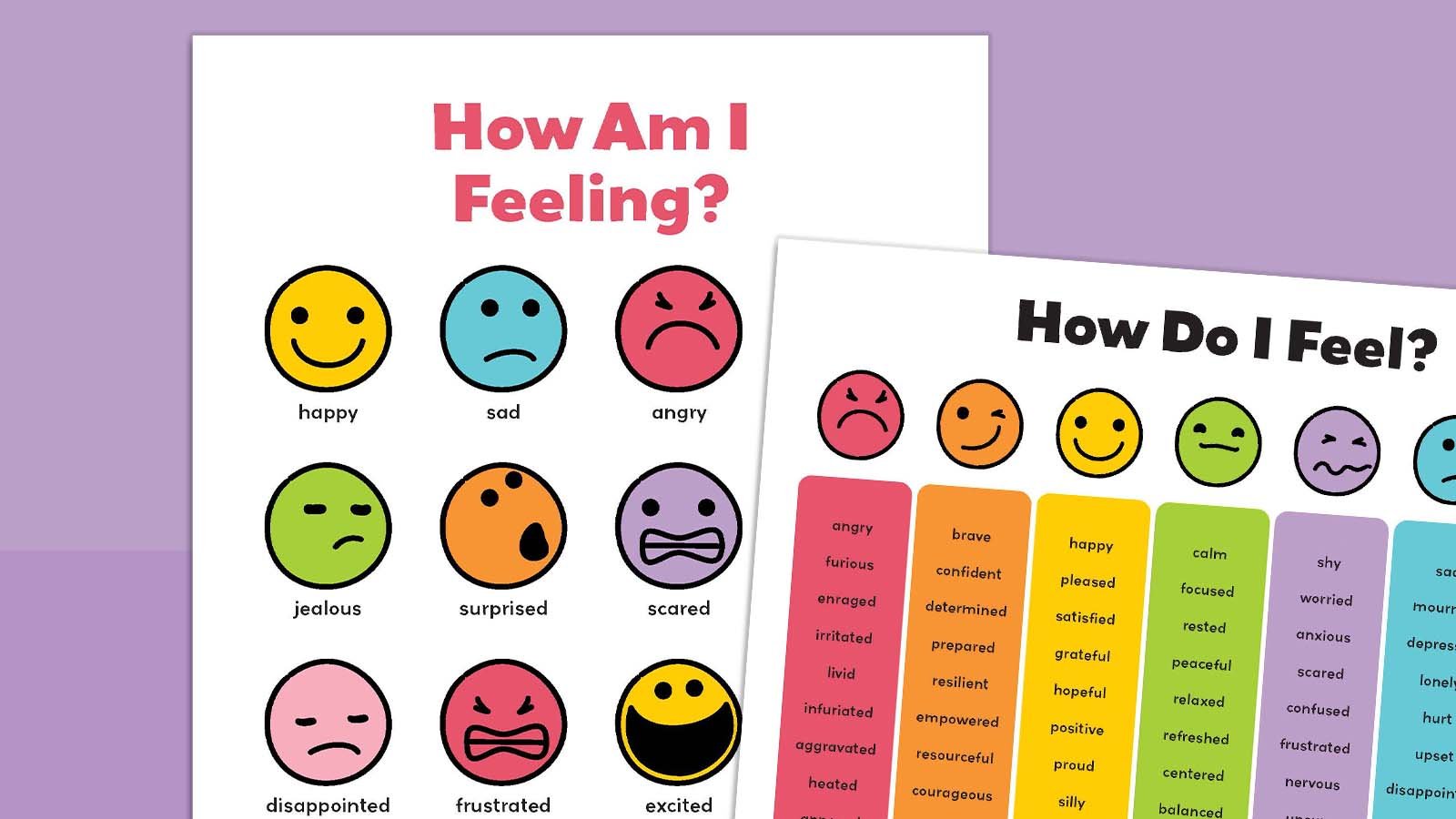
Feelings—what they are and how to manage them—are arguably one of the most important things for young kids to learn. Grab our free printable Feelings Chart Bundle to help your students identify and name their emotions as they experience them.
Jump to:
Why teach feelings?
“Knowing how to identify, understand, and communicate our emotions is a skill we all need to develop,” says school counselor Amy Miller. It’s not something kids just know. And as any teacher knows, when kids can’t communicate what they’re feeling, those emotions often show up as behaviors.
Kids who can’t talk about their feelings have a harder time focusing, problem-solving, and learning, says Miller. It’s like they’re getting a bunch of information and just can’t process it. Feelings aren’t “good” or “bad,” says Miller, they’re information. When teachers give kids the ability to name their feelings, they’re giving kids the tools to respond to what happens to them instead of reacting. “Students who understand their emotions are better able to regulate themselves, ask for help, work through conflict, and stay engaged in learning,” says Miller.
How do we teach feelings?
In short, we teach emotions like we teach reading or math. Here are Miller’s top tips for teaching emotions using tools like the feelings chart.
1. Build vocabulary
For kids to develop emotional literacy, or the ability to recognize and understand their emotions, they first need language. Feelings charts help children develop that emotional vocabulary. “The more precise a child can be in naming what they’re experiencing,” says Miller, “the better they can understand what they need. There’s a big difference between feeling frustrated, disappointed, embarrassed, overwhelmed, or lonely—and each emotion calls for a different response.”
2. Make all feelings OK
Students need to know that all feelings are OK. “I think we’ve unintentionally taught children that the goal of emotions is to get rid of them,” says Miller. When a child goes to a calming corner, says they are mad, and comes back when they “feel better,” they learn that anger is a bad feeling. But that’s not the case. Feelings are information.
3. Get curious
Rather than encouraging students to move away from uncomfortable feelings as quickly as possible, Miller wants them to get curious. Encourage students to ask:
- What is this emotion trying to tell me?
- What do I need right now?
Then, they can take action to help themselves move from an uncomfortable feeling to a calmer or more pleasant one.
4. Move beyond morning meeting
Students’ emotions are constantly changing, says Miller, so asking students how they feel once during morning meeting doesn’t tell us much. Instead, use feelings charts throughout the day. During a read-aloud, ask, “Which emotion best describes this character?” After a disagreement, identify how each person might have been feeling. Following a challenging assignment, talk about how frustration can actually be a sign that our brain is learning something new.
As you teach emotional literacy, the feelings chart becomes an important tool for building vocabulary, empathy, and self-awareness.
For more tips and ideas for teaching mental health, follow Amy Miller at @School_Counselor_Mama.
What’s Included in the Feelings Chart Bundle
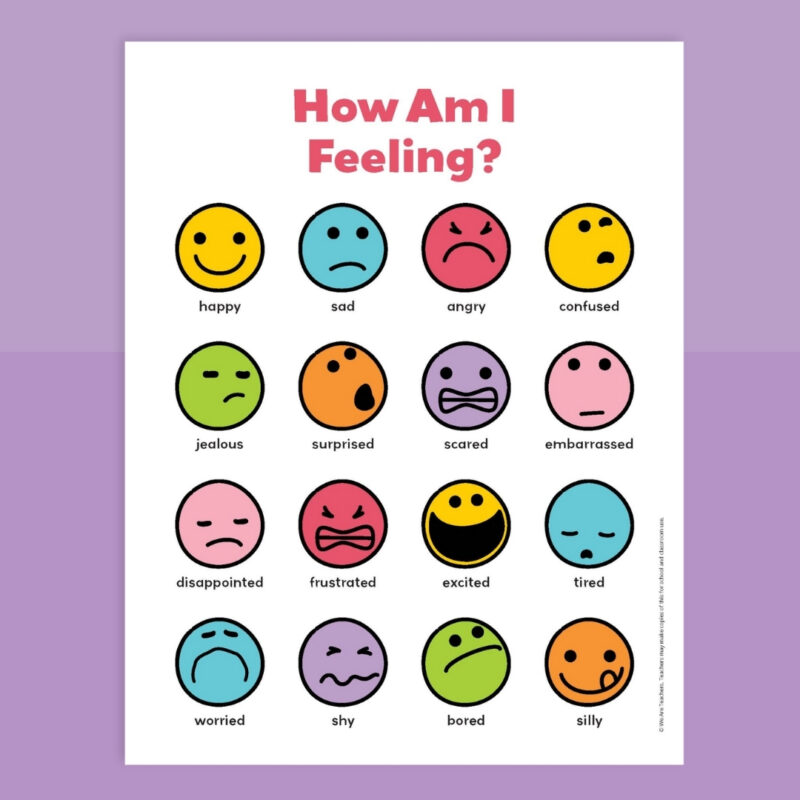
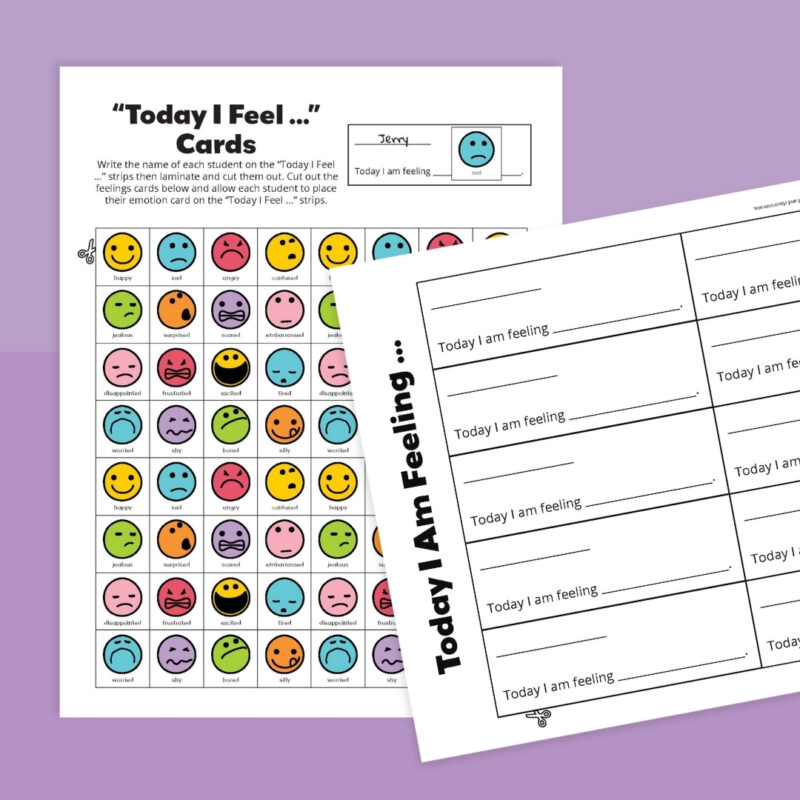
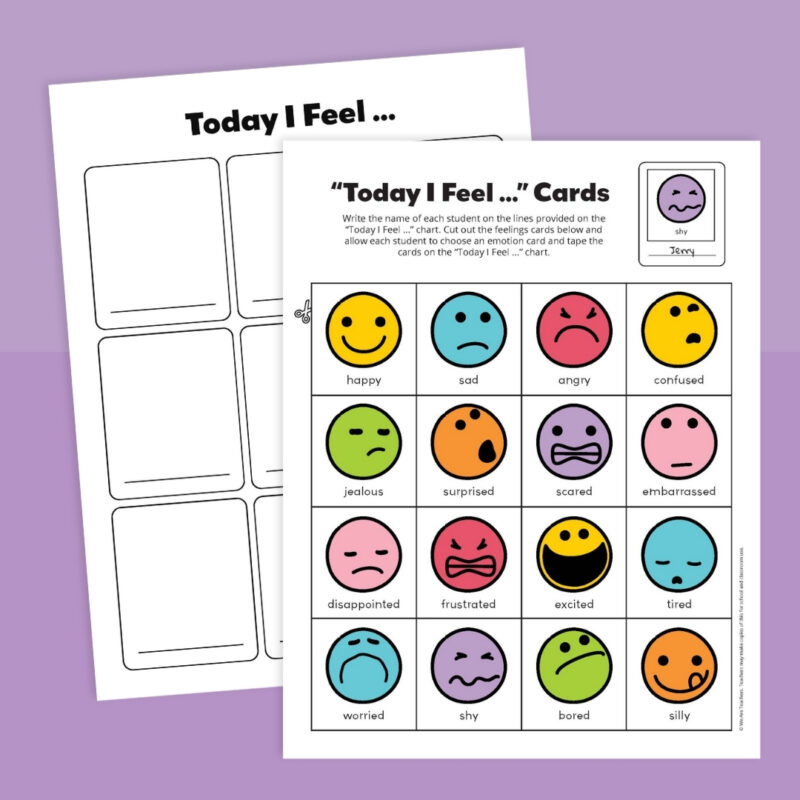
Each feelings chart for kids has illustrations of faces or emojis for each feeling and a word underneath. The faces help students identify how they’re feeling. We’ve designed a basic chart plus three other versions to help students work with feelings.
Below are the different printables included in the bundle and how to use each.
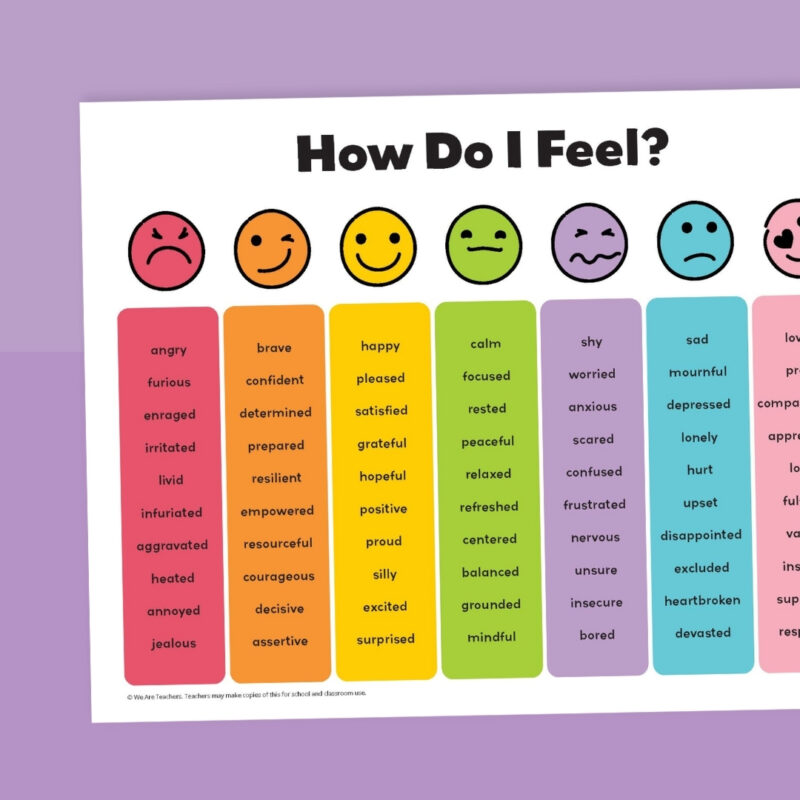
Get your free printable Feelings Chart Bundle!
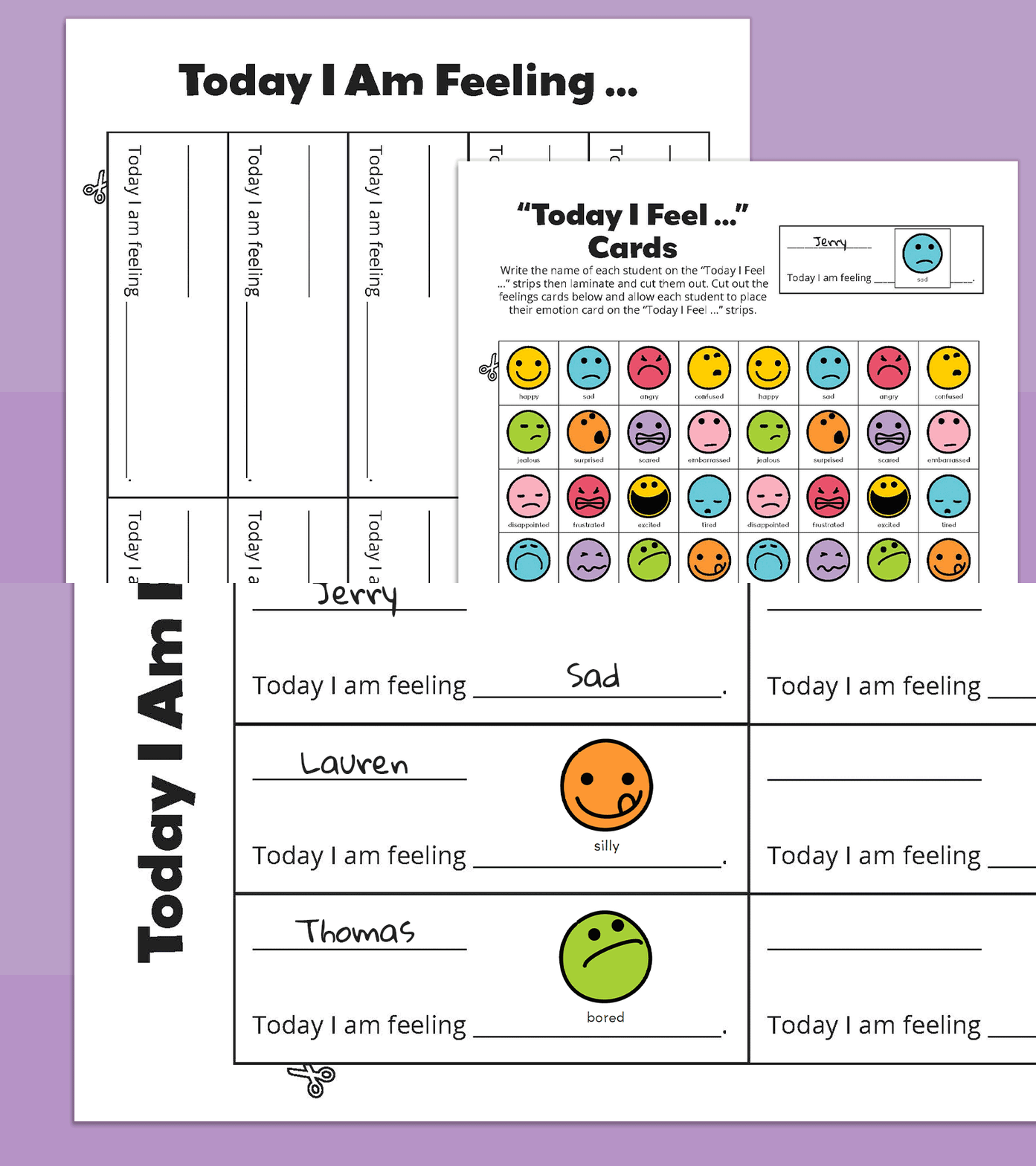
Just click the button on this page to get your free feelings printables.
Recent Comments