
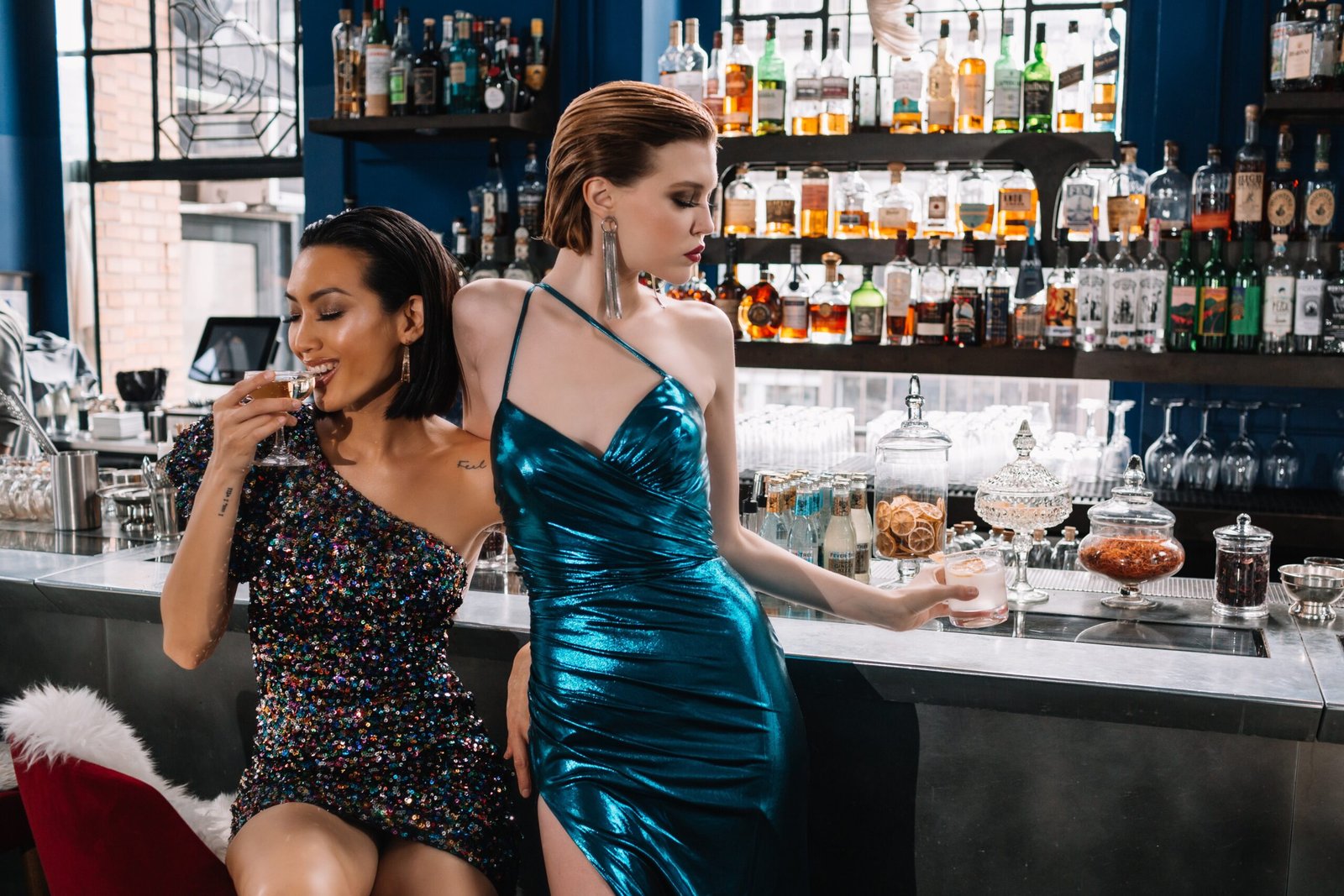
Long or short? If you’re choosing a dress for a wedding, the invitation can often make that decision for you. A formal or black-tie wedding usually calls for a long gown, while cocktail, semi-formal, daytime, and more relaxed weddings leave plenty of room for shorter styles. Then there’s the midi dress, which has become the wonderfully useful middle ground when neither extreme feels quite right.
There really isn’t a universally “better” length. The best choice depends on the dress code first, then the venue, season, time of day, and, very importantly, what you’re going to be doing for the next six or eight hours. A gorgeous dress that requires constant lifting, tugging, or rearranging loses some of its charm by the time the dancing starts.
What Do We Mean by Long and Short?
A long dress generally reaches the ankle or floor. Depending on the cut, that could mean anything from a relatively simple maxi dress to a full evening gown.
A short dress can fall anywhere from above the knee to around knee level. Midi dresses fall below the knee, usually somewhere between the knee and mid-calf, while tea-length dresses tend to finish around the lower calf.
Those distinctions matter because wedding dress codes aren’t simply divided into “long” and “short.” A sophisticated midi can look far more formal than a casual ankle-length sundress. Fabric, cut, embellishment, and styling all change the equation.
The Pros of Wearing a Long Dress
There’s a reason the long gown remains the default for very formal weddings: it immediately looks occasion-worthy. According to the Emily Post Institute’s black-tie guidelines, a formal floor-length evening gown is one of the traditional choices for women at a black-tie event.
Long dresses also give you a lot of room to play with silhouette. A fitted column gown creates a completely different impression from a sweeping A-line skirt, even though both technically have the same hemline.
They’re particularly at home at evening weddings, hotel ballrooms, grand historic venues, and more traditional celebrations. Long dresses can also be wonderful in fall and winter, when velvet, heavier satin, long sleeves, and richer fabrics feel far more appealing than they do at 2 p.m. in July.
And, yes, there’s always the drama factor. A beautiful full-length gown simply has a presence that a short cocktail dress doesn’t always have. Sometimes that is exactly what the occasion deserves.
The Cons of Wearing a Long Dress
The obvious downside is practical: there’s simply more dress to handle.
A long skirt can be warmer, heavier, and harder to manage, particularly if the wedding involves grass, gravel, sand, stairs, or a lot of walking. A hem that looked pristine when you left home may have collected half the garden by dinner.
Silhouette matters here too. A loose, lightweight maxi can be wonderfully easy to move in, while a very fitted floor-length gown may make climbing stairs or taking ambitious steps on the dance floor rather interesting.
There’s also the possibility of looking overdressed. At an informal daytime wedding in a restaurant or a small garden ceremony, a heavily embellished evening gown can feel out of step with the room.
Finally, if you bought spectacular shoes specifically for the occasion, a floor-length skirt is not going to give them much airtime.
The Pros of a Short Dress
Short dresses win a lot of points for sheer practicality.
They’re easier to walk and dance in, they don’t drag across outdoor surfaces, and they’re often more comfortable in warm weather. For a summer garden wedding or an afternoon celebration, that can make a very real difference.
They also work naturally with less formal dress codes. Expert wedding guest guidance, for example, lists cocktail or dressy afternoon dresses for women at several levels of wedding formality, particularly daytime, semiformal, and informal celebrations.
A shorter hem also puts shoes firmly in the picture. Metallic sandals, an unusual heel, jeweled pumps, or a strong color suddenly become part of the outfit rather than something occasionally glimpsed under a skirt.
Then there’s cost-per-wear. A cocktail dress that works for a wedding may come out again for a birthday dinner, holiday party, anniversary, or another celebration. A very formal floor-length gown can be harder to repurpose.
The Cons of a Short Dress
The biggest risk is getting the level of formality wrong. If the invitation specifically says black tie, a long gown is the safest choice. Wedding etiquette sources vary somewhat on how much flexibility women have at black-tie events. Emily Post includes a dressy cocktail dress among acceptable options, while some modern wedding guides interpret black tie more strictly as floor-length. If you don’t know how traditional the hosts are, going long removes the uncertainty.
Short dresses also need a little more attention around the hemline. “Short” and “very short” are not interchangeable when you’re attending someone’s wedding. If you spend the ceremony wondering whether you can sit down comfortably, that dress probably wasn’t the one.
And because your legs and shoes are fully visible, footwear becomes a bigger part of the finished look. That’s fantastic if you love shoes, less fantastic if you were hoping nobody would notice the comfortable pair you grabbed at the last minute.
How to Decide Between Long and Short
Start With the Dress Code
This is the easiest part. If the invitation gives you a dress code, believe it. For black tie, lean long. For cocktail or semi-formal weddings, knee-length and midi dresses are natural choices, although an appropriately styled longer dress can also work. If there’s no stated dress code, look at the venue and time of day for clues.
Think About the Venue
A ballroom and a beach ask very different things of a dress. Church ceremonies, elegant hotels, formal evening venues, and grand reception spaces tend to accommodate long gowns beautifully. Gardens, beaches, restaurants, vineyards, and daytime venues often make midi and shorter dresses more practical.
There are exceptions, of course. A formal garden wedding can absolutely call for a long gown. Just consider whether you really want six inches of delicate chiffon trailing across the lawn.
Dress for the Season, Not Just the Photos
Spring and summer naturally lend themselves to lighter fabrics and shorter or midi lengths. In fall and winter, longer dresses and more substantial fabrics can feel comfortable rather than cumbersome.
But temperature beats fashion theory every time. An air-conditioned ballroom in August and an outdoor ceremony on a surprisingly cold May afternoon are very different environments.
Consider Your Role in the Wedding
Wedding guests have the greatest freedom. Bridesmaids should follow the bride, or couple’s chosen look, particularly if a specific dress or length has been requested.
For the mother of the bride or groom, long gowns remain a classic choice for formal celebrations, but midi and tea-length dresses can be just as polished for daytime, cocktails, and less formal weddings. The most useful approach is to coordinate with the couple and, where appropriate, the other parent before shopping.

Don’t Forget the Midi Dress
If you’ve reached this point and still can’t decide, the answer may be sitting right between long and short.
Midi and tea-length dresses provide coverage and a dressed-up silhouette without the weight or maintenance of a floor-length gown. They’re particularly good for garden weddings, daytime ceremonies, cocktail receptions, and occasions where the dress code feels slightly ambiguous.
They also travel well between age groups. A great midi doesn’t belong to women in their 20s, 40s, or 70s. It belongs to whoever puts it on and thinks, “Yes. This works.”
So, Long or Short?
Start with the invitation, then look at the venue, season, and time of day. After that, choose the dress you’ll enjoy wearing.
For a formal wedding, a long gown remains the easiest choice to get right. For cocktail, daytime, outdoor, and semi-formal celebrations, shorter and mid-dresses give you much more flexibility. And if you’re caught somewhere in between, a polished midi is difficult to beat.
Explore NewYorkDress for wedding guest dresses, bridesmaid styles, and Mother of the Bride dresses across a wide range of lengths and silhouettes. If you’d rather see how different lengths actually look and move before deciding, you can also book an appointment at the New York City store and try your options in person.
Recent Comments