
What are the pros and cons of Propecia and Rogaine for hair loss?
“Any consumer looking on the Internet for a treatment for hair loss is exposed to a multitude of remedies.” However, we only have good evidence for efficacy for drugs approved by the U.S. Food and Drug Administration: finasteride (sold as Propecia) and minoxidil (sold as Rogaine). It’s considered a myth that all the patented hair-loss supplements on the market will increase hair growth. And they may actually be more expensive, with over-the-counter supplement regimens costing up to more than $1,000 a year, whereas the drugs may cost between $100 and $300 annually. The drugs can help but can cause side effects. Propecia can diminish libido and cause sexual dysfunction, while the topical minoxidil can cause itching.
Below and at 1:12 in my video Pills for Hair Growth, you can see a list of some of the more common side effects of these FDA-approved drugs.
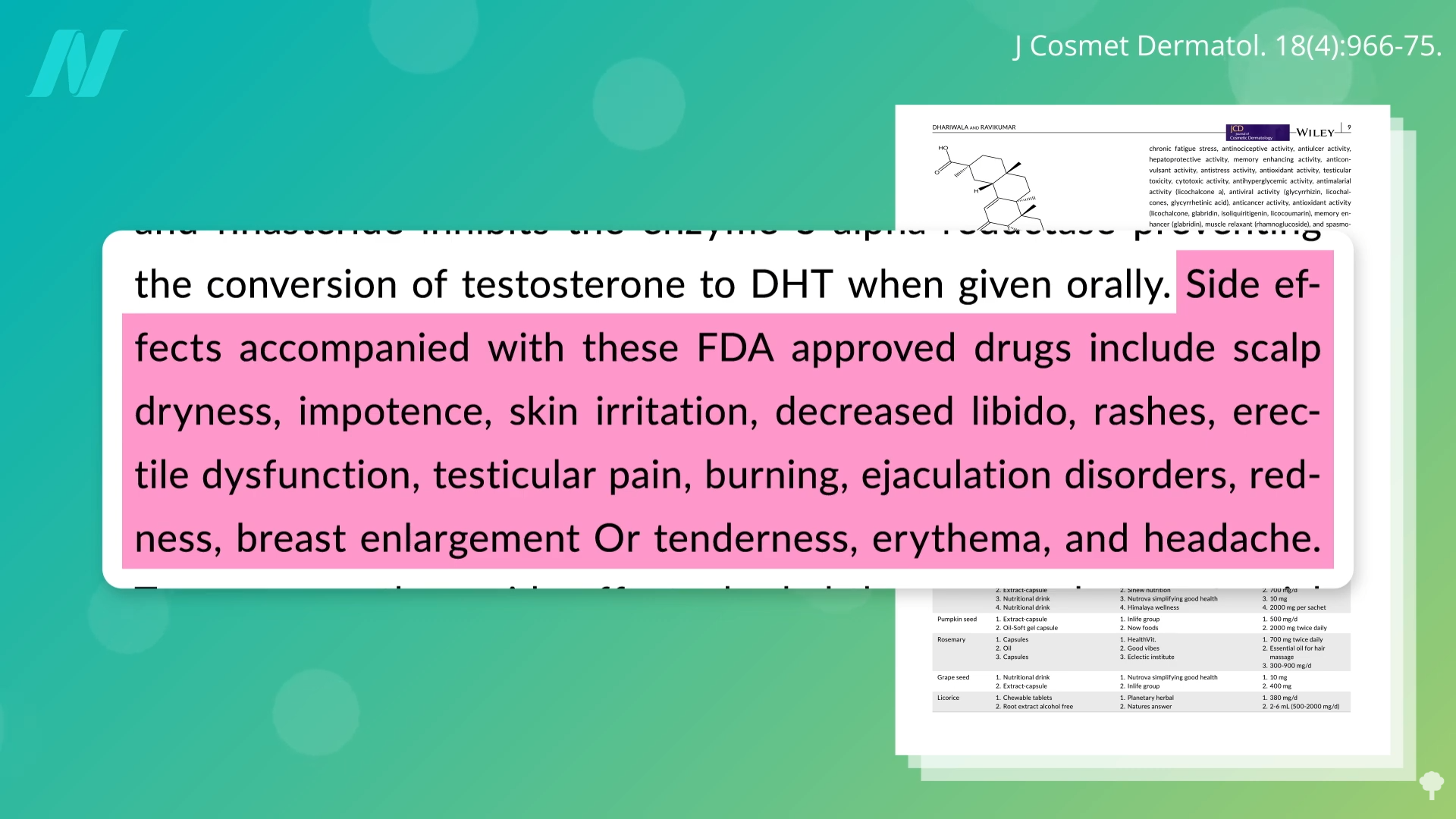
To understand why there are so many hormonal side effects for Propecia, like impotence, testicular pain, and breast enlargement, it’s important to understand how the drug works.
Androgens, male hormones like testosterone, are the principal drivers of hair growth in both men and women. We know this from studies half a century ago that show that castration of men stopped their hair loss. Why exactly were they being castrated? It was due to eugenics laws in the United States, when “mentally handicapped people” were castrated or forced to undergo tubal ligations against their will “to prohibit contribution to the genepool.” So-called “retarded persons were routinely sterilized without their consent or knowledge,” and the United States was the first country to introduce eugenic laws, which were later upheld by the U.S. Supreme Court. In the 1930s, a vocal proponent complained: “The Germans are beating us at our own game.”
Back to hair loss. Testosterone is the primary androgen circulating in the blood and can be converted to dihydrotestosterone, which is even more powerful, by an enzyme called 5-alpha reductase, shown below and at 2:28 in my video.
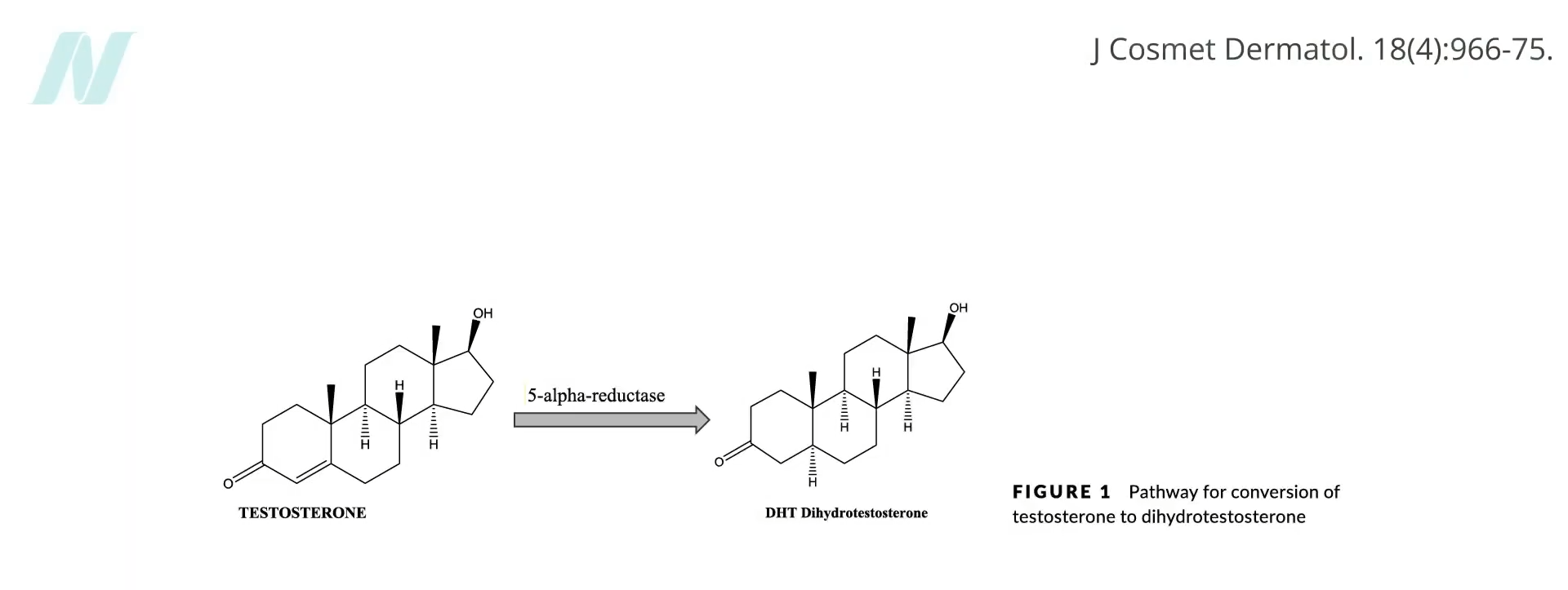 That’s the enzyme that is blocked by Propecia, so it inhibits the souping up of testosterone. That’s why women are not supposed to take it since it could feminize male fetuses; whereas for men, it has sexual side effects like erectile dysfunction, which can affect them for years. It’s something the drug companies had to disclose for the last decade: a “difficulty in achieving an erection that continues after stopping the medication,” a side effect that may even be permanent. Up to 20% of study participants reported “persistent sexual dysfunction” for six or more years after stopping the drug, suggesting the possibility that it may be permanent.
It’s possible that the drug may structurally change the part of your brain responsible for sexual function. Indeed, though blood levels of hormones in users with persistent effects appear normal, analysis of the cerebrospinal fluid surrounding the brain, obtained via spinal tap, shows that neurosteroid levels do appear to end up being altered. So, “it is recommended that prescribers of finasteride, as well as potential users, be aware of the potential serious long-term risks of a medication used for a cosmetic purpose.”
To date, no new interventions are used routinely in treating male or female pattern baldness. Given the side effects of the current drug options, “there is a need for alternative treatments.” So, what about food? Could what we eat help combat hair loss? That’s exactly what we’re going to explore next.
Doctor’s Note
This is the second in a three-part series on hair loss and growth. Do Hair Growth Supplements Work? is the first video, in case you missed it.
Antidepressants like Prozac can also cause sexual dysfunction, but there is something that may help. See Best Food for Antidepressant-Induced Sexual Dysfunction.
Recent Comments