
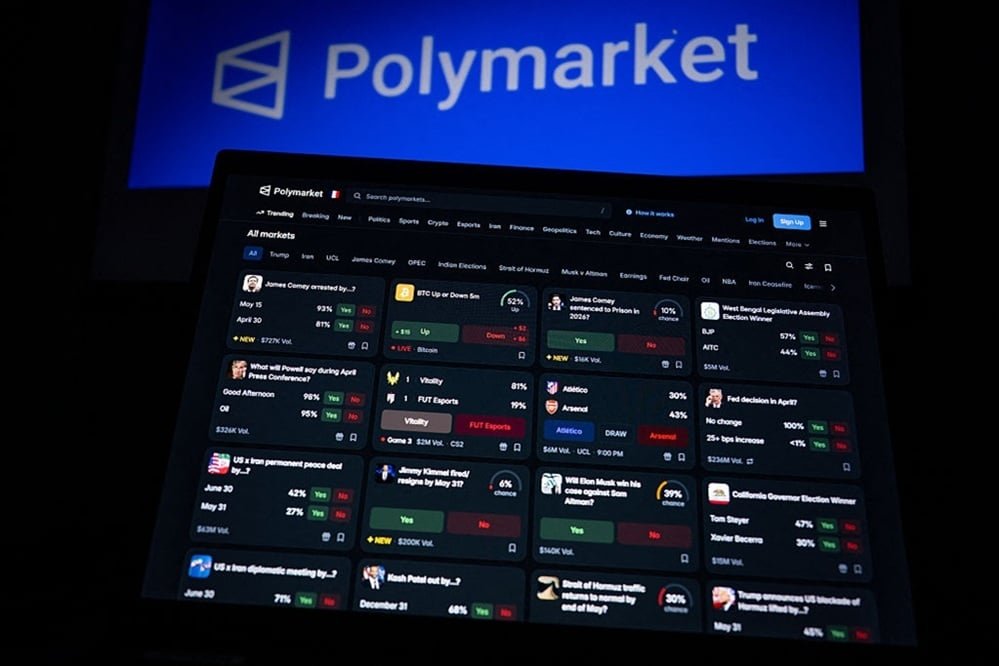
Prediction markets are pacing toward $1.5 trillion in taker volume by 2030, according to Macquarie, blowing past previous estimates.

In a note to clients out today, Macquarie analyst Chad Beynon estimated turnover on yes/no exchanges could ascend to levels by 2030 that are 50% above forecasts other analysts floated just a few months ago. Notably, the analyst’s projection breaks down as follows: $783 billion in non-sports volume and $705 billion of turnover from sports derivatives, indicating the industry will tap growth outlets outside the world of sports.
“While sports and major events such as the World Cup remain key drivers, non-sports markets are growing faster and expected to become the majority of volume by 2030, supporting the view that prediction markets are becoming a broad event-trading ecosystem,” notes Beynon.
Likely drivers of non-sports volume growth include cryptocurrency and political derivatives, which are already among prediction markets’ largest categories outside of sports.
What the Economics Could Look Like
If the $1.5 trillion volume estimate proves accurate, that could drive an estimated $50 billion in revenue for prediction market operators in aggregate, though Beynon warns that figure could be splintered as it is in the online sports betting (OSB) universe.
“Overall, we believe the prediction market industry could drive 2030E revenue of nearly $50 billion, assuming a net take rate of 3.25% on taker volume,” says the analyst.
Currently, the two largest prediction market operators are privately held companies and the other viable competitors in the space are financial services and gaming companies that aren’t solely focused on all-or-nothing derivatives.
However, it’s possible to forecast how prediction market performance can affect companies’ top and bottom lines. Beynon projects that an operator commanding approximately 30% market share could generate $7 billion in earnings before interest, taxes, depreciation and amortization (EBITDA) on sales of $17 billion by 2030.
Competition Is Broadening
From a market share perspective, in its early stages, the U.S. prediction market industry has largely been controlled by one operator, but the field of legitimate competitors — including some well-heeled ones — is rapidly broadening.
Beynon mentions DraftKings, Fanatics, FanDuel, Meta Platforms, Polymarket, Robinhood and Underdog, among others, as the players that could rise to prediction market prominence in the coming years. DraftKings and FanDuel are among the ones to keep eyes on. He mentions FanDuel’s partnerships with CME Group and Crypto.com and DraftKings’ building out its own exchange as signs of sportsbook operators’ commitments to prediction markets.
“These developments support the view that PM and OSB may ultimately coexist, serving overlapping but distinct customer segments,” concludes the analyst.
Sportsbook operators’ ability to pivot to yes/no derivatives is critical over the long-term because, assuming no new states legalize sports wagering, the total addressable market for sports event contracts could be 50% larger than online sports betting by 2030, according to Beynon.
Recent Comments