
What Causes Polymyalgia Rheumatica?
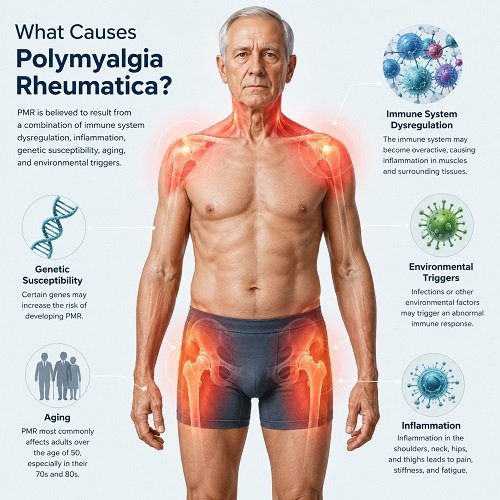
Polymyalgia rheumatica (PMR) is an inflammatory condition that causes pain, stiffness, and reduced movement, particularly around the shoulders, neck, hips, and upper thighs. It almost exclusively affects adults over the age of 50 and is more common in people in their 70s and 80s. Although doctors understand many of the features of PMR, the exact Polymyalgia Rheumatica Causes are still not completely known.
Researchers believe that PMR develops through a combination of immune-system changes, genetic susceptibility, aging, and environmental influences. Rather than being caused by a single factor, the condition may occur when several factors interact and trigger an abnormal inflammatory response.
Understanding the possible causes of Polymyalgia Rheumatica can help explain why the condition develops, who is more likely to experience it and how doctors approach Polymyalgia Rheumatica diagnosis and treatment.
Is Polymyalgia Rheumatica an Autoimmune Disease?
Polymyalgia rheumatica is generally considered an immune-mediated inflammatory disorder. It has several characteristics associated with an autoimmune disease, although the exact autoimmune mechanisms involved are not fully understood.
Normally, the immune system protects the body from infections and other harmful substances. In immune-mediated conditions, however, immune activity can become excessive or misdirected. In PMR, immune cells and inflammatory chemicals become active in tissues around joints and other structures.
This immune activity contributes to Polymyalgia Rheumatica inflammation, which is responsible for many of the condition’s characteristic symptoms.
PMR is not simply caused by normal aging or everyday muscle strain. Its inflammation occurs through biological processes involving the immune system and inflammatory signaling.
The Role of Inflammation in Polymyalgia Rheumatica
Inflammation is one of the most important features of PMR. The condition can cause inflammation in structures around the shoulder and hip joints, including bursae and other soft tissues.
Inflammatory substances released by the immune system can produce:
- Shoulder pain and stiffness
- Hip and thigh discomfort
- Neck stiffness
- Difficulty getting out of bed
- Reduced range of movement
- Morning stiffness
- General fatigue
- A feeling of weakness or reduced physical ability
The inflammation can also cause elevated blood markers such as C-reactive protein (CRP) and erythrocyte sedimentation rate (ESR).
Importantly, Polymyalgia Rheumatica symptoms are not necessarily caused by damage to the muscles themselves. The pain and stiffness often result from inflammation in tissues surrounding joints and other structures.
Aging and Polymyalgia Rheumatica
Age is one of the strongest known Polymyalgia Rheumatica risk factors.
PMR is extremely uncommon in people younger than 50. The likelihood of developing it increases considerably with age, particularly among people in their 70s and 80s.
Why aging increases the risk is not completely understood. As people age, the immune system undergoes significant changes. This process, sometimes called immunosenescence, can alter how immune cells respond to infections, inflammation, and other biological signals.
Age-related changes in the immune system may make certain people more susceptible to the inflammatory processes associated with PMR.
However, getting older does not mean a person will automatically develop PMR. Age is a risk factor rather than a direct cause.
Genetic Factors
Genetics may also contribute to the development of PMR.
Researchers have identified associations between PMR and certain genetic variations, particularly genes involved in regulating the immune system. These genetic differences may influence how a person’s immune system responds to environmental triggers.
A genetic predisposition does not mean PMR is directly inherited from a parent in the same way as some genetic disorders. Instead, certain genetic characteristics may increase susceptibility.
This helps explain why PMR appears more frequently in some populations than others and why some individuals may develop the condition while others exposed to similar environmental factors do not.
Environmental Triggers
One of the ongoing areas of research involves possible environmental triggers.
Scientists have investigated whether infections, seasonal patterns, and other environmental exposures might contribute to PMR. Some studies have suggested that infections or immune stimulation could precede the onset of symptoms in certain people.
However, no specific infection or environmental exposure has been established as a universal cause.
This distinction is important. Researchers may identify associations between particular exposures and PMR without proving that those exposures directly cause the disease.
At present, PMR is best understood as a condition that may develop when susceptible individuals experience an abnormal immune response following one or more biological or environmental triggers.
Could an Infection Trigger Polymyalgia Rheumatica?
Some researchers have explored whether infections could activate the immune response involved in PMR.
The theory is that an infection or other immune stimulus might cause inflammatory pathways to become activated. In someone who is genetically or biologically susceptible, this response could potentially contribute to the development of PMR.
Several infectious agents have been investigated over the years, but there is no single infection that has been proven to cause PMR.
Therefore, having an infection does not mean a person will develop polymyalgia rheumatica.
More research is needed to determine whether certain infections act as triggers or whether the observed relationship is coincidental.
Polymyalgia Rheumatica and Giant Cell Arteritis
PMR has an important relationship with giant cell arteritis (GCA), another inflammatory condition that affects blood vessels.
Some people with PMR develop GCA, while some people diagnosed with GCA experience PMR symptoms.
Both conditions involve abnormal immune activity and inflammation, suggesting that they may share some underlying biological mechanisms.
GCA can cause symptoms such as a new or severe headache, scalp tenderness, jaw pain when chewing, visual changes, or other symptoms related to inflammation of blood vessels.
Because untreated GCA can threaten vision and cause other serious complications, people with PMR should be aware of warning symptoms and seek prompt medical attention if they develop them.
Sex as a Risk Factor
Sex may influence the likelihood of developing PMR. The condition is more commonly diagnosed in women than in men.
Researchers are investigating why this difference exists. Differences in immune-system activity, hormones, genetics, and other biological factors may contribute.
However, being female is a risk factor rather than a direct cause. Men can also develop PMR.
Ethnicity and Geographic Patterns
PMR does not occur equally across all populations.
It is reported more frequently among people of Northern European ancestry, while it is less common in some other ethnic groups. Geographic differences have also been observed.
These patterns suggest that genetic and environmental factors may both influence susceptibility.
The reasons for these differences are not fully understood. Researchers continue to investigate whether genetics, environmental exposure, differences in healthcare diagnosis, or combinations of these factors explain the geographic variation.
Is Stress a Cause of Polymyalgia Rheumatica?
Stress is sometimes blamed for inflammatory diseases, but there is currently no strong evidence that everyday psychological stress directly causes PMR.
Stress can affect sleep, energy, pain perception, and overall well-being, so it may make existing symptoms feel more difficult to manage. However, it should not be considered a proven primary cause of PMR.
Similarly, normal physical activity, occasional muscle strain, or sleeping in an uncomfortable position does not cause the underlying inflammatory disorder.
If persistent shoulder or hip stiffness develops, particularly in an older adult, it is better to seek medical evaluation rather than assuming the symptoms are simply caused by stress or overuse.
Does Diet Cause Polymyalgia Rheumatica?
There is no established diet that is known to cause PMR.
Certain foods can influence overall health and inflammatory processes, but there is no specific food or dietary pattern proven to directly trigger polymyalgia rheumatica.
A balanced diet can still be useful for maintaining general health, especially because people with PMR may require corticosteroid treatment. Steroid therapy can affect blood sugar, blood pressure, bone health, and body weight.
A nutritious diet that includes adequate protein, fruits, vegetables, whole grains, and sources of calcium and vitamin D can support overall health.
People taking medication for PMR should discuss significant dietary changes or supplements with their healthcare professional.
Can Exercise Cause Polymyalgia Rheumatica?
Exercise does not cause PMR.
Physical activity can sometimes produce temporary muscle soreness, particularly after an increase in exercise intensity. PMR is different because its symptoms are associated with systemic inflammation and typically cause pronounced stiffness, particularly after periods of rest.
Some people initially mistake PMR for an exercise-related injury because the shoulders, hips, and thighs can become painful.
However, PMR often produces symptoms that persist and interfere with normal daily activities, such as dressing, raising the arms, getting out of a chair, or turning in bed.
Gentle physical activity may be beneficial during recovery, but exercise should be adjusted according to symptoms and medical advice.
Other Possible Polymyalgia Rheumatica Risk Factors
In addition to age, sex, genetics, and geographic or ethnic background, researchers continue to investigate other possible risk factors.
Potential influences include:
- Changes in immune-system function
- Genetic susceptibility
- Environmental exposures
- Possible infectious triggers
- Age-related inflammatory changes
- Biological factors associated with aging
Not every person with one or more risk factors will develop PMR.
A risk factor increases the probability of a condition; it does not establish that the factor directly caused the disease.
Why Does PMR Develop So Suddenly?
One unusual feature of polymyalgia rheumatica is that symptoms can appear relatively quickly.
A person may feel reasonably well and then develop significant shoulder or hip stiffness over a short period. This sudden change can be confusing, particularly when there has been no obvious injury or physical trigger.
The rapid onset may reflect activation of inflammatory pathways rather than gradual structural damage.
Researchers believe that the immune system can become activated in a way that produces widespread inflammation. The exact event that initiates this response remains uncertain.
This is one reason scientists continue to study the relationship between genetics, aging, infections, and environmental factors.
What Does Not Cause Polymyalgia Rheumatica?
Understanding what does not cause PMR can be just as useful as understanding its possible causes.
PMR is not generally caused by:
- A single muscle injury
- Normal physical activity
- Poor posture alone
- Ordinary aging alone
- One particular food
- Lack of exercise
- Everyday stress
- A single episode of overuse
These factors may influence how a person feels, but they do not explain the underlying inflammatory process associated with PMR.
How Doctors Determine the Cause of Symptoms
There is no single test that proves the exact cause of PMR.
Instead, doctors consider a person’s age, symptoms, physical examination, medical history, and laboratory results. Blood tests may show elevated inflammatory markers such as ESR and CRP.
Doctors may also use imaging or other tests to rule out conditions that can cause similar symptoms.
This is particularly important because shoulder and hip pain can occur with osteoarthritis, rheumatoid arthritis, thyroid disorders, infections, medication-related problems, and other conditions.
A careful diagnosis helps ensure that appropriate Polymyalgia Rheumatica treatment is started.
When Should You See a Doctor?
Persistent shoulder or hip pain should not automatically be assumed to be PMR.
Speak with a healthcare professional if you experience:
- New shoulder or hip stiffness that persists
- Severe morning stiffness
- Difficulty raising your arms
- Difficulty standing up from a chair
- Symptoms that interfere with sleep or daily activities
- Unexplained fatigue or fever
- Unintentional weight loss
- New headaches or scalp tenderness
Anyone experiencing new vision problems, jaw pain while chewing, or a sudden severe headache should seek urgent medical evaluation because these symptoms can occur with giant cell arteritis.
Final Thoughts on Polymyalgia Rheumatica Causes
The exact Polymyalgia Rheumatica Causes remain uncertain, but research strongly points toward a combination of immune-system activity, inflammation, genetic susceptibility, and age-related biological changes.
PMR is considered an inflammatory, immune-mediated condition rather than a simple muscle disorder. Age is the strongest known risk factor, while genetics, sex, ethnicity, geographic background, and possible environmental or infectious triggers may also influence susceptibility.
The presence of a risk factor does not guarantee that someone will develop PMR, and researchers have not identified one specific trigger responsible for every case.
If persistent shoulder, neck, hip, or upper-thigh pain and stiffness develop after age 50, especially when symptoms are worse in the morning, medical evaluation is important. Early diagnosis can help distinguish PMR from other conditions and guide appropriate treatment.
Recent Comments