

In the game of blackjack, the dealer is dealt two cards: one faces up and the other, the hole card, is dealt facing down. The hole card is meant to be hidden until the players have acted on their hands.
“But as a hole-card reader, I can see the dealer’s card before it’s turned over,” Gina Fiore writes in her memoir. “And when I know what their hole card is, the house no longer has an edge — I do.”

A former dealer who switched sides after realizing the casino floor was far less observant than most players imagine, Fiore built her career on a mix of math, nerve, and social engineering—rotating through more than a dozen identities, assembling teams of misfits and savants, and navigating a world where backrooms, BOLO (Be On the LOokout) files, and threats were part of the job description.
Fiore’s reputation grew inside a field historically dominated by men, eventually making her one of the most sought‑after voices on the subject. She’s taught master classes in gambling, writes a newsletter on advantage-play techniques, and was the subject of the 2023 short film Miss Brown, directed by Christina Burchard, which premiered at the Tribeca Festival.
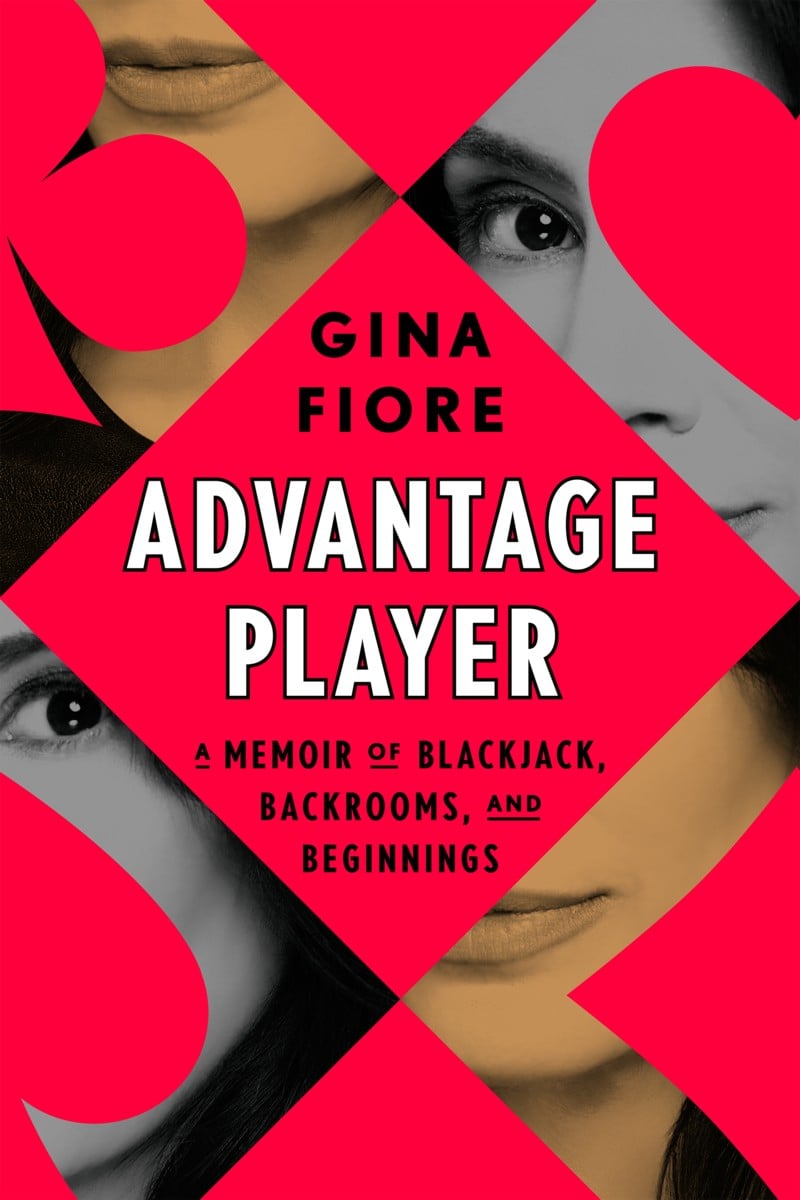
On Oct. 27, Fiore’s memoir, Advantage Player: A Memoir of Blackjack, Backrooms and Beginnings, will be published by Gillian Flynn Books. It has already inspired an upcoming HBO series starring Riley Keough (Elvis Presley’s granddaughter) in the title role.
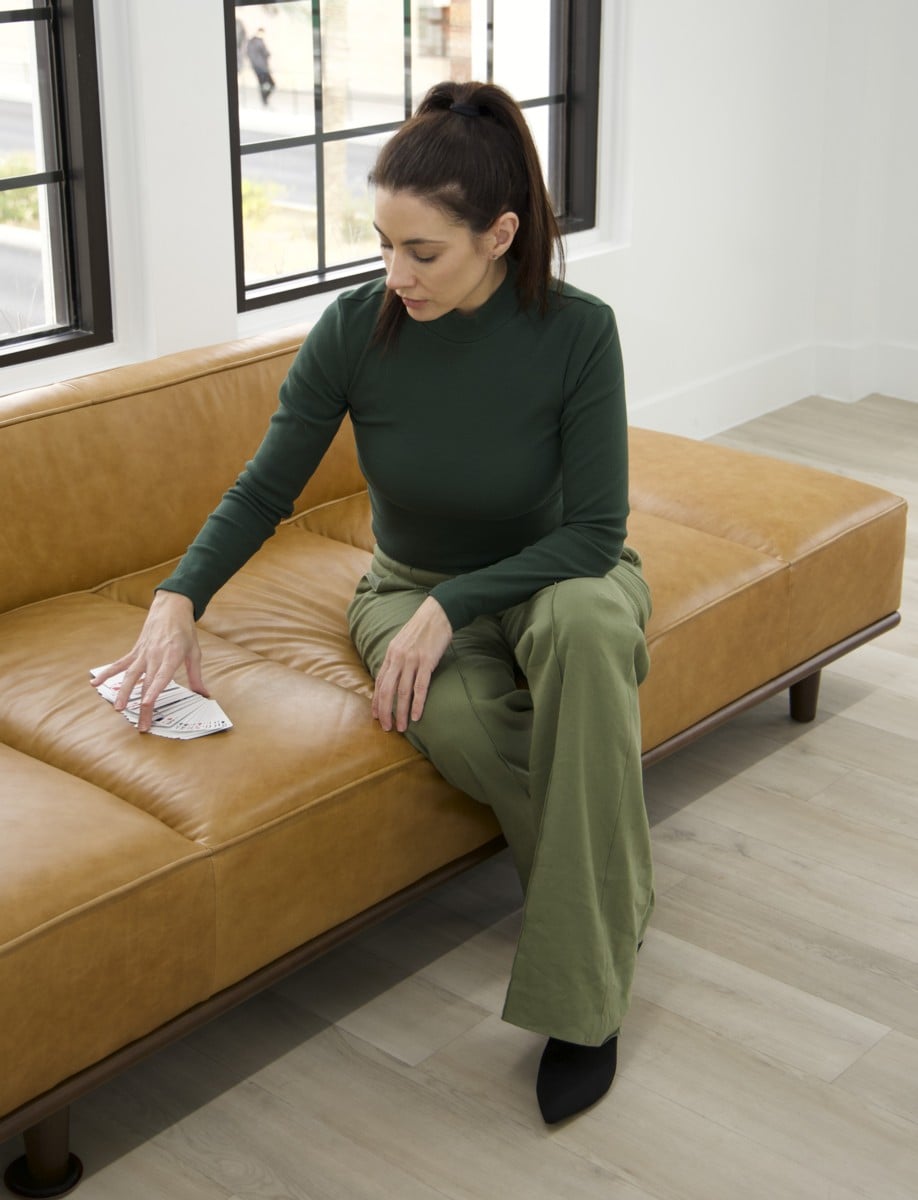
Fiore video-conferenced with Casino.org from her home in Las Vegas.
Q: How much did you make advantage playing in your career?
A: Good question. My teams and my partnerships made, I estimate, about 15 million, so I probably made—I guess—3 million, maybe?
Q: What are the top three rules to advantage playing?
A: You have to adapt, that’s number one, because conditions are always changing. Number two is you have to always be on the lookout for new opportunities because the one you have is going to die eventually — it just is.
And number three is probably the circle you keep. because information-sharing is really important. You have to be around people who you can trust and who don’t get pulled into something that’s either borderline grey-area or illegal because your credibility is more important than anything.
Q: You learned to deal before you learned to count a deck. What did standing on the house side teach you that you took advantage of later?
A: Working on the other side of the table taught me that everything going on in the casino isn’t about the players. Because when you go in and you’re hole-carding or edge-sorting or card-counting, you think every call in the pit is about you; every conversation is about you; every time they look over at the table, it’s about you.
But working in the casino, you realize, they’re calling for a fill, they’re talking to the guy in the pit over there about fantasy football. It’s not all about the players. And they’re not really educated on advantage play at all. So to think that they know that you’re doing this high-level thing is not what’s happening.
Q: As a dealer, what tipped you off to the first person you ever recognized as an AP. And what did you do when you saw them?
A: The first person I noticed counting cards in a casino was this guy in Palm Springs. I noticed because he was counting aces. Every time an ace would come out, he’d lift a finger on his chin. And then when he’d get to four, he’d mark it with another finger on the table and then he’d start over.
I was so excited to like see a card-counter. So when I dealing to him, I started counting the aces. I would just say, you know, three, seven or whatever. And obviously, I spooked him out because he didn’t play on my table after I did that twice. And I was never gonna tell anyone. I was just like, this is so cool.
Q: A co-worker quitting to count cards in Laughlin was the plot point that made you switch sides. What was the first moment you felt the casino looking at you differently — not as a customer, but as a problem?
A: I can’t recall the exact moment, but I mean, I’m pretty good at coming back another day, not taking that huge risk because once you’re at the top of the pile, when you get kicked out and your face is at the top of the BOLO pile, it really hurts. It hurts every other day you’re gonna work.
Q: How many identities did you rotate through in a typical year? And what made a cover story hold up under a pit boss’s small talk?
A: Most advantage players have names that we refer to ourselves as. For me, it’s either Brown or Miss Brown or MB. But I’ve probably used 15 different names, Michelle Williams or whatever it is. And I wouldn’t necessarily rotate them until the name got burned. Once it was done, it was done, basically.
My big cover story was that I was an event planner. That made my schedule open up. Like, I can be in the casino on a Tuesday afternoon because I’m an event planner. Or on a weekend we didn’t have any weddings.
Q: What’s the smallest detail that ever saved a play for you?
A: I can’t think of one little thing that ever saved a play. But maybe just staying on the game and playing basic strategy after I felt I was getting attention. Like, who stays there and does that? But that has to be where I’m getting attention and I really, really, really believe that they’re not sure. Because once they’re sure, nothing I do is going to mitigate that. I’m going to just leave. I’m going to try to leave naturally, but I’m going to leave.
Q: How many times have you been backed off a casino?
A: I mean, there are different levels. One level is you’re told you’re too good for us and you just can’t play blackjack. And then that’s it.
Q: That’s the Ben Affleck level.
A: Exactly. And then there’s being like backed off of the casino. And then there’s being trespassed where they try to read you the Trespass Act, at least in Nevada, which bans you. And then there’s being back-roomed. So if I combine all of those things, like how many times those things have happened, God, I don’t know, 50.

Q: How many times have you been back-roomed and what happened?
A: I’m thinking of three. I feel like there’s a fourth that I’m not remembering.
Q: This was way after the days of the mob, so you weren’t subjected to violence, right?
A: No, I was. At Ellis Island Casino, they pushed me on the ground and I was calling 911 as this was happening. And he said if I didn’t hang up, he was going to have to hurt me. This is 2003. So that was definitely violent. I had bruises on my wrist from when they handcuffed me really tight.
And then there was a guy that grabbed me outside of Palace Casino in Biloxi. This is in 2008 or 2009. And I was just like, ‘You can’t touch me!’ And then he actually let go. But there are people still getting beat up in Vegas. I hear stories.
Q: In 2006, you and a partner, Keith Gipson, carried nearly $100,000 through the Atlanta airport, where a DEA agent seized it because he thought it was drug money. That became a Supreme Court case that you lost. What did that mean for your business?
A: We were lucky that it wasn’t our total bankroll, so it didn’t affect our work. We got into a standoff. We wouldn’t sign anything saying that we wouldn’t sue. So we waited eight months to get the money back. I was very angry that it happened.
I’m not happy about losing at the Supreme Court, either, but it had nothing to do with gambling. It was a precedent over jurisdiction. But I will say that in my regular life, it is a novelty to have lawyers say that they studied your case in law school.
Q: Every AP has a night they regret—either staying too long or leaving too early. What’s yours?
A: I stayed too long at the Rio once. I think this is in the book. I was playing a hole card session at the Rio in 2005, and other hole-carders jumped on my game because it was a really good game. Instead of leaving because they were bringing heat to the game, I didn’t want to leave because of the EV (expected value). So I stayed and I ended up running out of there—actually sprinting out of there.
That one bothers me because the Rio used to have a lot of hole-card games and I knew at the time I should go. I just didn’t want to leave the game because then I’d be giving it to these other players. It shouldn’t still bug me, but that’s a big one. Something that happened 20 years ago still bothers me.
Q: Is there a technique or an insight that you thought of including in the book, but ultimately didn’t want to reveal?
A: Oh, yeah, for sure, several. I’m not going to reveal them now. There are things I can’t say. They’re either still good now or they aren’t, but they might be good in the future because moves just get recycled. Or someone else did it and I didn’t do it.
Q: It sounds like you either can see yourself returning to the tables one day, or that you still haven’t quit yet.
A: That’s kind of a hard question to answer because, on one hand, I would like to go to the restaurant and not be bothered. I will agree to go into a casino and not do anything if I can just enjoy my time there.
Q: You have a child. At what point did “Mommy is a professional gambler” stop being an abstract problem and become a conversation you actually had to have? When did you realize you couldn’t hide your job from your kid?
A: My son, he’s going to be 11 this month. I’ve never hid it from him, but it’s really hard to explain, obviously. He’d know that I was in the casino working. And then when he was 6, I taught him the practice of counting cards.
So we’d go in the casino and I explain to him like, ‘These are slot machines. You can’t play these. You can only play them if you know how to win.’ So he knows. He knows that I’ve been asked to leave some casinos. He knows about the Supreme Court. So he knows things. In 6-to-10 year-old terms, he understands what I do.
Q: What’s the one thing recreational gamblers still refuse to believe about advantage play when you tell them?
A: That you can beat the casino honestly. They still think card-counting is cheating, that it’s illegal, which is really odd to me, but I live in a bubble of gamblers.
Q: What’s the biggest misconception casinos still have about advantage players?
A: That they should be as concerned with us as they are. Card-counters really don’t take that much out of the casino. Some slot AP players are really annoying because they’ll camp out behind civilians, but it’s a fact that if civilian gamblers just played basic strategy, or even just closer to it, the casinos would lose way more money than they lose to advantage players.
So being so scared of advantage players with a $50 big bet is just overkill.
Recent Comments