
 It was the year 1898, and only days from the end of summer. A group of boaters and swimmers at Lake George had just finished organizing a training session by the recently established Volunteer Life Saving Corps.
This was an era when organized water safety and life-guarding were virtually nonexistent, and swimming was more often viewed as “bathing,” requiring no formal skill.
Like many summer lake resort programs during that era, the training event revolved around a lake regatta and aquatic carnival.
Among the executive committee that planned the instruction and regatta were Commodore W. H. Tippetts (chairman); Vice Commodore C.F. Burhans and Legrand C. Cramer (referees), Dr. W. A. Hickman (starter); the Sagamore Hotel’s John Boulton Simpson; Hague artist Harry W. Watrous; and a who’s who of other Lake George summer residents.
Ironically, planning the training in aquatics safety came in the shadows of a triple drowning which happened during Fourth of July fireworks celebrations at Lake George earlier that same summer.
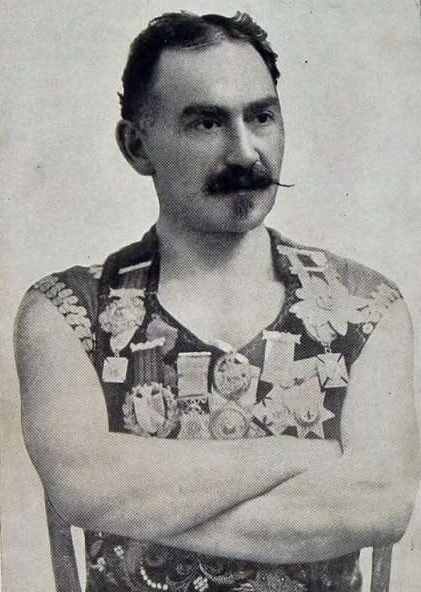
Following the drownings, Tippetts and Burhans brought Captain Davis Dalton of the Volunteer Life Saving Corps to Lake George to direct training for the local squad. Dalton was one of the nation’s leading authorities on swimming and aquatic life saving.
The Volunteer Life Saving Corps, founded in 1890 in New York City, was among the first groups dedicated to protecting the public at beaches (not to be confused with the American Red Cross’s Life Saving Corps, founded in February 1914).
Previously lifesaving organizations were primarily concerned with rescuing people from distressed ships along the Atlantic Coast.
 Dalton, a long distance swimmer in addition to being a swimming instructor, would publish a ground-breaking book How to Swim the following year. He was said to have saved 278 people from drowning.
Dalton also had a son who followed in his father’s swim strokes. According to the Rockland County Journal, Davis Dalton was drowned at Rockaway Beach in Queens while giving a swimming demonstration a year later in August 1899, within sight of his wife and family.
1898 Lake George Event
According to the New York Press, the August 27, 1898 regatta held several lifesaving-related competitions. These included a swimming race, several rowing contests, and rescue matches.
The latter featured training to save a person clinging to a capsized vessel, sprint rowing to help a simulated drowning victim, and even a challenging recovery of an anatomical dummy from the lake bottom.
Following the regatta and carnival, a party was held at the Lake House, where today’s Shepards Park is now located in the village of Lake George.
At the celebration, Tippetts, the editor of the Lake George Mirror, and Burhans, each received a gold medal for organizing this instruction.
The training reportedly established 40 crews trained in aquatic life saving. They were placed under the direction of Tippetts and Burhans. The newly formed lifeguards were based out of the Lake House.
(Ironically, in July 1897, Burhans’s steam yacht Helen [II] was stolen one evening from its berth at the south end of Lake George and scuttled. No one was hurt and a hardhat diver from the Merritt Wrecking Company of New York City (aka, Merritt-Chapman & Scott) raised the vessel. The watercraft was then put back into service.)
Reportedly, Hague and the Sagamore Hotel in Bolton Landing had already established a similar aquatics program.
Today’s Lake George beach lifeguards, marine law enforcement rescue and recovery teams, and excursion vessel personnel are trained in boating safety.
They trace their lineage to this water safety corps organized in 1898, and to Captain Davis Dalton.
Read more about swimming in New York State.
A version of this article first appeared on the Lake George Mirror, America’s oldest resort paper, covering Lake George and its surrounding environs. You can subscribe to the Mirror HERE.
Illustrations, from above: Davis Dalton wearing his swimming and water safety medals, from his book How to Swim, 1898; and the cover of Dalton’s book How to Swim (1899).
Recent Comments