
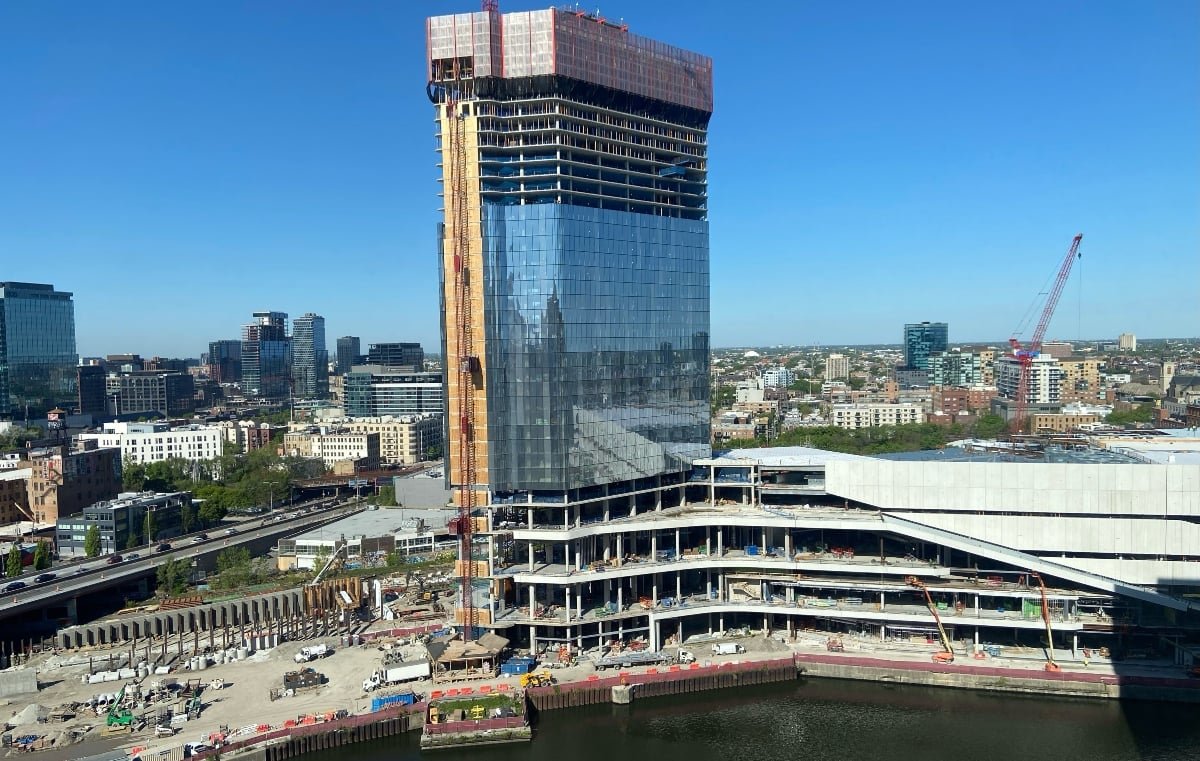
Bally’s Chicago has made good on its $4 million annual pledge to the city despite escalating tensions between the casino developer and local government.
After threatening to withhold the yearly contribution over claims the city isn’t upholding its end of the Host Community Agreement (HCA), Bally’s paid the $4 million on Wednesday (Sept. 9). Under the HCA, Bally’s Chicago is required to pay the city an annual direct impact fee of $2 million and another $2 million that serves as an indirect impact fee.
The HCA compels Bally’s Chicago to make the community impact payments each year on Sept. 9. That’s the date that Bally’s Chicago opened its temporary casino inside the Medinah Temple in 2023.
Along with the annual community commitments, Bally’s paid Chicago a one-time $40 million upon the execution of the HCA on June 9, 2022.
Video Gaming Dispute
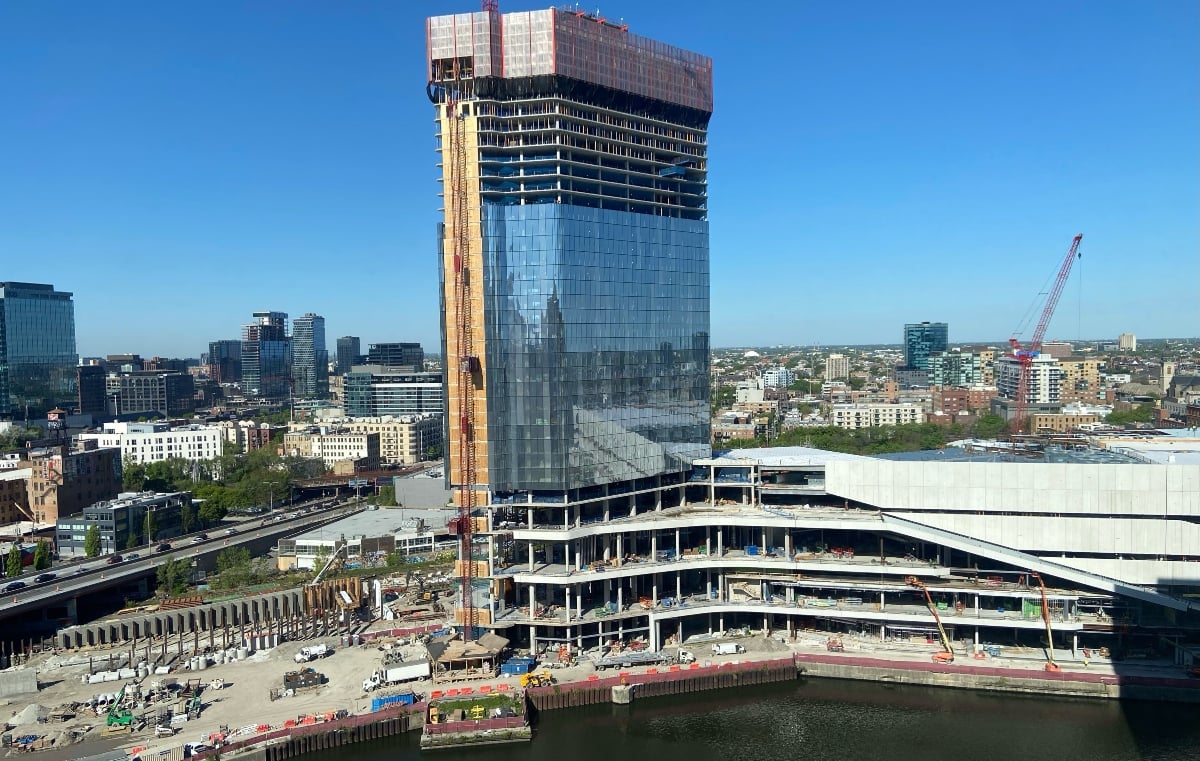
On Aug. 9, Bally’s Chicago notified its general contractor on the $1.7 billion casino that it was halting construction on all non-gaming components of the sprawling project. Bally’s stopped work on the 500-room hotel, 3,000-seat theater, 30,000 square feet of convention space, 10 restaurants and bars, and public greenspace connecting to the Chicago Riverwalk.
Bally’s officials said the decision was made after the Chicago City Council continued to move forward with allowing slot-like video gaming terminals (VGTs). The HCA, Bally’s claims, bars the city government from authorizing any new form of gambling, including VGTs in restaurants, bars, truck stops, and social organizations.
The City Council signed off on VGTs in part of its 2026 budget on the forecast that the games will generate about $7 million a year in new tax revenue. Mayor Brandon Johnson has opposed VGTs, as did his predecessor, Lori Lightfoot, who struck the casino deal with Bally’s.
The HCA says if Chicago authorizes a new casino, increases the gaming privilege tax imposed on its gross gaming revenue, or authorizes a new form of gambling under the Illinois Gambling Act, the obligation of Bally’s to pay the annual direct and indirect impact fees “shall be subject to good-faith renegotiation.”
The Illinois Gambling Act, however, did not legalize VGTs but casino-style gambling. VGTs were authorized through the Video Gaming Act in 2009.
Bally’s Meeting
With the City Council demanding Bally’s restart resort-wide construction, and Bally’s claiming it wouldn’t have made the bid it did had it known VGTs would operate across the Windy City, the company plans to provide an update on the project on Monday (Sept. 14).
Bally’s Corp. Executive Chairman Soo Kim, along with other Bally’s executives, will “review progress and recent developments” during the conference scheduled for 12 pm ET.
Recent Comments