
 Amid Trump administration threats to historic preservation, the largest cultural resources management company in the United States abruptly shut down October 1st, quietly laying off more than 600 employees across more than 20 offices without a public announcement, according to reporting by Science.
Chronicle Heritage formerly operated as PaleoWest. In 2022, through private equity backing of The Riverside Company, the company consolidated with numerous smaller cultural resource management companies. It was generating an estimated $100 million annually.
Executives notified office principals the night before and informed staff during a surprise town hall meeting on October 1st, saying the company was liquidating rather than being sold.
Over 600 archaeologists, paleontologists, historic preservationists, and staff members worldwide have been recalled from field projects and left without severance, with most termination dates set for October 1 or 2, according to Science.
One employee, who asked to remain anonymous, told the journal “Our response was absolutely shock, anger, sadness, and fear.”
The sudden collapse left active projects in every US state — as well as the UK, India, and Saudi Arabia — in limbo, alongside large troves of client data and artifacts.
New York Impacts
While a comprehensive, project-by-project list has not been made public, New York State is actively impacted by the closure.
The expanded company had operated an Eastern US Division that managed high-volume regulatory compliance — such as Section 106 and State Environmental Quality Review Act (SEQRA) reviews — for infrastructure, energy, and development projects throughout New York and neighboring states.
Multiple New York cultural resource management and archaeology firms were brought into the fold during the company’s expansion. These include Panamerican Consultants, which became Chronicle Heritage’s office on Clinton Street in Buffalo. The company also had an office at 5030 Broadway in New York City.
The Buffalo office has been working with the Seneca-Iroquois National Museum to repatriate thousands of indigenous artifacts recovered during regional surveys.
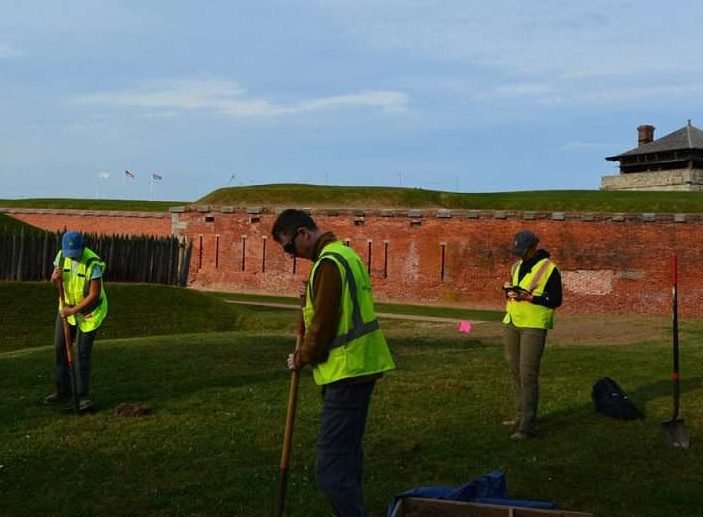
Another project recently concluded was for a contract from US Army Corps of Engineers to conduct a Phase I archaeological survey as part of a shoreline protection project at Old Fort Niagara National Historic Landmark.
John Milner Associates was also acquired. That prominent firm historically handled cultural and environmental compliance projects throughout New York, especially in New York City.
Active Phase I, II, and III field surveys in New York have been halted with project deliverables, client data, and excavated artifacts still held in the company’s regional repositories.
State agencies, private developers, and utility companies with active Chronicle Heritage contracts are currently being forced to scramble to re-hire alternative, competing cultural resources management firms to salvage their data and legally resume fieldwork.
“President Donald Trump’s administration has proposed changes to preservation laws that could vastly reduce the number of federally funded or federally permitted projects requiring archaeological reviews,” Science reported.
“And a bipartisan group of senators has unveiled legislation, designed to streamline the issuing of federal development permits, that could also lead to fewer archaeological surveys. A broad coalition that includes archaeology organizations, historic preservation groups, and tribal nations has formed to oppose the changes.”
New York Almanack is reporting on Donald Trump’s regime impacts in New York State, but we can’t do it without your help. Please support this work.
Read More About Archaeology in New York
Illustration: Chronicle Heritage contract archaeologists conducting a Phase I shovel test survey at Old Fort Niagara.
Recent Comments