
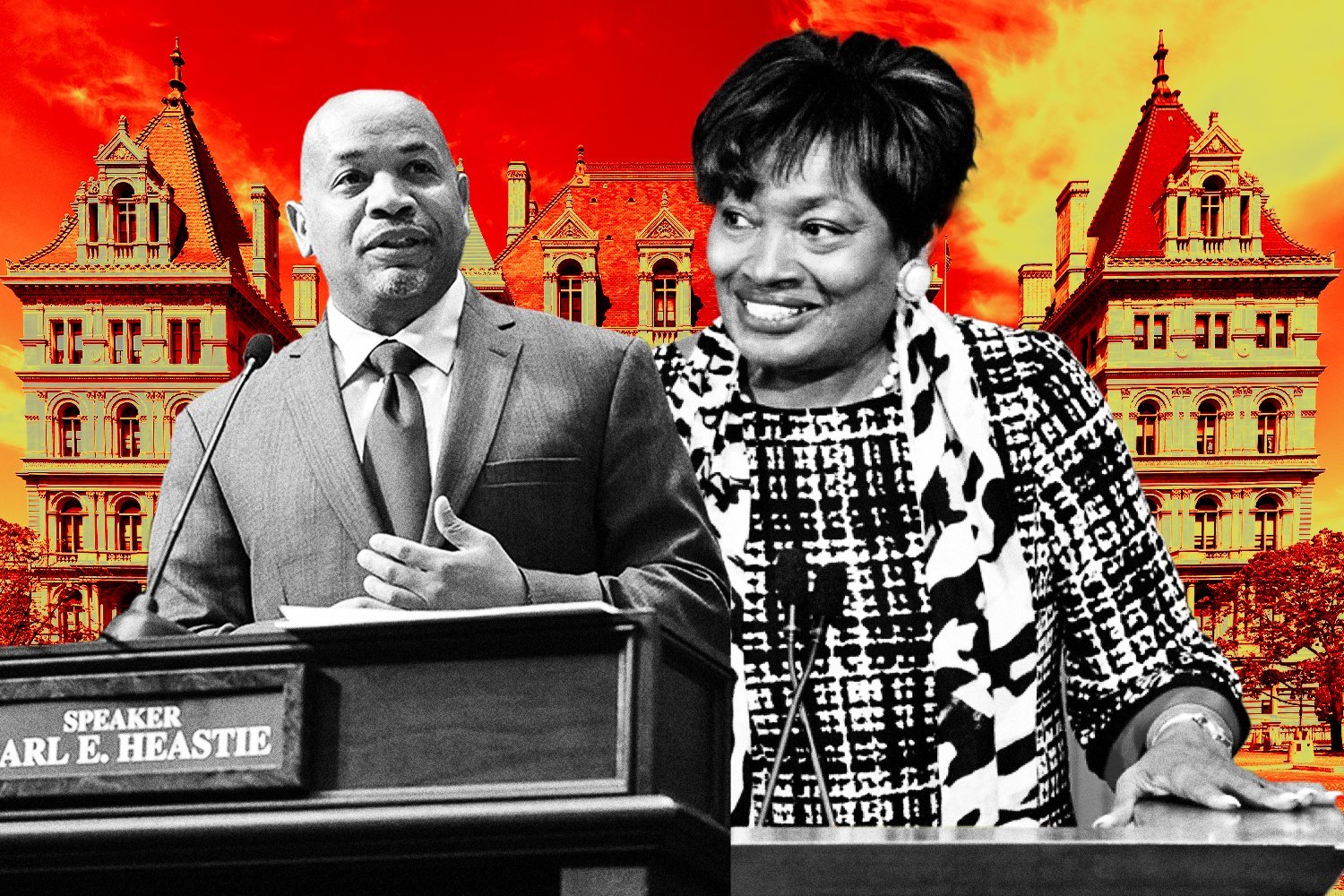
Albany is effectively done for the year.
The state Senate adjourned Friday morning after an overnight marathon of debate and voting. The Assembly is expected to wrap up later today. With senators headed home, any bill that failed to clear the chamber is dead until next year.
This year’s protracted budget negotiations left lawmakers with little time to negotiate legislation, triggering a frantic end-of-session push to move hundreds of bills through both chambers.
Lawmakers jockeyed over several bills with real estate implications, but few crossed the finish line. Those that did include a bill restricting private listings unless sellers or rental landlords consent and a one-year moratorium on new data centers halting permits to build the facilities, which have become one of commercial real estate’s hottest asset classes. The bills are now headed to Gov. Kathy Hochul for a final decision.
Many bills never made it to the floor for a vote. But the measure the industry was most closely watching died on the vine: legislation that would have given communities across the state a new pathway to declare rent emergencies and adopt rent-stabilization. Here’s where bills that gained the most traction this session landed.
Passed
Private listings crackdown
The Legislature approved a bill that curtails private listings unless a seller or rental landlord signs a disclosure acknowledging that limiting public exposure could reduce buyer interest and offers. Assembly member Michaelle Solages and state Sen. Nathalia Fernandez’s bill includes some key concessions to brokers following lobbying from the Real Estate Board of New York, state disclosures show (the organization said it is pleased with where the bill landed). The legislation requires agents to place listings on a multiple listing service or a public-facing website in a “timely” manner unless a seller opts out — initially the bill required listings be posted within one calendar day of a listings agreement. The bill’s biggest win for brokers may be its liability protections. Real estate professionals who act in “good faith” and do not knowingly make false or misleading statements would be shielded from legal exposure under the measure. At the same time, penalties increased for those who violate the law, rising from $2,000 to $5,000. The bill does not regulate how listings are marketed once they hit a public website, leaving the door open for the brokerage-to-brokerage listing networks that have recently proliferated. Compass and Redfin launched the first such partnership in February. Zillow has since struck similar deals with more than 60 brokerages and franchisors.
AI data center moratorium
Data centers hit a wall in Albany. Lawmakers on Thursday approved a sweeping bill from Sen. Kristen Gonzalez and Assembly member Didi Barrett that includes a one-year moratorium on new large facilities. If the measure becomes law it would make New York the first in the U.S. to impose a statewide pause on data center development amid growing concerns about the industry’s energy and water demands. The moratorium is a scaled-back version of the three-year freeze initially sought by lawmakers and environmental advocates to give regulators time to develop guardrails for the fast-growing sector. Despite pushback from building and trade unions — especially from the state Building and Construction Trades Council — the compromise managed to clear the finish line as part of a broader data center package. Whether it actually becomes law now rests with Hochul, whose office says she’s reviewing the bill.
Higher hurdles for broker licenses
Becoming a licensed broker in New York may soon take longer. The Senate and Assembly approved a bill sponsored by Sen. James Skoufis and Assembly member Ed Braunstein that would double the experience required to qualify for a broker’s license from the Department of State, from two years as a licensed salesperson to four consecutive years. Applicants who don’t meet that threshold could instead qualify by documenting at least three years of equivalent experience elsewhere in the real estate industry. The lawmakers worked on the bill with the New York State Association of Realtors, which supports it and argues that requiring more experience from brokers would benefit all parties in a transaction. Applicants would still need to complete 152 hours of approved coursework, including fair housing and anti-discrimination training.
Failed to advance
Upstate rent stabilization
A push by progressive Democrats to create a new way for communities outside of New York City to adopt rent stabilization stalled in Albany. Current state law allows local governments to enact rent stabilization if they declare a housing emergency. To do so they must conduct a costly vacancy study proving that the rental vacancy rate in their area is 5 percent or less. The Rent Emergency Stabilization for Tenants (REST) Act, sponsored by state Senator and housing committee chair Brian Kavanagh and Assembly member Sarahana Shrestha, would allow local officials to use publicly available data, including housing supply, rent burdens and eviction rates. Housing Justice for All rallied tenant advocates and worked to line up support from local elected officials whose constituents could benefit from the measure. Landlord groups, including the Homeowners for an Affordable New York coalition, mounted opposition and lobbied lawmakers behind the scenes. In the end, Kavanagh argued time was the bill’s biggest obstacle. He told The Real Deal that with budget negotiations wrapping up eight days before the end of session, there was limited time to win over skeptical lawmakers. “I do expect this will be an ongoing conversation but we were just not able to get consensus,” said Kavanagh. The measure will need a new Senate sponsor next year, as Kavanagh is set to retire at the end of the year. It is not yet clear who will take it up.
Unlocking housing from vacant malls and offices
In March, state Sen. James Skoufis and Assembly member Michaelle Solages unveiled the Redeveloping Empty and Vacant Infrastructure for Vibrant Economies (REVIVE) Act, a bill aimed at turning struggling malls, office complexes and little-used parking lots into housing. The proposal would streamline approvals for qualifying projects, with the goal of creating apartments from stranded commercial assets and breathing life into corridors battered by e-commerce. Backed by builders and housing advocates, the measure drew pushback from local officials and lawmakers who argued it would erode municipal control over development. The bill stalled this session, but it’s expected to resurface next year.
Going after banks to revive zombie homes
Since 2017, state lawmakers have pushed legislation requiring banks and other lienholders of abandoned multifamily properties to address hazardous conditions threatening surrounding communities. The latest version, sponsored by state Sen. Zellnor Myrie and Assembly member Charles Lavine, gained momentum this session, passing the Senate in April and reaching the Assembly floor. As of Friday afternoon, the bill has not cleared the chamber; the Assembly is set to adjourn later in the day. The New York Bankers Association has long opposed the measure, arguing it would force lenders to absorb steep renovation costs. As the bill advanced in Albany, JPMorgan Chase & Co. renewed the lobbying campaign, state records show. Current law enables local authorities to seize abandoned buildings, but lenders can halt those efforts by promising repairs without any requirement to complete them. The bill authorizes lawsuits to obtain title of the property if the conditions are not corrected within 90 days. In New York City, the sponsors estimate there are at least 2,000 zombie homes across the boroughs.
Read more

Where New York’s budget landed on real estate

State proposal aims to fast-track mall, office-to-resi projects

The Daily Dirt: Tenants say it’s time for REST
Recent Comments