
Sixth grade science covers a wide variety of topics and varies depending on the curriculum. We’ve rounded up the best 6th grade science fair projects to inspire kids, as well as classroom science demos and activities that will grab their attention.
To make it easier to find what you’re looking for, we’ve rated all the projects and activities by difficulty and the materials needed:
Difficulty:
- Easy: These are low- or no-prep experiments you can do pretty much anytime.
- Medium: These take a little more setup or a longer time to complete.
- Advanced: Experiments like these take a fairly big commitment of time and/or effort.
Materials:
- Basic: Use simple items you probably already have around the house.
- Medium: These require items that you might not already have but are easy to get your hands on.
- Advanced: These require specialized or more expensive supplies to complete.
Jump to:
Physical Science Fair Projects for 6th Grade
These 6th grade science projects help students explore force, motion, energy, matter, electricity, magnetism, and heat transfer. Each hands-on activity gives students a chance to test variables, collect observations, and connect physical science concepts to real-world engineering and design.
1. Explore new ways to filter water
- Difficulty: Medium
- Materials: Medium
- Materials Needed: Coffee filters, sand, gravel, activated charcoal, plastic bottles, water, cups or jars
Have students design and test simple water-filtration systems using different layers of materials. They can pour the same amount of dirty water through each filter and compare clarity, smell, and flow rate. This project helps students understand how filtration works in real-world water treatment and how particle size affects what gets trapped.
2. Stop soil erosion with plants
- Difficulty: Medium
- Materials: Medium
- Materials Needed: Soil, seeds or small plants, containers, water, tray
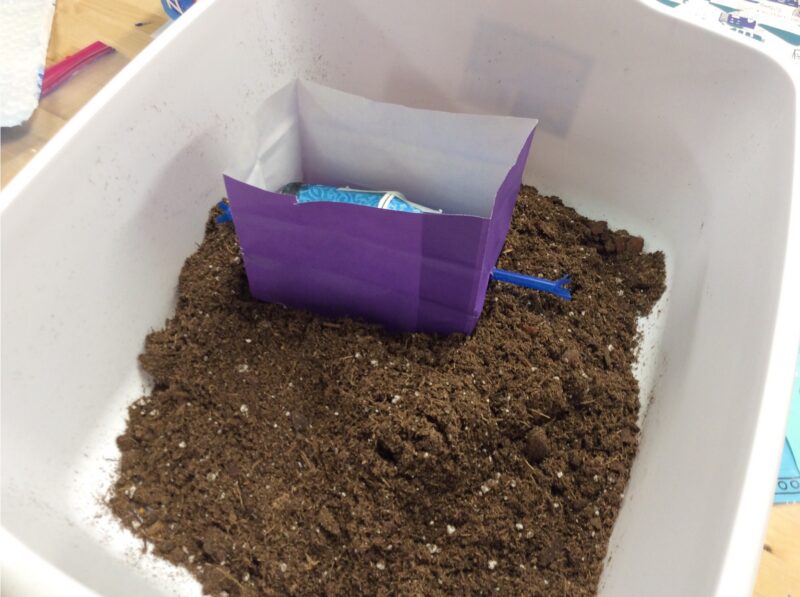
Fill two containers with soil, adding plants to one and leaving the other bare. Pour the same amount of water over each container and compare how much soil washes away. Students can see how plant roots help hold soil in place and reduce erosion caused by wind or water.
3. Make a paper skyscraper
- Difficulty: Easy
- Materials: Basic
- Materials Needed: Paper, tape, scissors, ruler
Challenge students to build the tallest freestanding skyscraper they can using only paper and tape. They can test different folds, columns, bases, and reinforcements to improve stability. This activity introduces structural engineering concepts such as balance, strength, height, and load distribution.
4. Create a straw rocket
- Difficulty: Easy
- Materials: Basic
- Materials Needed: Straws, paper, tape, scissors, measuring tape
Students create small paper rockets that launch using air blown through a straw. Have them test different fin shapes, rocket lengths, and nose cones to see which design flies farthest. This project introduces thrust, motion, air resistance, and basic aerodynamics.
5. Drop parachutes to test air resistance
- Difficulty: Easy
- Materials: Basic
- Materials Needed: Plastic bags, string, small weights, scissors, tape, timer
Students design parachutes using plastic bags and string, then attach small weights and drop them from the same height. Time each parachute to see which falls slowest. Have students compare canopy size, shape, and string length to explore air resistance and drag.
6. Build a powerful paper-plane launcher
- Difficulty: Medium
- Materials: Medium
- Materials Needed: Rubber bands, cardboard, paper, tape, scissors, ruler
Students engineer a launcher that propels paper airplanes across the room. They can adjust rubber-band tension, launch angle, and airplane design to improve distance or accuracy. This project helps students explore stored energy, force, projectile motion, and iterative design.
7. Identify the best insulating material
- Difficulty: Easy
- Materials: Basic
- Materials Needed: Foil, fabric, paper, small containers, hot water, thermometer, timer
Wrap containers of hot water with different insulating materials and measure the temperature at regular intervals. Students can compare which material keeps the water warm the longest. This project helps students investigate heat transfer, insulation, and real-world applications like food containers and winter clothing.
8. Test water pH
- Difficulty: Medium
- Materials: Medium
- Materials Needed: pH strips, water samples, cups, labels, recording sheet
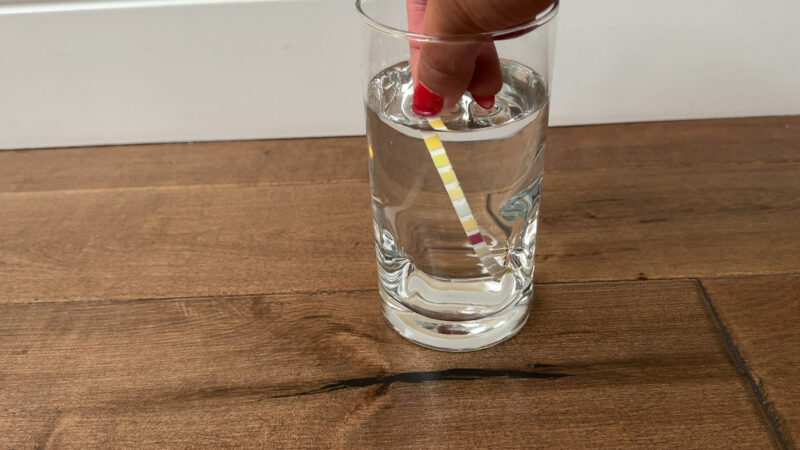
Collect water samples from different sources, such as a sink, fountain, puddle, rainwater, or nearby stream if available. Students test each sample with pH strips and record the results. This investigation introduces the pH scale and helps students consider how environmental factors can affect water quality.
9. Engineer the strongest craft stick bridge
- Difficulty: Medium
- Materials: Basic
- Materials Needed: Craft sticks, glue or tape, weights, cups or blocks for supports
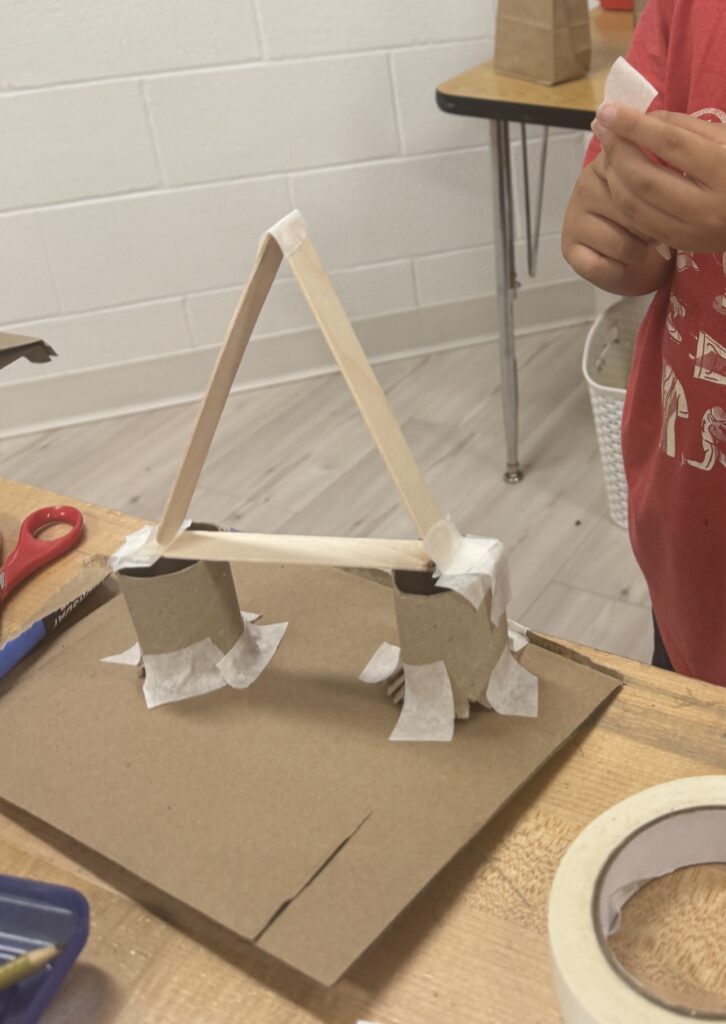
Students design and build bridges using craft sticks, then test how much weight each bridge can hold. Encourage them to compare truss designs, support placement, and bridge length. This activity introduces tension, compression, load distribution, and real-world bridge engineering.
10. Assemble the best simple motor
- Difficulty: Advanced
- Materials: Advanced
- Materials Needed: Copper wire, neodymium magnets, 9V battery, tape, safety goggles, adult supervision
Students build a basic electric motor and test how wire shape, balance, and magnet placement affect motion. This hands-on activity shows how electricity and magnetism interact to produce movement. Because batteries and wire can heat up, this project should be closely supervised.
11. Levitate a Ping-Pong ball
- Difficulty: Medium
- Materials: Basic
- Materials Needed: Plastic bottle, bendy straw, Ping-Pong ball, tape
Students use airflow from a straw or bottle setup to suspend a Ping-Pong ball in midair. They can adjust the angle and strength of the airflow to keep the ball floating. This experiment demonstrates Bernoulli’s principle and helps students understand how pressure differences can create lift.
12. Use a fidget spinner to understand inertia
- Difficulty: Easy
- Materials: Medium
- Materials Needed: Fidget spinner, timer, small stickers or markers, optional small weights
Students spin a fidget spinner and time how long it rotates. They can test how adding small markers or weights changes the spin time and balance. Use the activity to introduce rotational inertia, angular momentum, and how mass distribution affects motion.
13. Experiment with electromagnets
- Difficulty: Advanced
- Materials: Advanced
- Materials Needed: 9V battery, insulated copper wire, iron nail, safety pins or paper clips, tape, adult supervision
Wrap copper wire around an iron nail and connect the wire ends to a battery to create an electromagnet. Students can test how many paper clips or safety pins the magnet picks up, then change the number of wire coils and compare results. This project shows how electric current creates a magnetic field.
14. Send water traveling down a string
- Difficulty: Easy
- Materials: Basic
- Materials Needed: Cotton string, water, cups, food coloring if desired
Tie or hold a cotton string between two cups, keeping the string taut. Slowly pour water so it travels along the string into the second cup. Students can observe cohesion, adhesion, and capillary action as water clings to and moves along the fibers.
Life Science Fair Projects for 6th grade
These 6th grade science projects focus on living things, ecosystems, cells, genetics, decomposition, and body systems. Students can investigate how organisms grow, interact, adapt, and depend on both living and nonliving parts of their environments.
15. Find the fastest way to ripen fruit
- Difficulty: Medium
- Materials: Basic
- Materials Needed: Bananas, peaches or other fruit, paper bags, apples, labels, observation sheet
Place similar pieces of unripe fruit in different conditions, such as on the counter, in a paper bag, and in a paper bag with an apple. Observe changes in color, texture, and smell over several days. Students can investigate how ethylene gas affects ripening and compare which setup works fastest.
16. Grow a better garden using hydroponics
- Difficulty: Medium
- Materials: Advanced
- Materials Needed: Small plants or seeds, water, nutrient solution, containers, growing medium, light source
Students grow plants in a hydroponic setup and compare them with plants grown in soil. They can track height, leaf growth, and root development over time. This project helps students understand how plants absorb nutrients and how controlled systems can support plant growth without soil.
17. Create compost in a cup
- Difficulty: Easy
- Materials: Basic
- Materials Needed: Soil, vegetable scraps, clear cups, water, leaves or shredded paper, labels
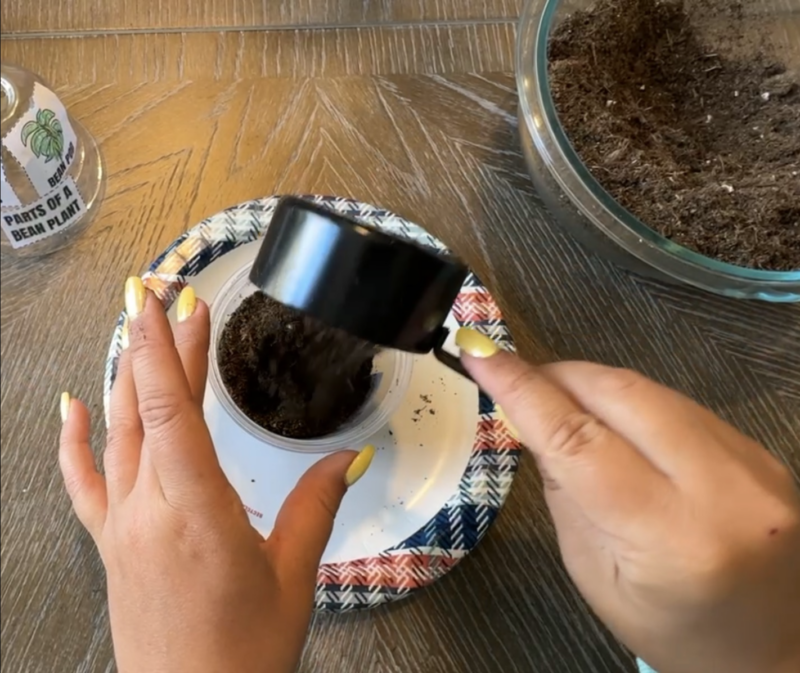
Layer soil, vegetable scraps, leaves, and a little water in clear cups to create mini compost systems. Students can observe changes over time and record how the materials break down. This activity introduces decomposition, microorganisms, nutrient cycling, and the value of organic waste.
18. Learn the best way to repel ants
- Difficulty: Medium
- Materials: Basic
- Materials Needed: Sugar, cinnamon, vinegar, other natural barriers, paper plates, outdoor area with ants, observation sheet
Place small amounts of sugar near an ant trail and test different natural barriers around the food source. Students can observe which substances ants avoid most often. This investigation explores animal behavior, chemical senses, and environmentally friendly pest-control methods.
19. Simulate a tsunami and find ways to protect people
- Difficulty: Medium
- Materials: Basic
- Materials Needed: Tray or shallow bin, sand, water, small structures, craft materials
Create a coastal model using sand, water, and small buildings. Generate waves and observe how the water affects the shoreline and structures. Students can then design barriers or elevated buildings to reduce damage, connecting Earth science with engineering solutions.
20. Hypothesize about climate change
- Difficulty: Easy
- Materials: Medium
- Materials Needed: Climate charts, thermometers, ecosystem images, chart paper, markers
Give students data or visuals showing changes in temperature, rainfall, or habitat conditions. Ask them to form hypotheses about how these changes might affect plants, animals, water availability, or food webs. Students can support their ideas with evidence and discuss how climate shifts influence ecosystems.
21. Design a biodome
- Difficulty: Medium
- Materials: Medium
- Materials Needed: Clear containers, soil, small plants, gravel, water, natural materials, figurines if desired
Students build enclosed ecosystems designed to support plant life over time. They can observe condensation, plant growth, and changes inside the biodome. This project helps students explore habitats, energy flow, decomposition, and interactions between living and nonliving components.
22. Grow a crystal egg geode
- Difficulty: Medium
- Materials: Medium
- Materials Needed: Eggshell halves, alum or crystal salts, hot water, cups, string, food coloring if desired, adult supervision
Students grow crystals inside hollowed eggshells to create geode-like formations. Dissolve crystal salts in hot water, pour the solution into eggshells, and let them sit undisturbed. This project introduces crystallization, saturated solutions, and how minerals can form naturally over time.
- Difficulty: Medium
- Materials: Basic
- Materials Needed: Strawberries, dish soap, salt, water, rubbing alcohol, plastic bags, coffee filter or mesh, clear cup
Mash strawberries in a plastic bag, then mix them with a simple extraction solution made from dish soap, salt, and water. Filter the mixture and add cold rubbing alcohol to reveal stringy DNA. Students can see genetic material with their own eyes and connect the lab to cell structure and heredity.
24. Build a heart pump model
- Difficulty: Medium
- Materials: Medium
- Materials Needed: Balloons, syringes, tubing, tape, water, food coloring, container
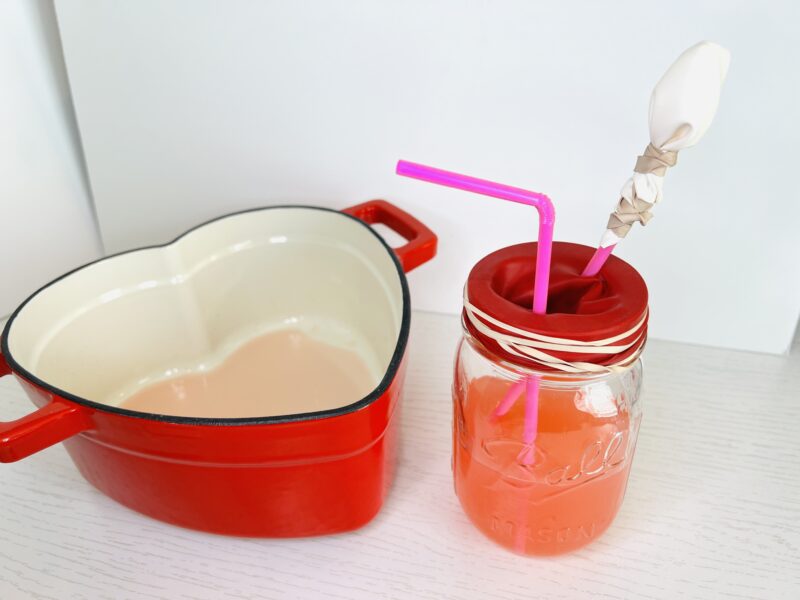
Students build a simple model that pumps colored water through tubing. By pressing and releasing the syringe or balloon chamber, they can observe how pressure moves fluid through the system. Use the model to discuss blood flow, valves, and how the heart works as a pump.
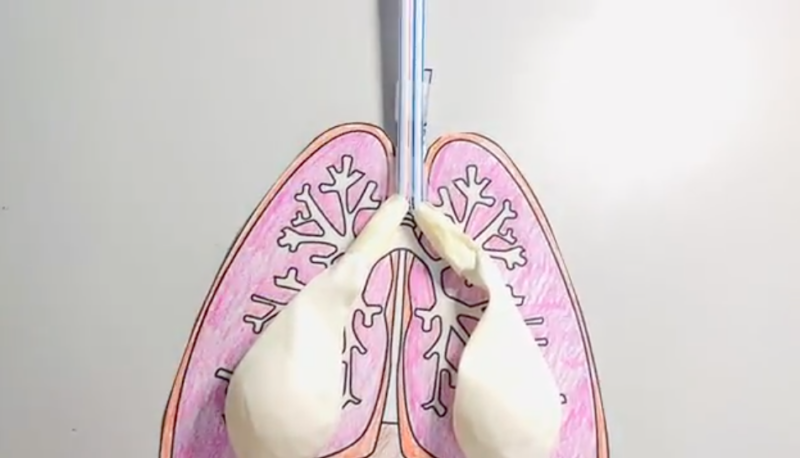
25. Construct a pair of model lungs
- Difficulty: Medium
- Materials: Basic
- Materials Needed: Plastic bottle, balloons, straws, tape, scissors, modeling clay, adult supervision
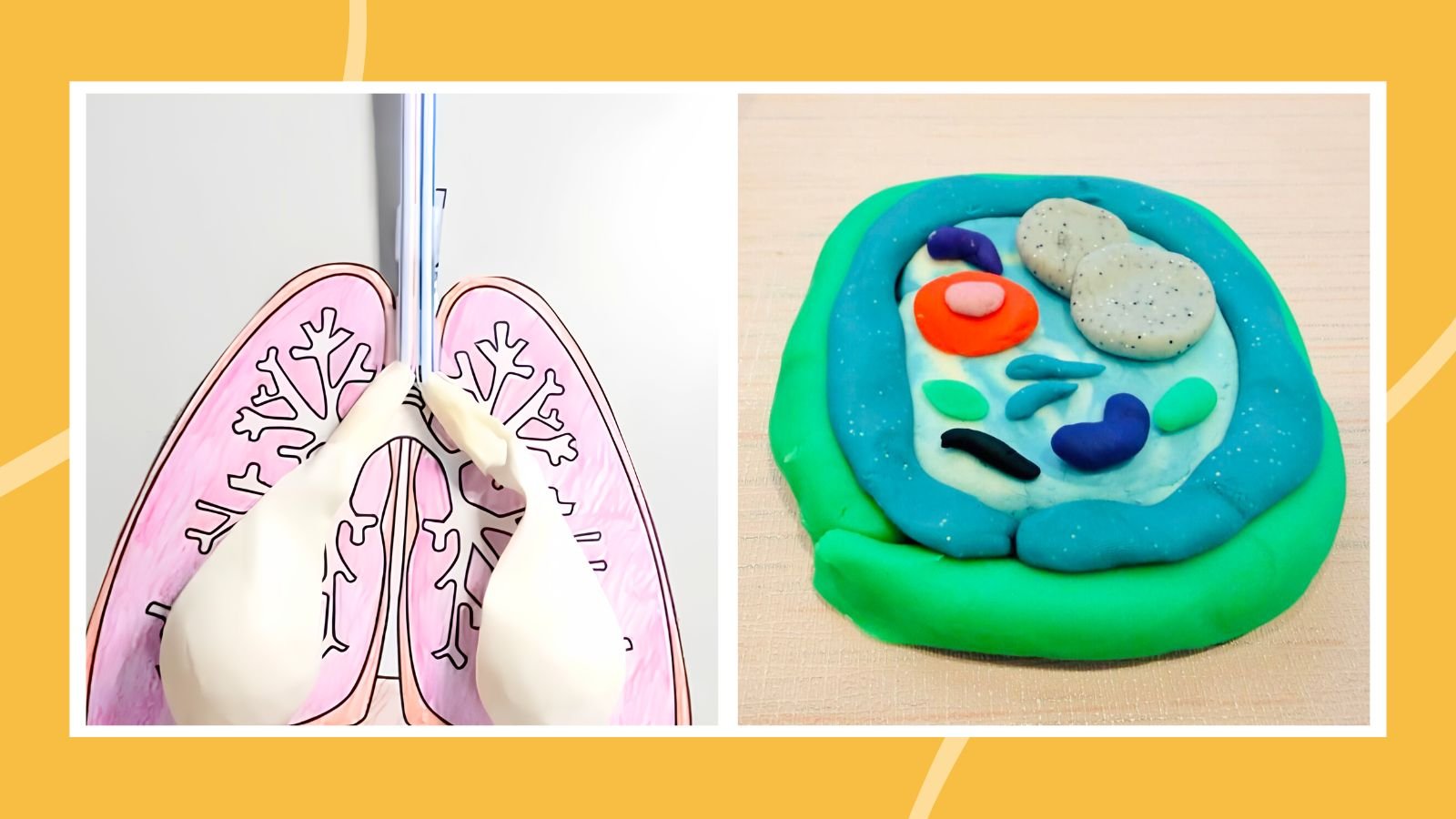
Use a plastic bottle, balloons, and straws to model the respiratory system. Pulling down on the balloon at the bottom of the bottle causes the balloons inside to inflate. Students can see how pressure changes help air move in and out of the lungs.
26. Dissect an owl pellet
- Difficulty: Easy
- Materials: Medium
- Materials Needed: Owl pellets, tweezers, gloves, paper plates, bone identification chart
Students carefully separate owl pellets to identify bones and other prey remains. (You can get owl pellets online.) They can use a chart to determine what animals the owl may have eaten. This investigation helps students understand food webs, predator-prey relationships, and evidence-based analysis.
27. Wear a gene bracelet
- Difficulty: Easy
- Materials: Basic
- Materials Needed: Pony beads, string, trait chart
Assign bead colors to different genetic traits, then have students create bracelets representing inherited combinations. Students can compare patterns and discuss how traits vary from person to person. This activity introduces inheritance and genetic variation in a visual way.
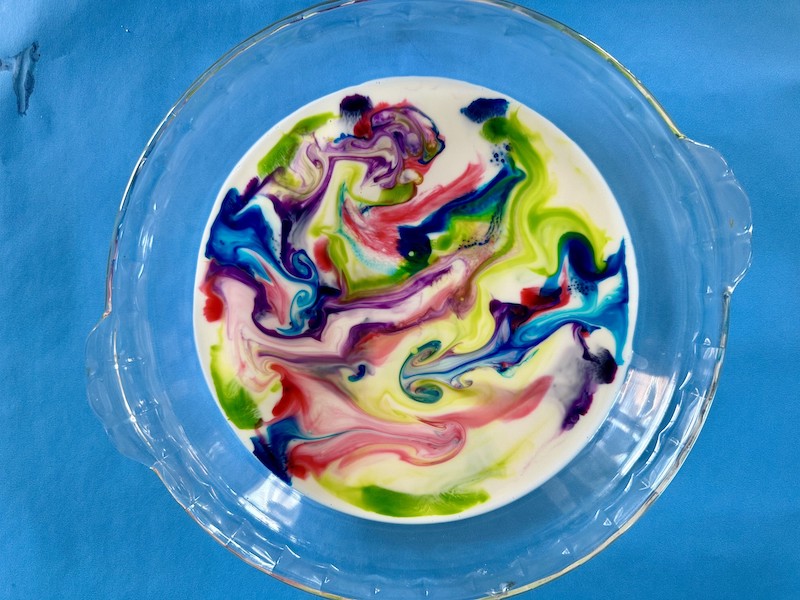
28. Whip up some magic milk
- Difficulty: Easy
- Materials: Basic
- Materials Needed: Milk, food coloring, dish soap, shallow dish, cotton swabs
Pour milk into a shallow dish and add drops of food coloring. Touch the surface with a cotton swab dipped in dish soap and watch the colors move. Students can observe surface tension and molecular interactions as the soap reacts with fat molecules in the milk.
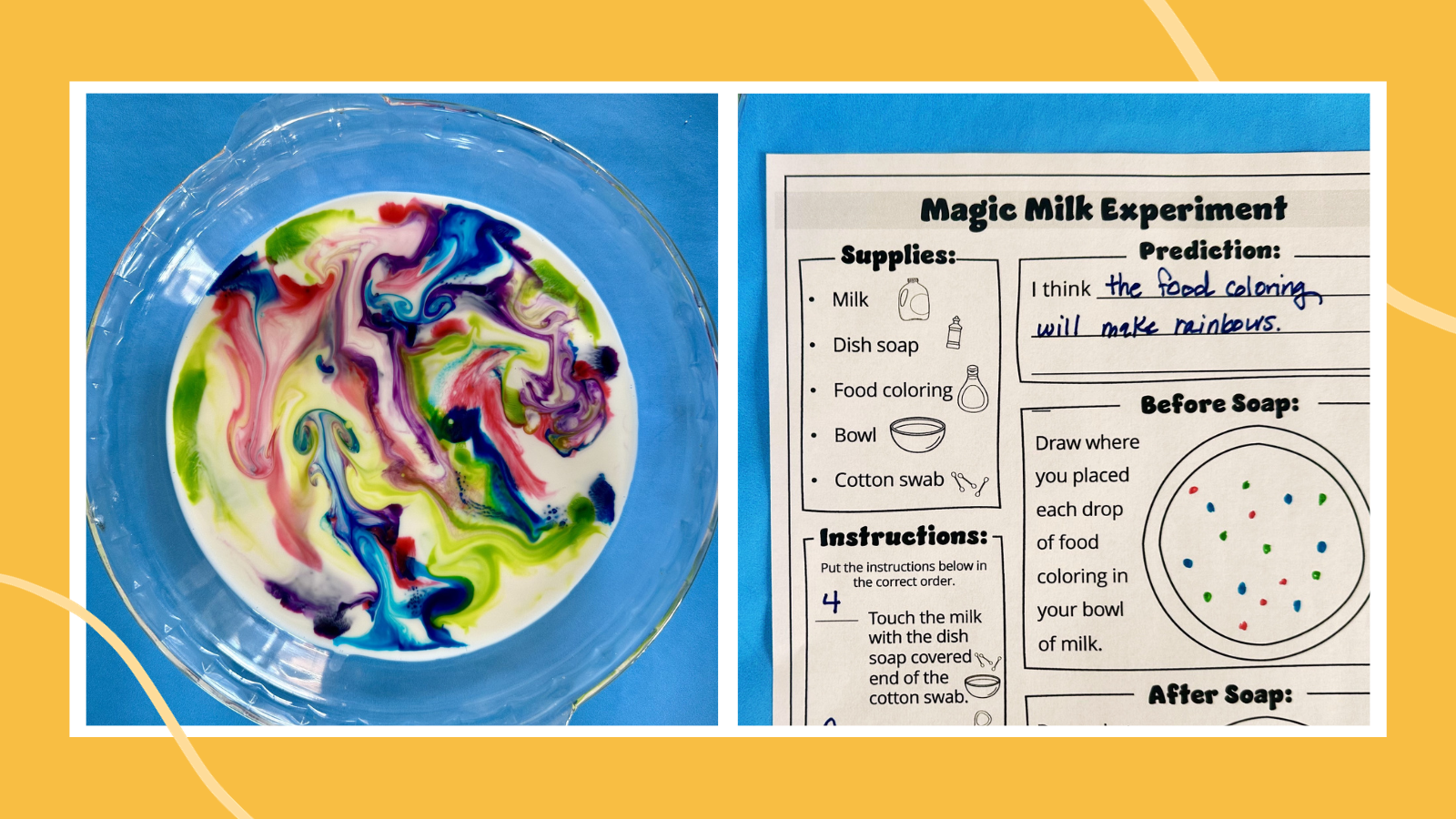
Magic Milk Experiment (Worksheet + Demo Video)
Watch our video to learn how to do the magic milk experiment. Then have students fill out the observation sheet.
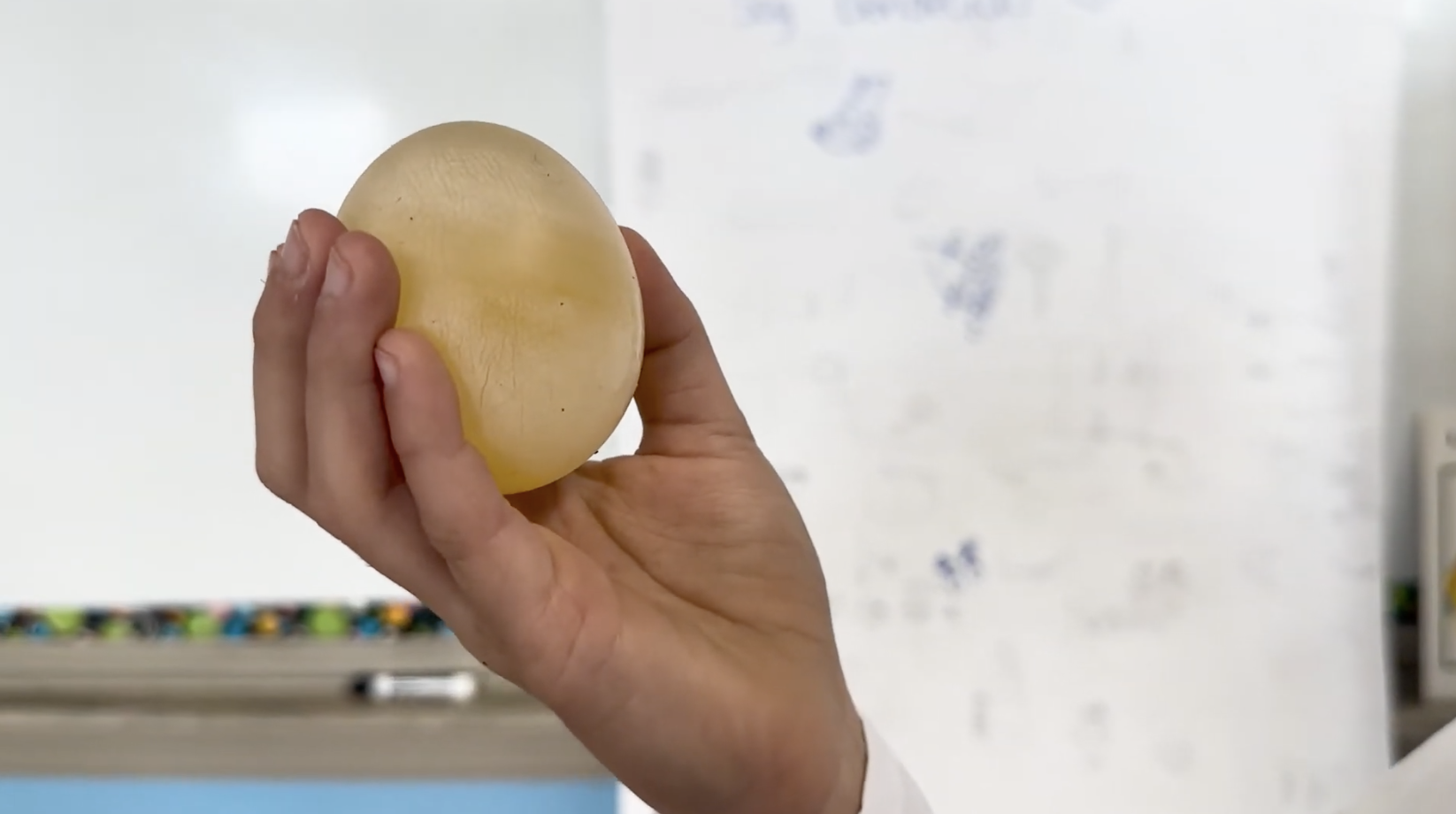
29. Experiment with eggs and vinegar
- Difficulty: Easy
- Materials: Basic
- Materials Needed: Eggs, vinegar, clear cups, labels, spoon
Place raw eggs in cups of vinegar and observe them over several days. The vinegar reacts with the calcium carbonate shell until the shell dissolves, leaving a soft membrane behind. Students can explore chemical reactions, acids, and how materials change over time.
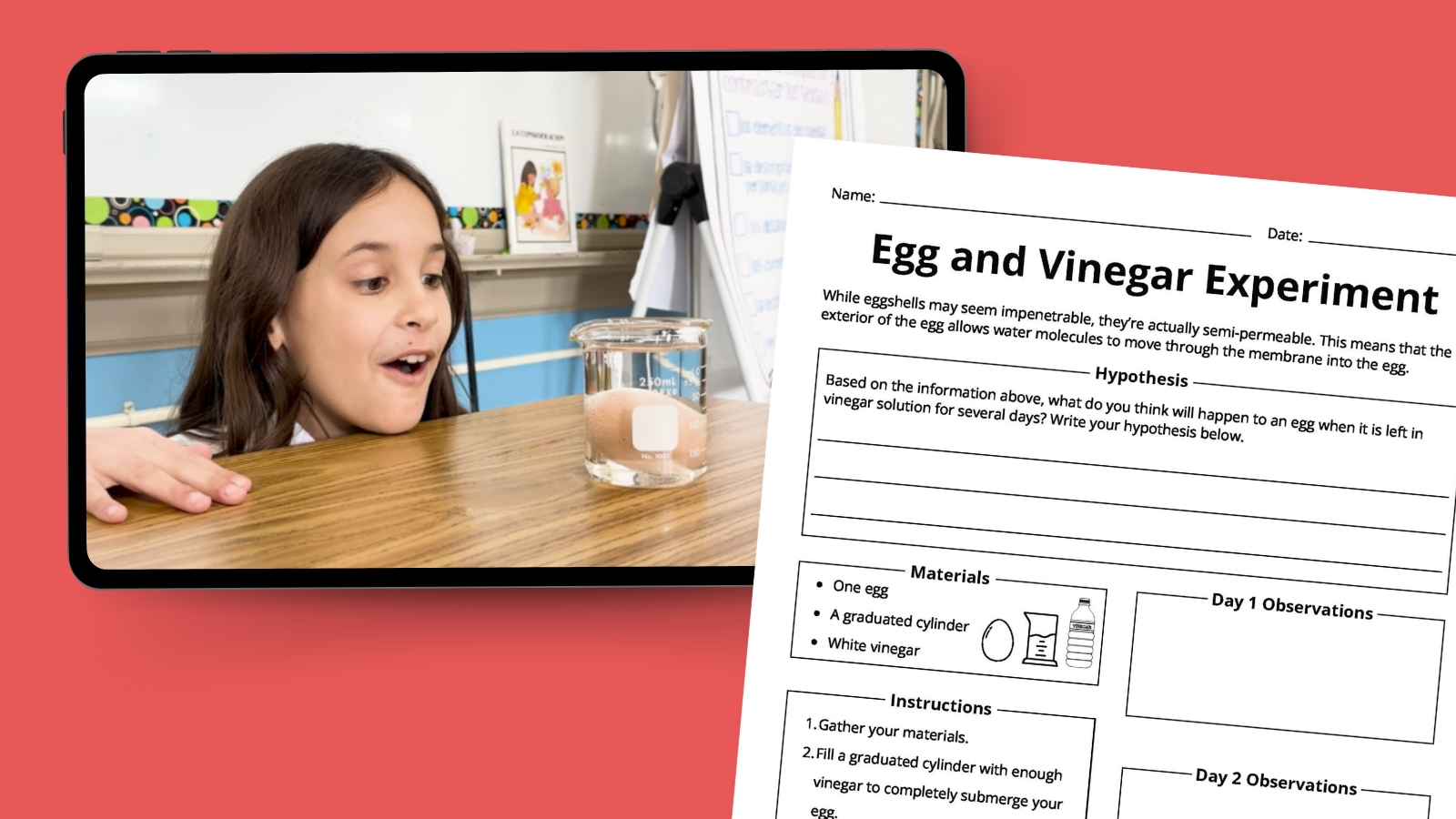
Egg and Vinegar Experiment (Demo Video + Worksheet)
Watch the video to learn how to conduct the egg and vinegar experiment with students. Then have them fill out the experiment observation sheet.
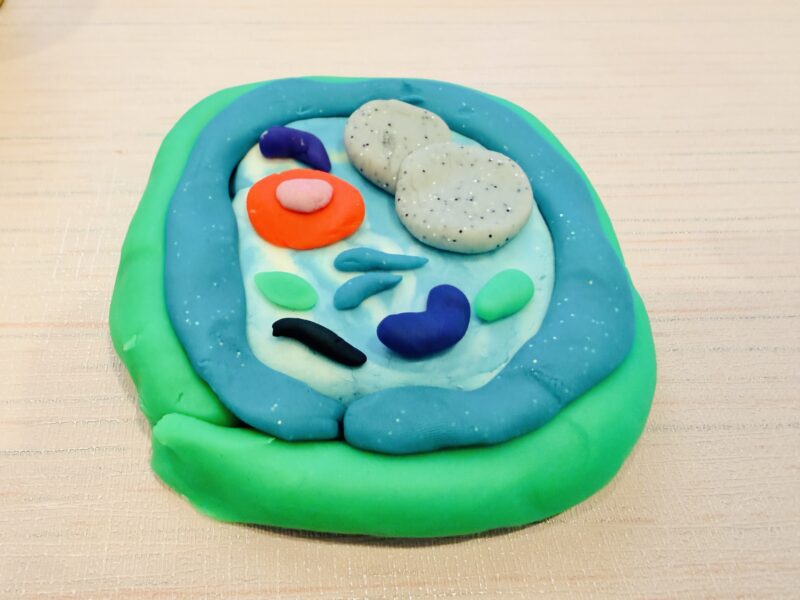
30. Create a colorful cell model
- Difficulty: Medium
- Materials: Basic
- Materials Needed: Clay, beads, markers, candy, paper plate or cardboard base
Students build 3D models of plant or animal cells using craft materials or candy. Each material can represent a different organelle, such as the nucleus, mitochondria, or cell membrane. Have students label the parts and explain each organelle’s function.
Earth and Space Science Fair Projects for 6th Grade
These 6th grade science projects help students explore Earth’s systems, environmental changes, natural hazards, renewable energy, and the relationship between Earth and space. Students use models and investigations to better understand how natural processes shape the world around them.
31. Clean up an oil spill
- Difficulty: Medium
- Materials: Basic
- Materials Needed: Vegetable oil, water, plastic animals, feathers if desired, absorbent materials, shallow tray
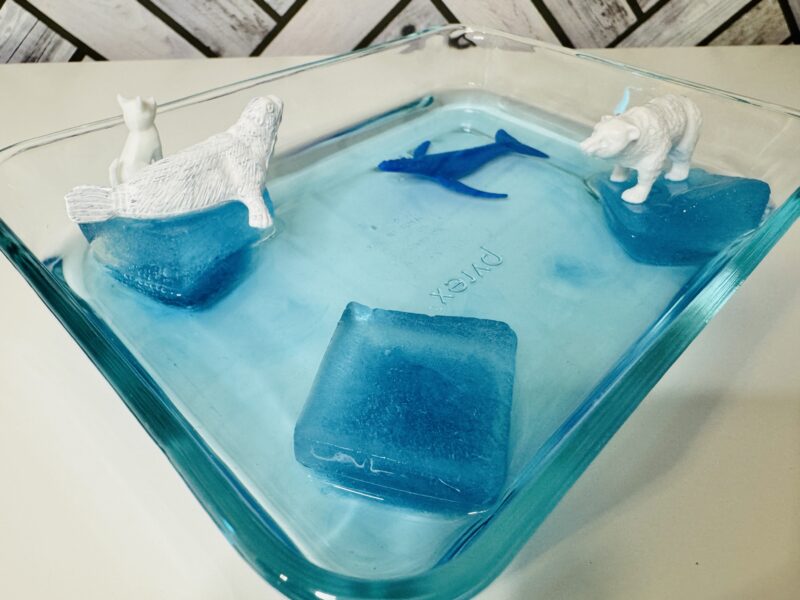
Create a model oil spill by adding vegetable oil to water in a tray. Students can test different cleanup materials, such as cotton balls, paper towels, spoons, or sponges, to see which removes oil most effectively. Discuss how oil spills affect wildlife and why cleanup is so difficult.
32. Make a solar oven
- Difficulty: Medium
- Materials: Medium
- Materials Needed: Cardboard box, aluminum foil, plastic wrap, black paper, tape, food item, sunlight, thermometer if desired
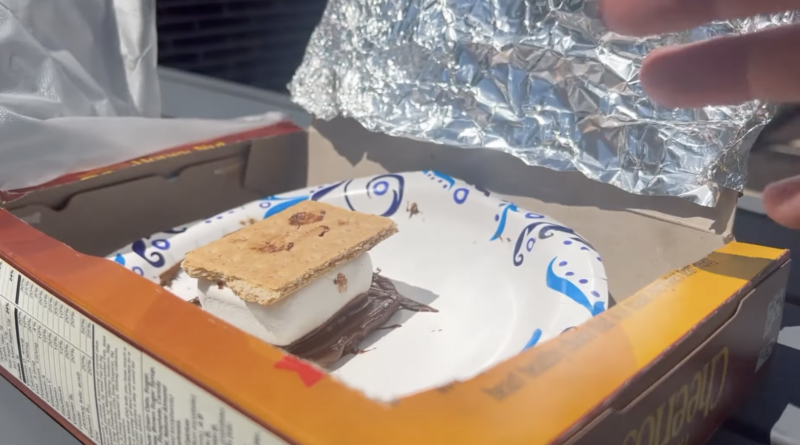
Students design and build a solar oven that uses sunlight to warm or cook a simple food item. They can experiment with reflective surfaces, insulation, and box angle to improve performance. This activity demonstrates energy transfer, reflection, heat absorption, and renewable energy.
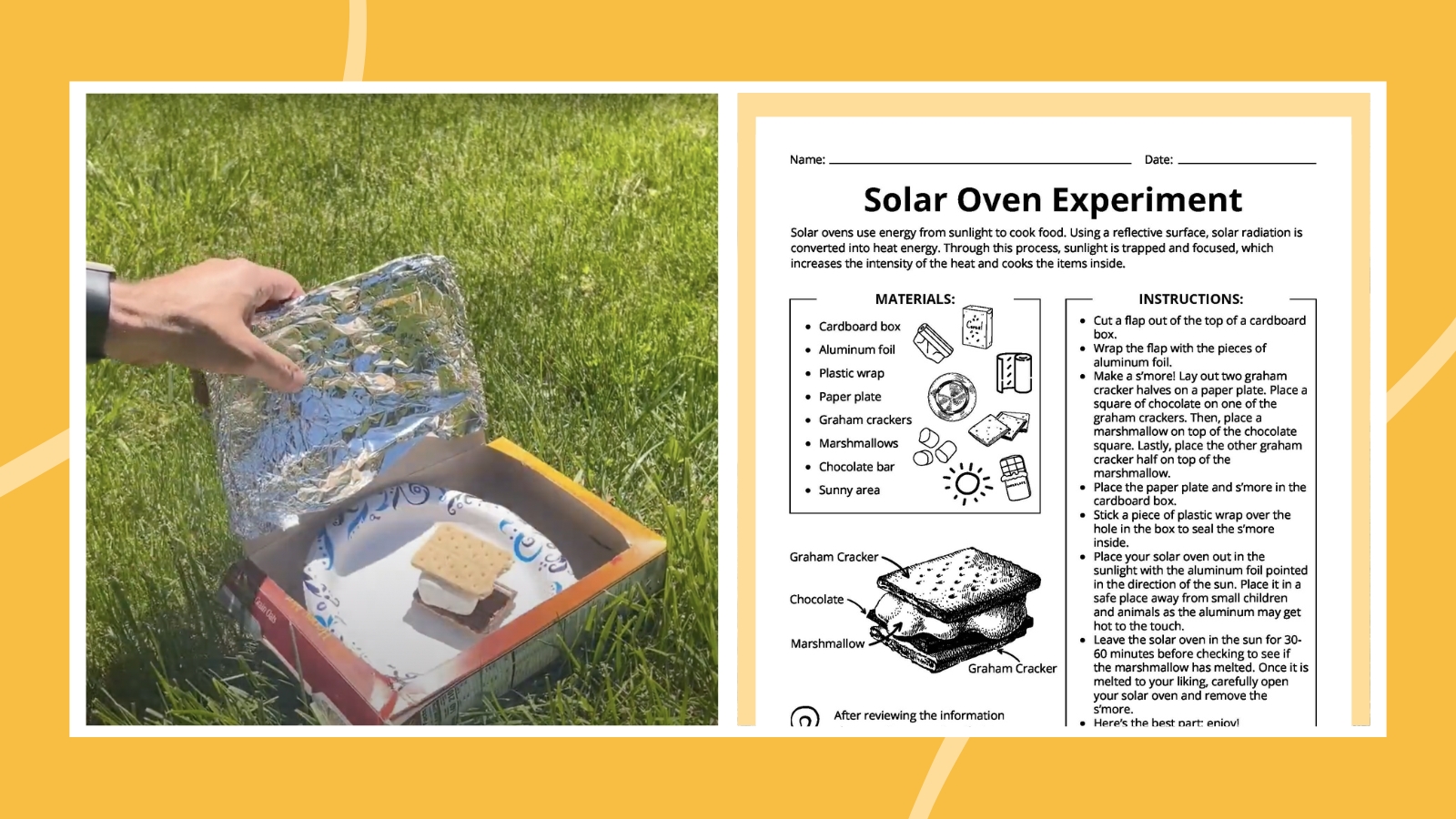
Solar Oven Experiment (Worksheet + Demo Video)
Watch the video to learn how to build a safe solar oven. Then grab your free printable experiment recording sheet.
33. Explore the effects of various sugars on yeast
- Difficulty: Easy
- Materials: Basic
- Materials Needed: Yeast, different sugar types, warm water, cups or bottles, balloons, thermometer if desired
Mix yeast with warm water and different types of sugar, then observe gas production over time. Students can place balloons over bottles or watch for bubbles in cups. This experiment explores fermentation, cellular respiration, and how different sugars affect yeast activity.
34. Shake it up with earthquake science
- Difficulty: Easy
- Materials: Basic
- Materials Needed: Small structures, tray, sand, weights
Students place model structures on a shaking surface to simulate earthquake movement. After testing, they can redesign the structures to improve stability. This activity helps students investigate seismic forces and the engineering decisions used to reduce earthquake damage.
35. Create a new plant or animal
- Difficulty: Easy
- Materials: Basic
- Materials Needed: Paper, pencils, markers, habitat cards if desired
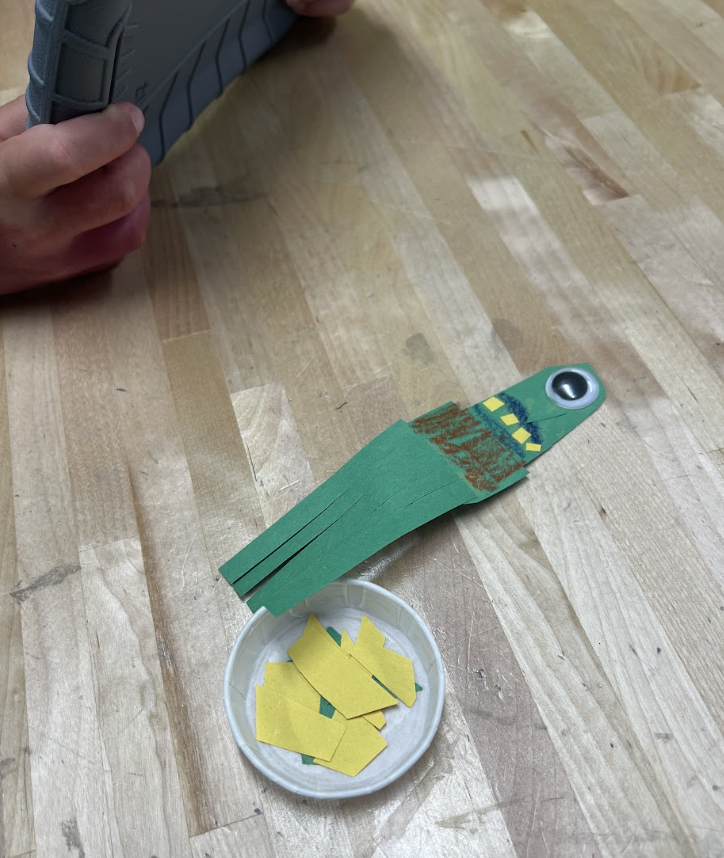
Students invent a fictional plant or animal designed for a specific habitat. They should include features that help the organism find food, survive weather, avoid predators, or reproduce. This activity reinforces adaptations and the relationship between structure and function.
36. Determine which type of juice has the most vitamin C
- Difficulty: Medium
- Materials: Medium
- Materials Needed: Juice samples, iodine solution, starch solution, droppers, cups, recording sheet, adult supervision
Students use a chemical indicator test to compare vitamin C levels in different juices. They can add iodine solution drop by drop and record how much is needed to produce a color change. This lab introduces data collection, chemical indicators, and nutrient analysis.
Engineering, Technology, and Applications of 6th Grade Science Fair Projects
These 6th grade science projects give students opportunities to design, build, test, and improve solutions. From bridges and marble runs to Rube Goldberg machines and bottle rockets, each challenge emphasizes problem-solving, creativity, and evidence-based redesign.
37. Design a LEGO bridge
- Difficulty: Easy
- Materials: Basic
- Materials Needed: LEGO bricks, weights, ruler
Students design and build bridges using LEGO bricks, then test how much weight each bridge can support. Encourage them to compare different shapes, spans, and supports. This project helps students explore stability, load distribution, and how structure affects strength.
38. Create a marble run
- Difficulty: Medium
- Materials: Basic
- Materials Needed: Paper towel rolls, paper plates, tape, scissors, marbles
Students construct a track that moves a marble from top to bottom. They can adjust slopes, curves, and barriers to keep the marble moving without falling off. This challenge explores gravity, potential and kinetic energy, friction, and design improvement.
39. Withstand the weight of a basketball
- Difficulty: Medium
- Materials: Basic
- Materials Needed: Cardboard, newspaper, tape, basketball
Challenge students to build a structure strong enough to support a basketball without collapsing. They can experiment with columns, triangles, rolled paper, and wide bases. This activity highlights compression, force distribution, and the importance of shape in structural design.
40. Design a Rube Goldberg machine
- Difficulty: Easy
- Materials: Basic
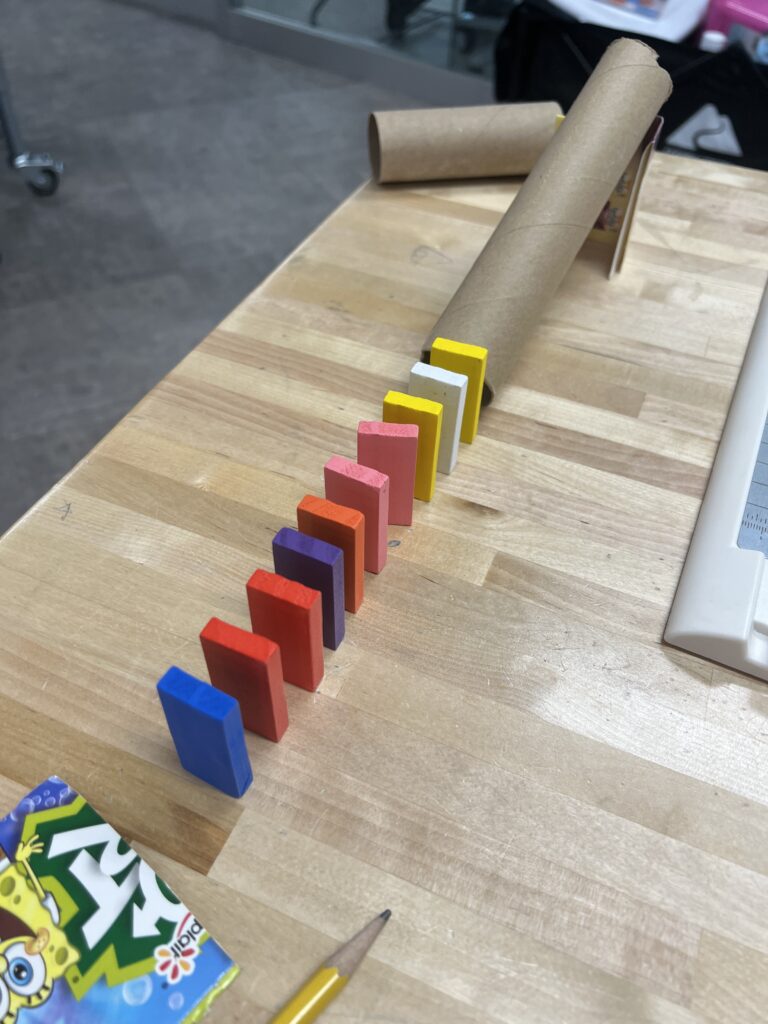
- Materials Needed: Blocks, dominoes, cups, string, ramps, balls, tape, other classroom materials
Students design a chain-reaction machine that completes a simple task, such as ringing a bell or knocking over a cup. Each step should trigger the next. This activity encourages sequential thinking, cause and effect, problem-solving, and iterative design.
41. Assemble motorized tiny dancers
- Difficulty: Medium
- Materials: Advanced
- Materials Needed: Copper wire, magnets, battery, small paper figures or lightweight decorations, adult supervision
Students create small motorized figures that spin or vibrate when connected to a simple circuit. They can adjust the wire shape or figure design to change how the dancer moves. This activity explores electrical circuits, magnetism, and the conversion of electrical energy into motion.
42. Amplify your smartphone with basic supplies
- Difficulty: Medium
- Materials: Basic
- Materials Needed: Paper cups, toilet paper tube, tape, scissors, smartphone
Students build a passive sound amplifier using a cardboard tube and paper cups. After placing the phone in the tube, they can compare the sound volume before and after amplification. This project explores sound waves, vibration, and how shape influences sound.
43. Do the Egg Drop Challenge
- Difficulty: Medium
- Materials: Basic
- Materials Needed: Eggs, cushioning materials, containers, tape, straws, paper, boxes
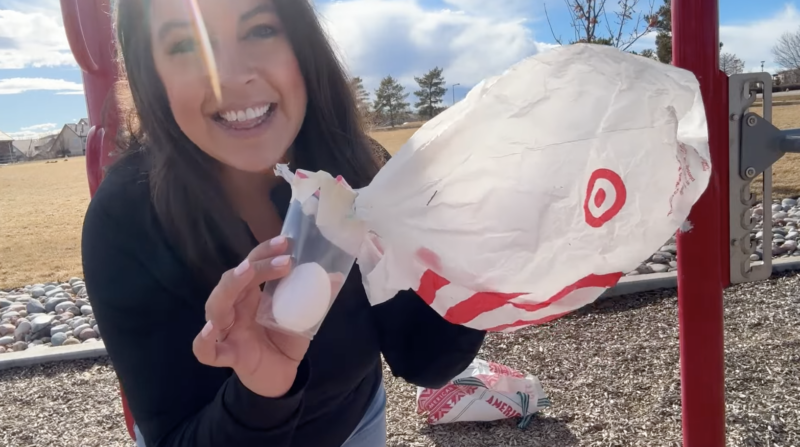
Students design protective devices that keep an egg from breaking when dropped from a set height. After testing, they can analyze which materials absorbed impact best. Encourage redesign to explore energy absorption, force, momentum, and safety engineering.
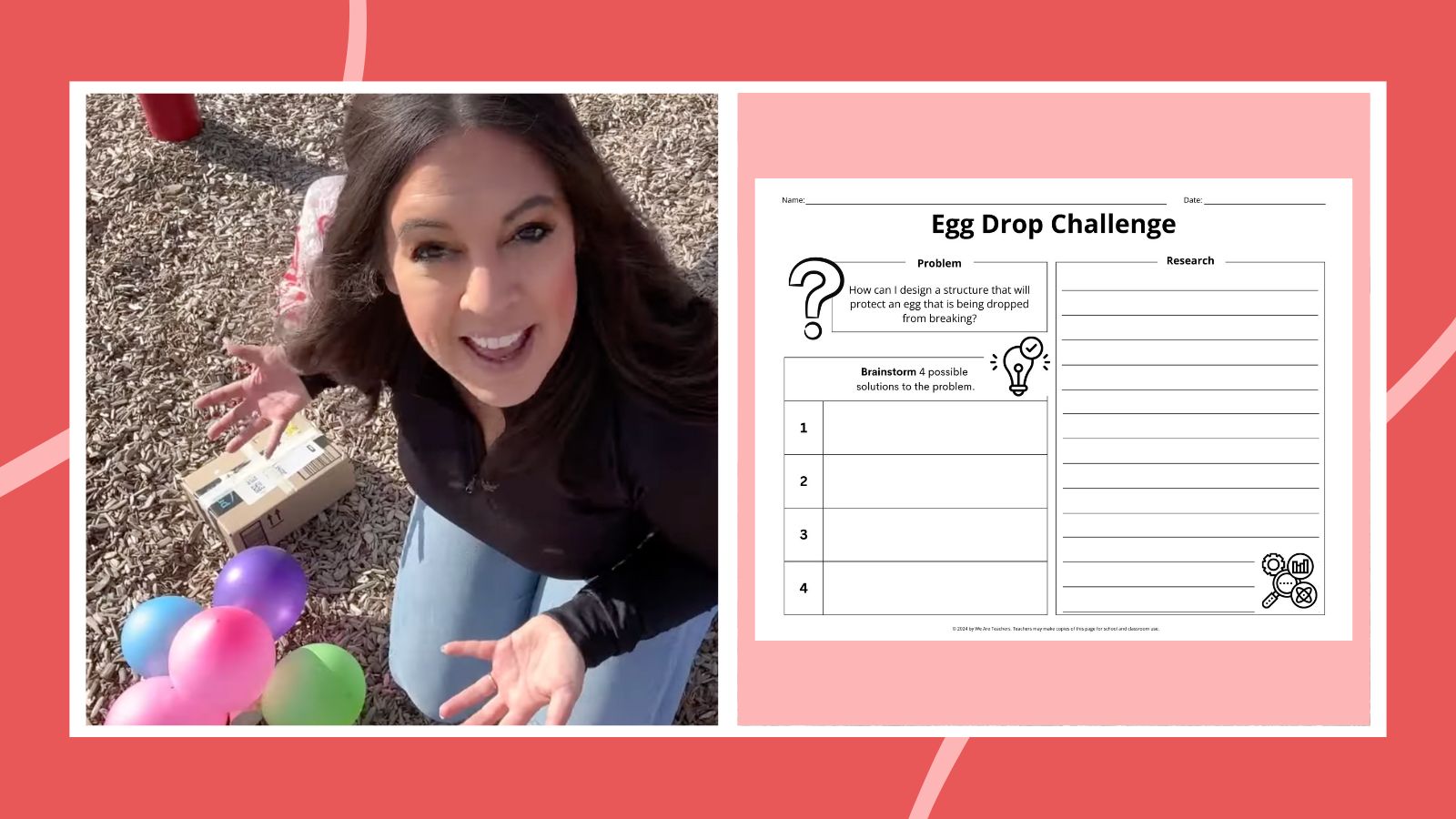
Egg Drop Challenge (Worksheet + Demo Video)
Watch the video to learn how to do the Egg Drop Challenge. Then have students fill out the worksheet.
44. Launch your own bottle rocket
- Difficulty: Advanced
- Materials: Advanced
- Materials Needed: Plastic bottle, vinegar, baking soda, cork, launcher setup, safety goggles, outdoor space, adult supervision
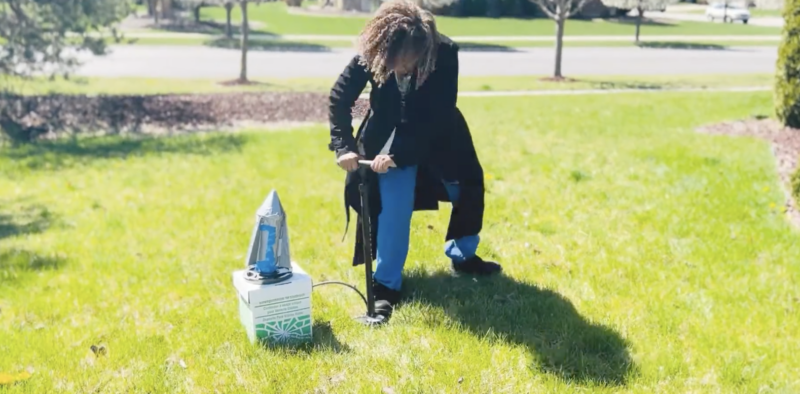
Build and launch a bottle rocket using a baking soda and vinegar reaction. Students can test how design changes affect launch height, stability, or distance. This project connects engineering design with Newton’s laws, thrust, pressure, and energy transfer.
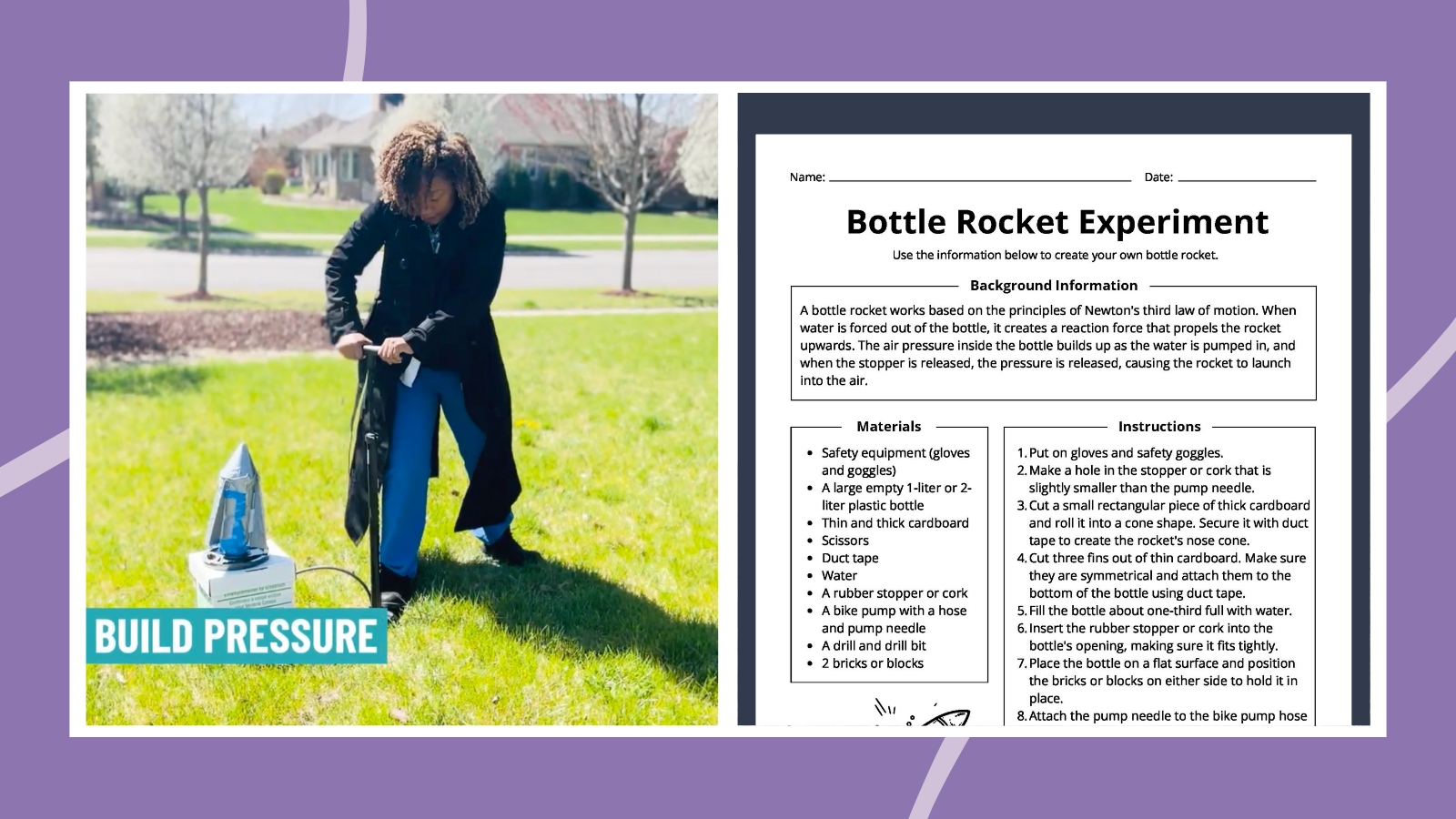
Bottle Rocket Experiment (Worksheet + Demo Video)
Watch the demo video and grab your free Bottle Rocket Experiment instructions and worksheet for students.
Chemistry Science Fair Projects for 6th Grade
These 6th grade science projects introduce students to acids and bases, chemical reactions, polymers, pH, gas production, oxidation, crystallization, and everyday chemistry. Students can observe how substances interact, change, and form new materials through safe, hands-on investigations.
45. Blow up a balloon
- Difficulty: Easy
- Materials: Basic
- Materials Needed: Balloons, vinegar, baking soda, plastic bottle, funnel
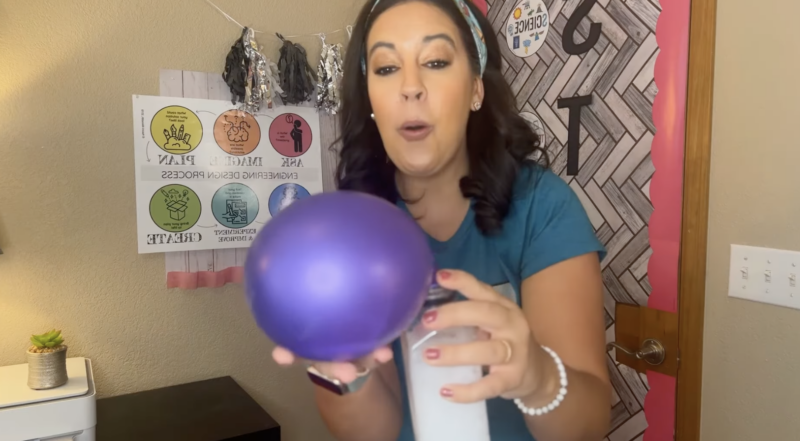
Pour vinegar into a plastic bottle and add baking soda to a balloon using a funnel. Stretch the balloon over the bottle opening, then lift it so the baking soda drops into the vinegar. Students can observe carbon dioxide gas inflating the balloon and connect the reaction to gas production and pressure.
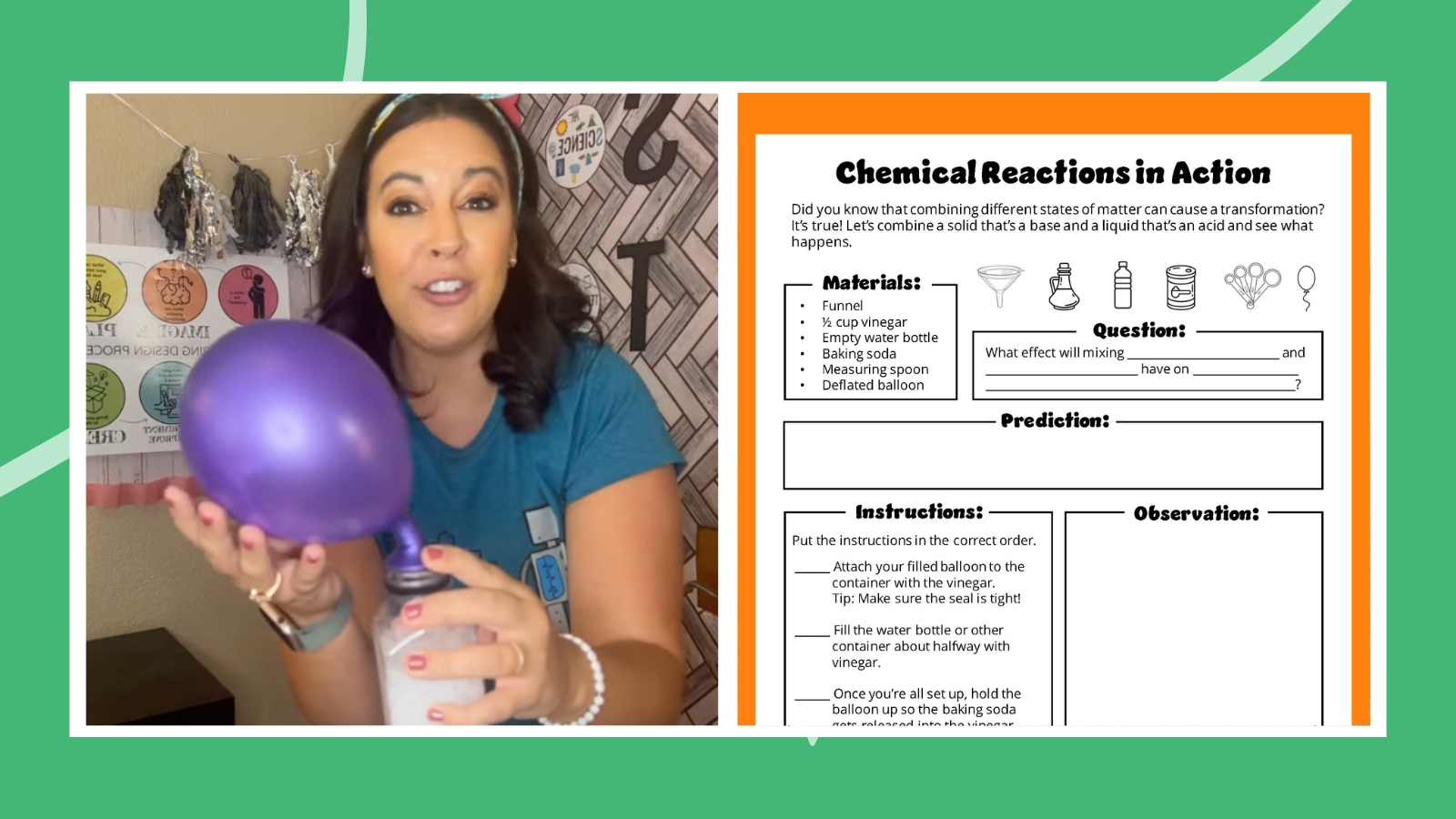
Baking Soda and Vinegar Balloon Experiment (Worksheet + Demo Video)
Watch our video to learn how to do the baking soda and vinegar balloon experiment. Then have students fill out the chemical reactions observation sheet.
46. Compare baking powder and baking soda
- Difficulty: Medium
- Materials: Basic
- Materials Needed: Baking powder, baking soda, water, vinegar, cups, spoons
Place baking powder and baking soda in separate cups, then add water or vinegar to each one. Students can compare bubbling, reaction speed, and gas production. This experiment helps students understand that similar-looking substances can behave differently because of their chemical composition.
47. Devise a formula for the biggest soap bubbles
- Difficulty: Medium
- Materials: Basic
- Materials Needed: Dish soap, water, glycerin, bubble wands, measuring cups
Students test different bubble-solution recipes to find which mixture creates the largest or longest-lasting bubbles. They can change one variable at a time, such as the amount of glycerin or soap. This investigation explores surface tension, elasticity, and molecular interactions.
48. Learn if tea and cola damage teeth
- Difficulty: Easy
- Materials: Basic
- Materials Needed: Eggshells, tea, cola, water, cups, labels
Soak eggshells separately in tea, cola, and water to model how drinks affect tooth enamel. Students can observe staining, softening, or other changes over time. This activity introduces acidity, chemical erosion, and the importance of dental health habits.
49. Look for iron in breakfast cereal
- Difficulty: Medium
- Materials: Basic
- Materials Needed: Iron-fortified cereal, water, plastic bag or bowl, strong magnet, spoon
Crush fortified cereal and mix it with water to create a slurry. Move a strong magnet around the outside of the bag or bowl and look for tiny iron particles. Students can compare cereals and connect the results to food fortification and magnetism.
50. Find the best way to clean old coins
- Difficulty: Easy
- Materials: Basic
- Materials Needed: Old coins, vinegar, salt, baking soda, water, cups, paper towels
Test different cleaning solutions to see which removes tarnish from old coins most effectively. Students can compare untreated coins with coins soaked in vinegar, salt water, or baking soda mixtures. This experiment explores oxidation, acids, bases, and chemical changes on metal surfaces.
51. Grow the biggest carbon sugar snake
- Difficulty: Easy
- Materials: Medium
- Materials Needed: Sugar, baking soda, sand, heat-safe dish, heat source, safety goggles, adult supervision
Students observe a chemical reaction that produces an expanding carbon “snake.” Mix sugar and baking soda, place it on sand, and have an adult manage the heat source. This demonstration shows decomposition, gas release, and how heat can drive chemical change.
52. Determine whether soda has more sugar than juice
- Difficulty: Medium
- Materials: Medium
- Materials Needed: Soda, juice, pot or hot plate, scale, measuring cup, adult supervision
Measure equal amounts of soda and juice, then carefully evaporate the liquid with adult supervision to compare the remaining solids. Students can weigh the residue and compare sugar content. This investigation builds data-analysis skills and shows that sugar can be dissolved in liquids even when it is not visible.
53. Explore properties of plastic made from milk
- Difficulty: Medium
- Materials: Basic
- Materials Needed: Milk, vinegar, strainer, bowl, spoon, paper towels, mold or cookie cutter, adult supervision
Warm milk and add vinegar to separate the milk proteins into curds. Strain and shape the curds, then let them dry into a simple casein plastic. Students can test the dried material for strength and flexibility while exploring polymers and chemical change.
54. Test pH levels of drinks
- Difficulty: Medium
- Materials: Basic
- Materials Needed: pH strips, juice, soda, water, cups, labels, recording sheet
Use pH strips to test the acidity of common drinks. Students can compare results and rank the liquids from most acidic to least acidic. This lab reinforces the pH scale and helps students connect acids and bases to everyday products.
55. Construct a homemade lava lamp
- Difficulty: Easy
- Materials: Basic
- Materials Needed: Clear bottle or jar, oil, water, food coloring, antacid tablet
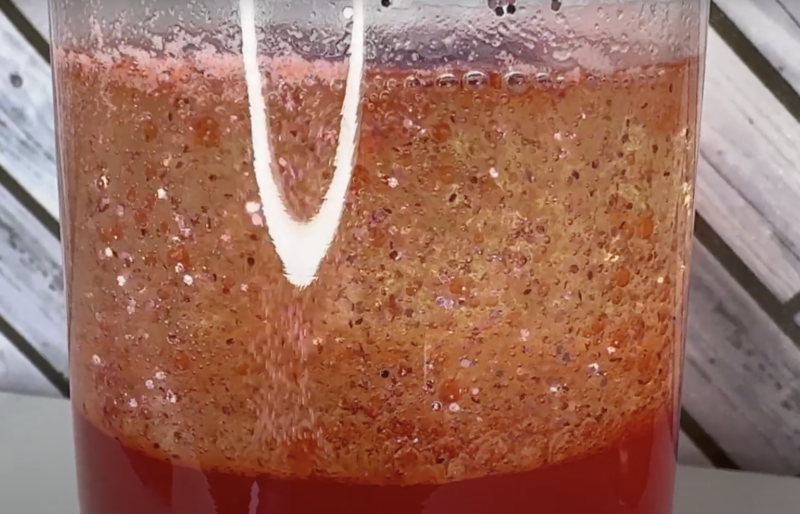
Fill a clear container with oil and water, then add food coloring. Drop in a piece of antacid tablet and watch colored bubbles rise and fall. Students can observe density differences, gas formation, and why oil and water do not mix.
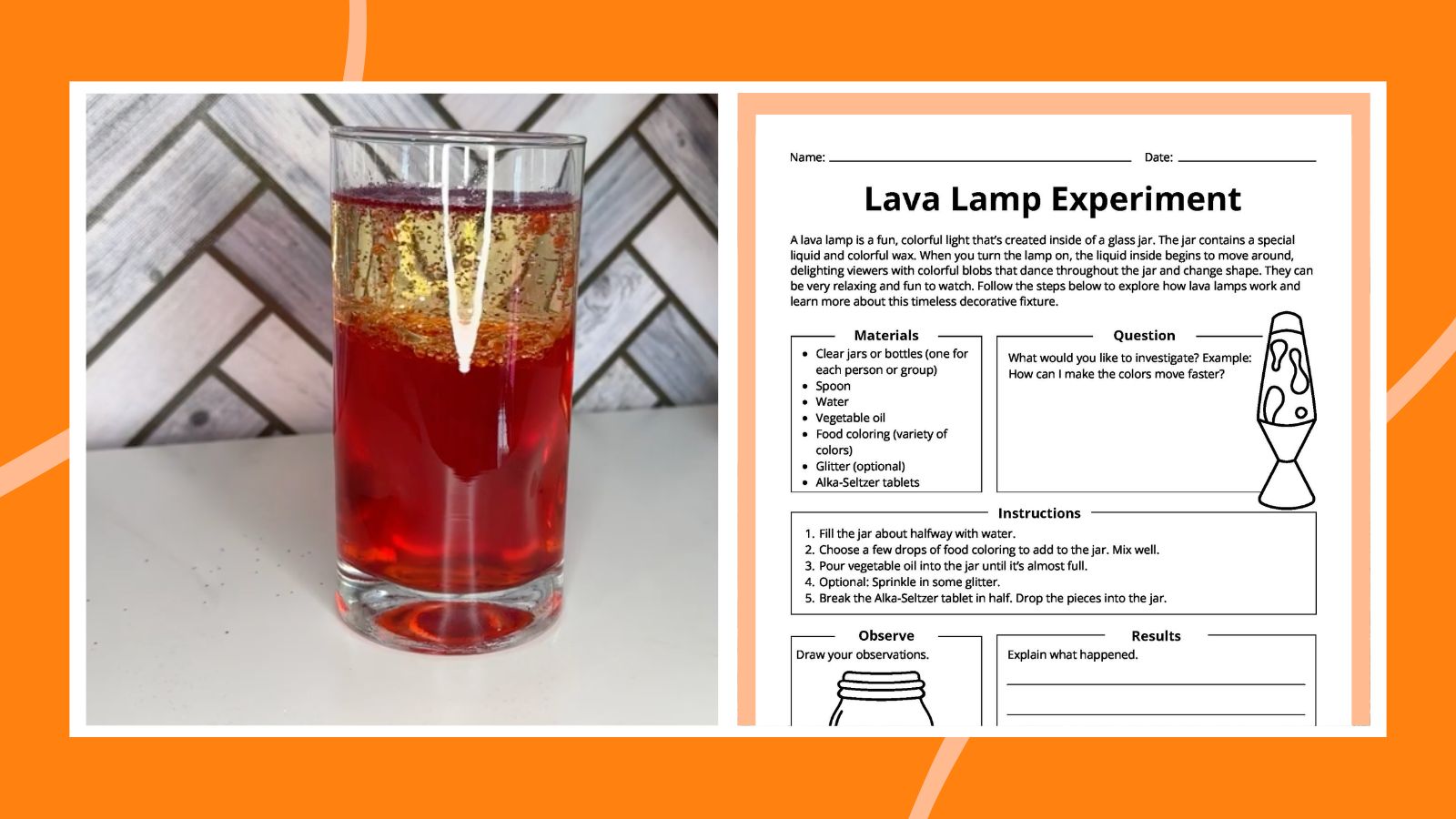
DIY Lava Lamp (Experiment + Demo Video)
Watch the video to learn how to make a DIY lava lamp with your students. Then have them fill out the step-by-step experiment worksheet.
56. Demonstrate the “magic” leakproof bag
- Difficulty: Easy
- Materials: Basic
- Materials Needed: Zip-top bag, sharpened pencils, water, tray or sink
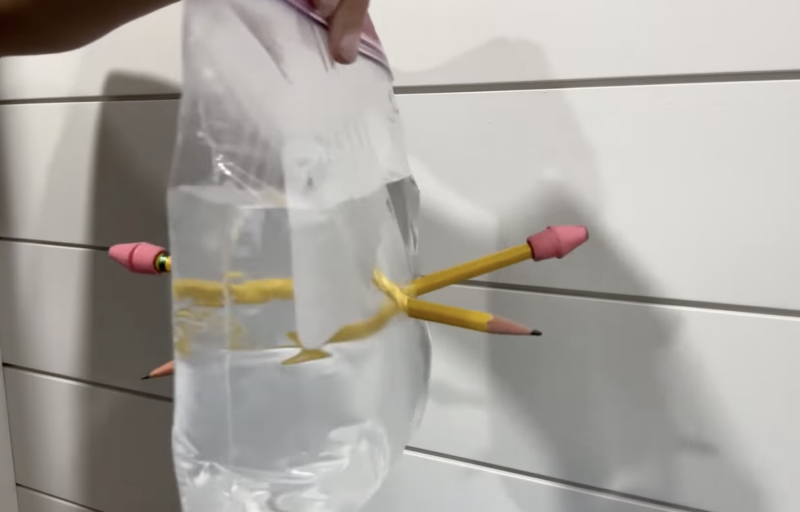
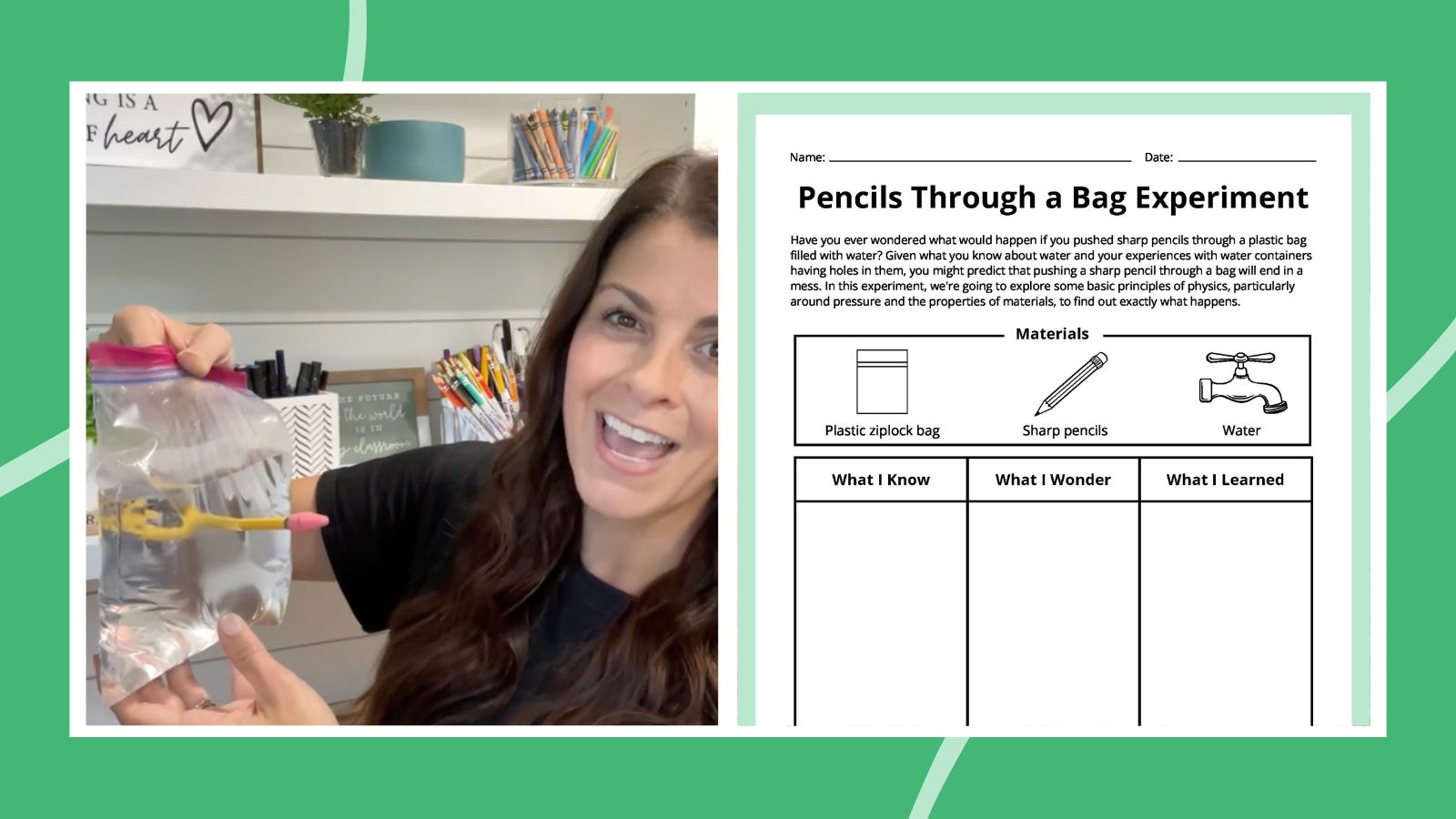
Fill a zip-top bag with water, seal it, and carefully push sharpened pencils through the bag. Students can observe that the bag does not immediately leak. Explain how the flexible plastic stretches tightly around each pencil, demonstrating polymer structure and material behavior.
57. Erupt a baking soda volcano
- Difficulty: Medium
- Materials: Basic
- Materials Needed: Clay or dough, baking soda, vinegar, dish soap, food coloring, tray
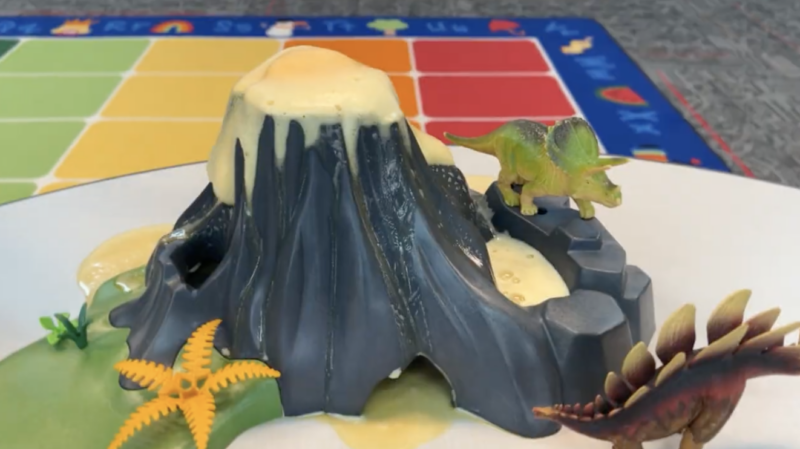
Build a simple volcano model from clay or dough, then add baking soda inside. Pour in vinegar mixed with food coloring and dish soap to create a foamy eruption. Students can test how changing ingredient amounts affects eruption size and duration.
Baking Soda Volcano (Experiment + Demo Video)
Watch the video to learn how to make a baking soda volcano with your students. Then have them fill out the observation sheet.
58. Make elephant toothpaste
- Difficulty: Medium
- Materials: Medium
- Materials Needed: 3% hydrogen peroxide, dish soap, yeast, warm water, plastic bottle, tray, safety goggles, gloves, adult supervision
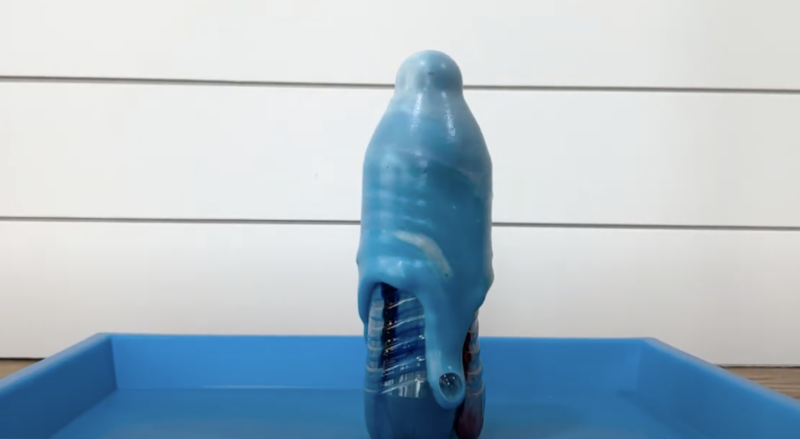
Mix dish soap and 3% hydrogen peroxide in a bottle, then add activated yeast. Students can watch foam expand quickly as oxygen gas is released and trapped in soap bubbles. This demonstration introduces catalysts, gas production, and chemical reactions.
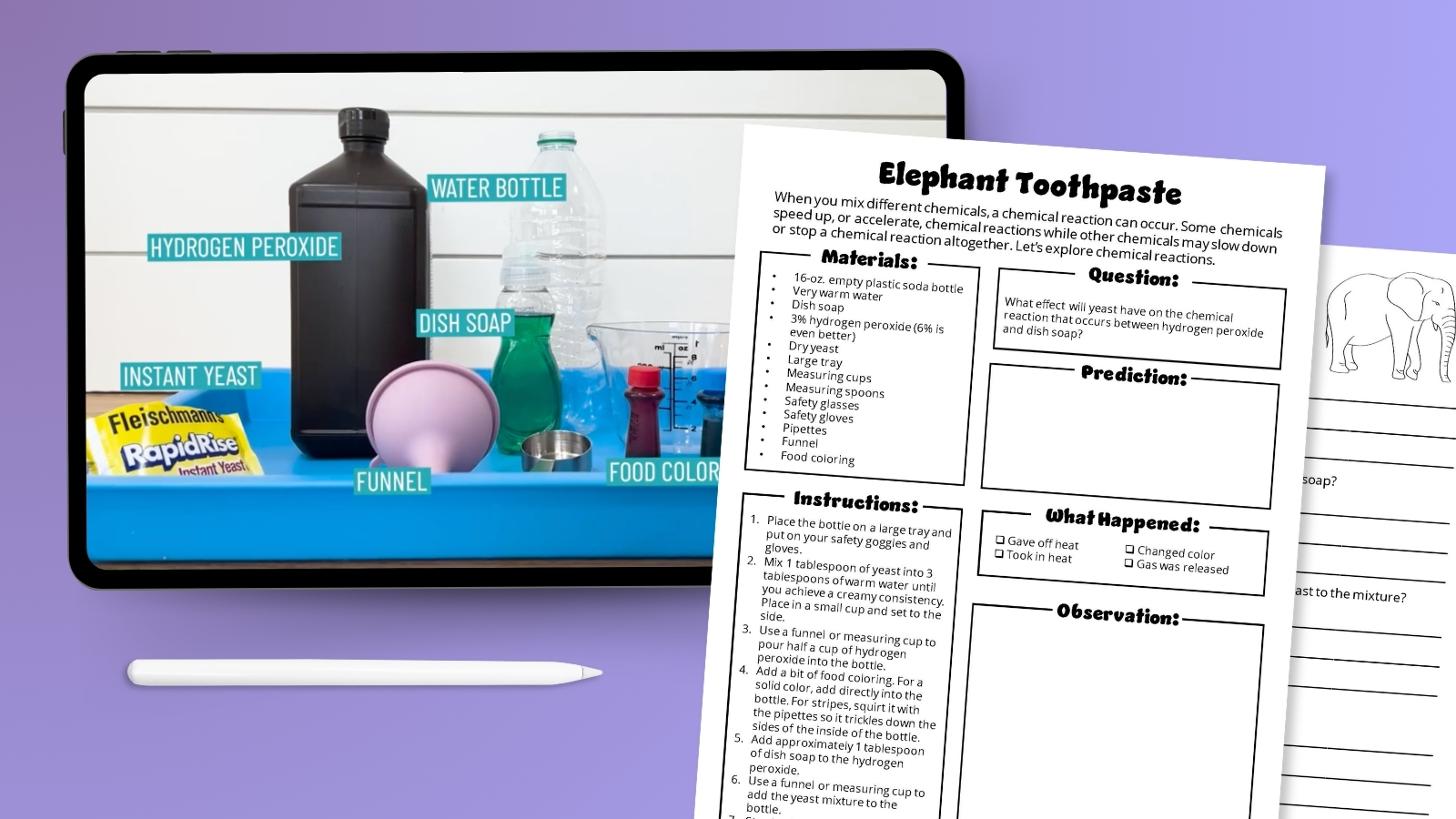
Elephant Toothpaste Experiment (Worksheet + Video)
Watch our demo video to learn how to make elephant toothpaste. Then have students fill out the observation sheet.
59. Change the color of a liquid instantly
- Difficulty: Medium
- Materials: Medium
- Materials Needed: Iodine, starch, water, vitamin C if using a clock-reaction variation, cups, droppers, adult supervision
Students observe a sudden color change caused by a chemical reaction between an indicator and another substance. They can change ingredient amounts or temperature to see how reaction timing changes. This experiment introduces indicators, reaction rates, and chemical change.
60. Make a pH indicator from a vegetable
- Difficulty: Medium
- Materials: Medium
- Materials Needed: Red cabbage, hot water, blender or knife, strainer, cups, acids and bases to test, adult supervision
Create a natural pH indicator by soaking or blending red cabbage in water, then straining the liquid. Students can add the cabbage indicator to different substances and observe color changes. This project shows how indicators reveal whether a substance is acidic, basic, or neutral.
61. Make popcorn dance
- Difficulty: Easy
- Materials: Basic
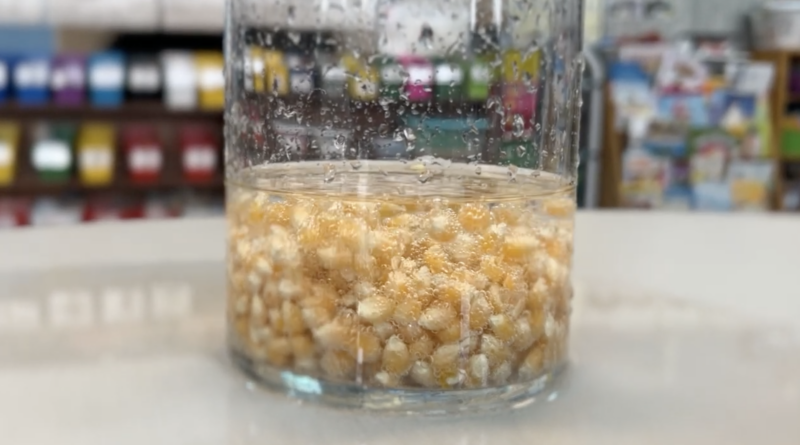
- Materials Needed: Popcorn kernels, water, antacid tablet, clear container
Add popcorn kernels and water to a clear container, then drop in an antacid tablet. Students can watch the kernels rise and fall as gas bubbles attach and release. This activity demonstrates buoyancy, gas production, and forces acting in liquids.
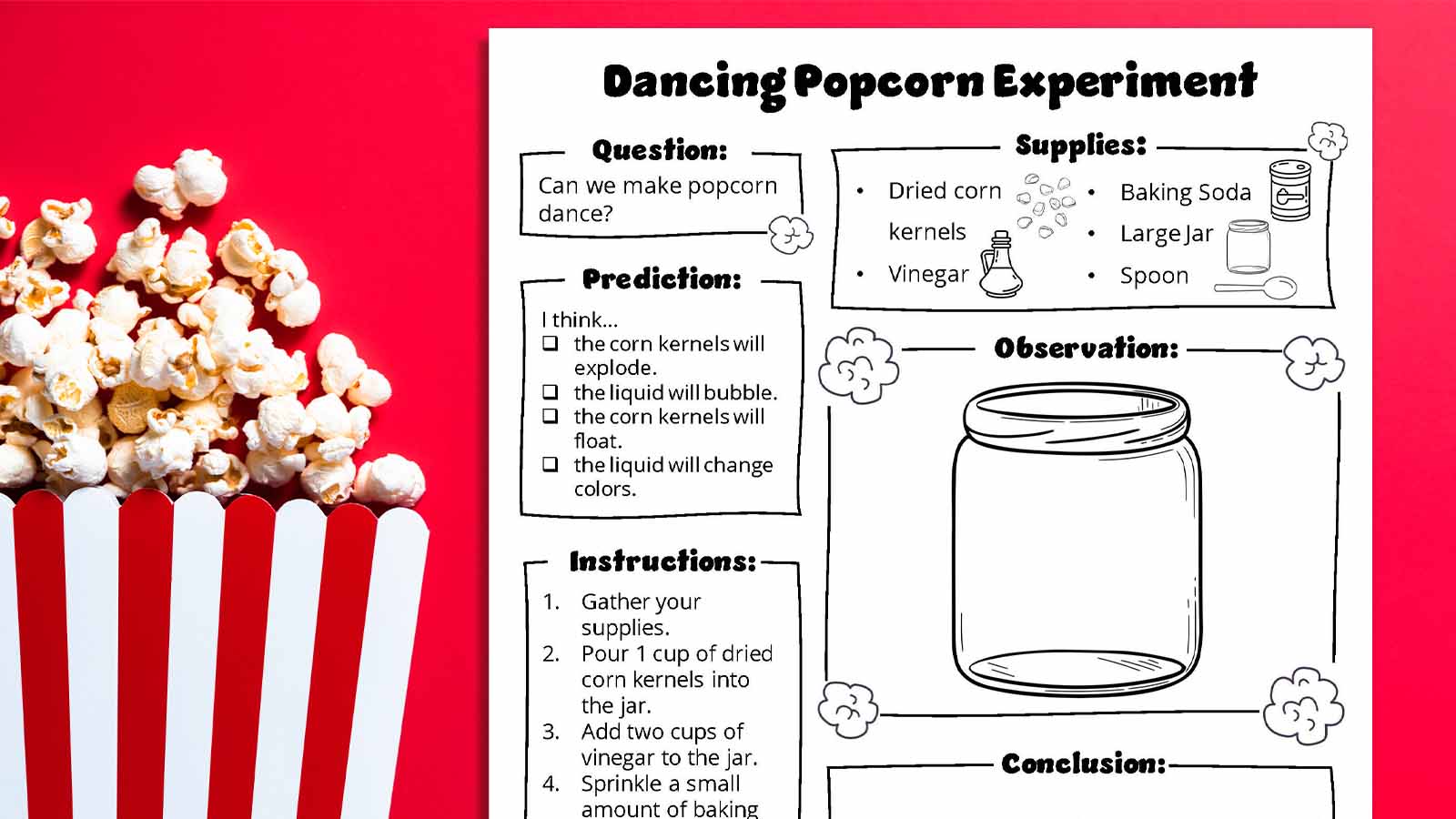
Dancing Popcorn Experiment (Worksheet + Demo Video)
Watch our video to learn how to do the dancing popcorn experiment. Then have students fill out the experiment observation sheet.
More 6th Grade Science Fair Projects
These 6th grade science projects work especially well for science fairs because students can test variables, form hypotheses, collect data, and explain their results. Encourage students to change only one variable at a time so their projects become true experiments.
62. Create and compare slime
- Difficulty: Easy
- Materials: Medium
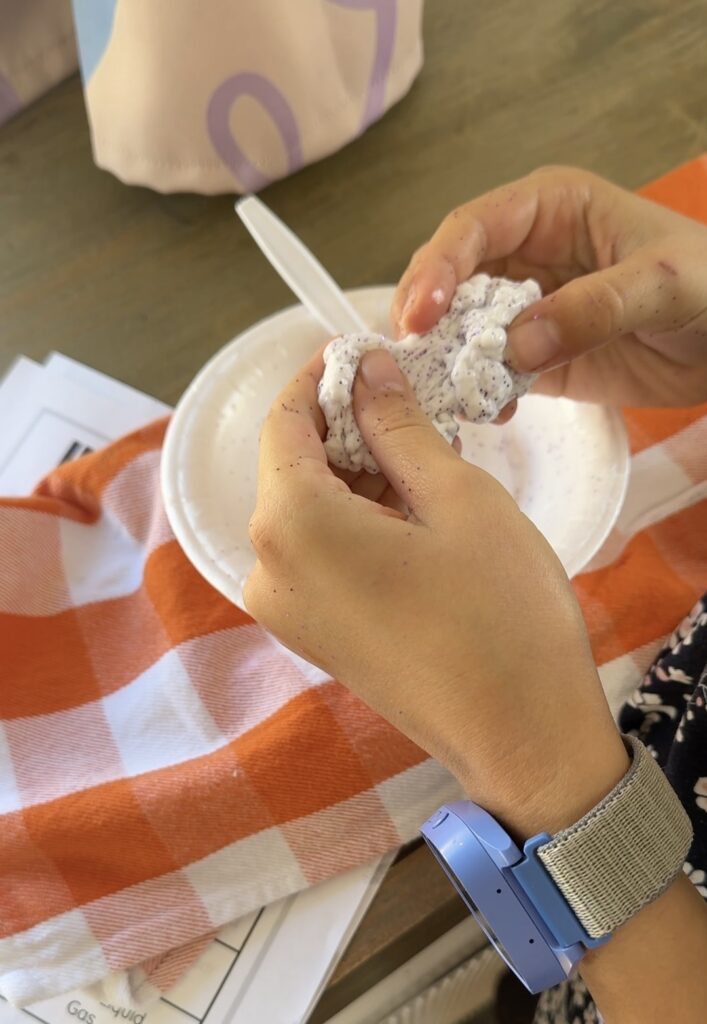
- Materials Needed: Ingredients for several slime recipes, bowls, spoons, measuring tools, sealable containers
Make several slime recipes and compare how they behave during different tests. Students can test stretching, bouncing, breaking, melting, or freezing. Have them record observations and identify which ingredients affect the slime’s properties most.
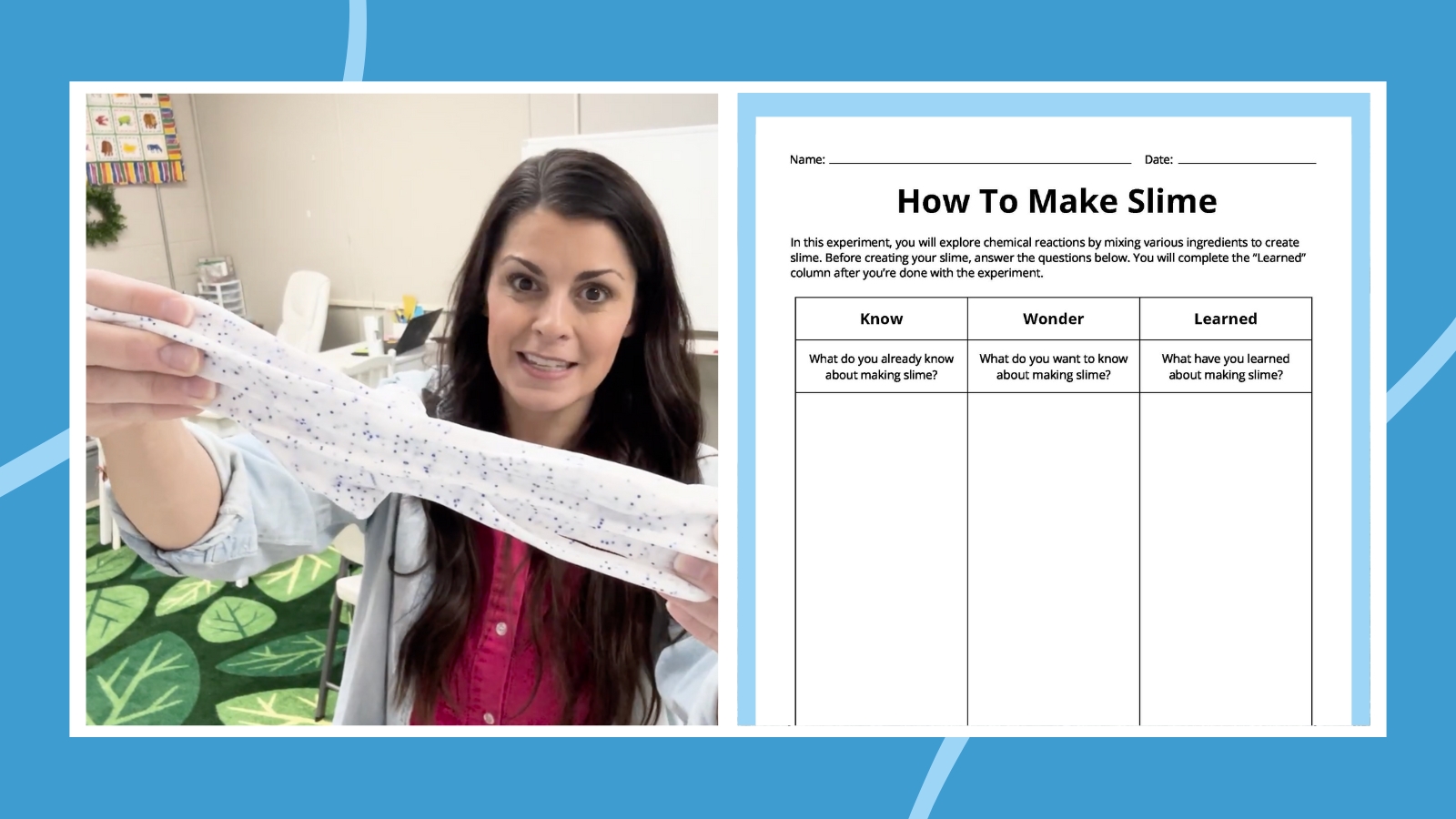
Slime Experiment (Worksheet + Demo Video)
Learn how to make slime with a video that includes recipes. Then use the experiment worksheets to compare them.
63. Shoot a soda geyser sky-high
- Difficulty: Easy
- Materials: Medium
- Materials Needed: Diet soda or regular soda, Mentos candies, outdoor space, safety goggles
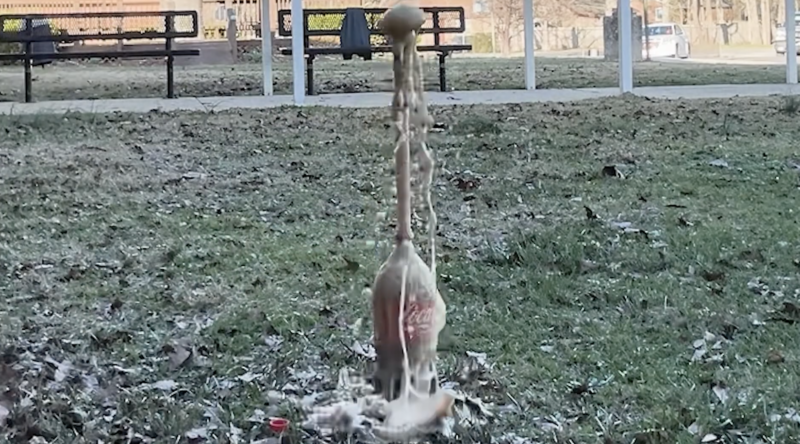
Drop Mentos into a bottle of soda and observe the rapid geyser that forms. Students can test variables such as soda type, number of candies, or candy coating. This project demonstrates dissolved carbon dioxide, nucleation sites, gas release, and pressure.
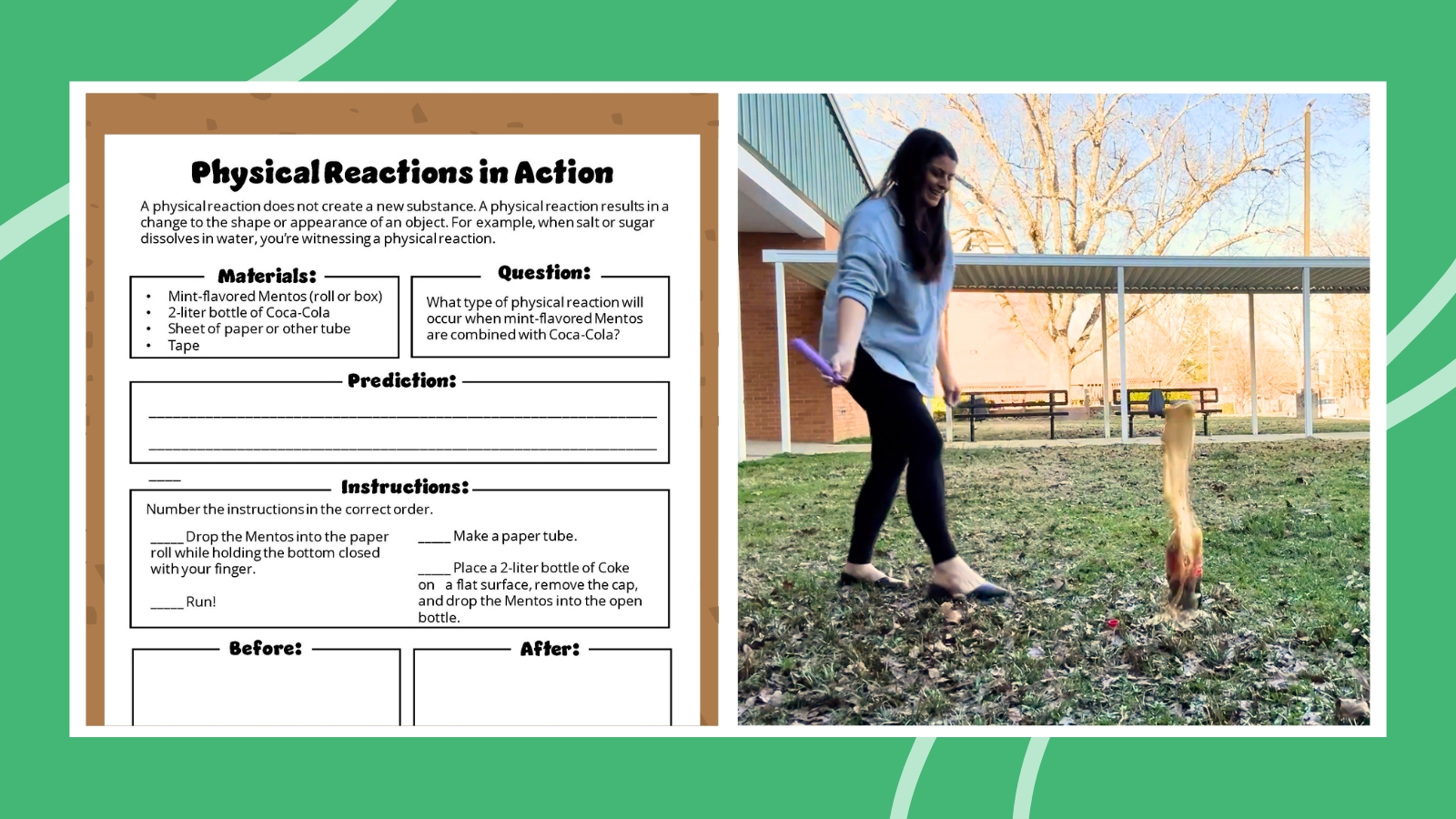
Mentos and Diet Soda Experiment (Worksheet + Video)
Learn how to conduct the Mentos and diet soda experiment. Then students use the Physical Reactions in Action worksheet to record their observations.
64. Taste the rainbow
- Difficulty: Easy
- Materials: Medium
- Materials Needed: Skittles or similar colored candies, plate, water
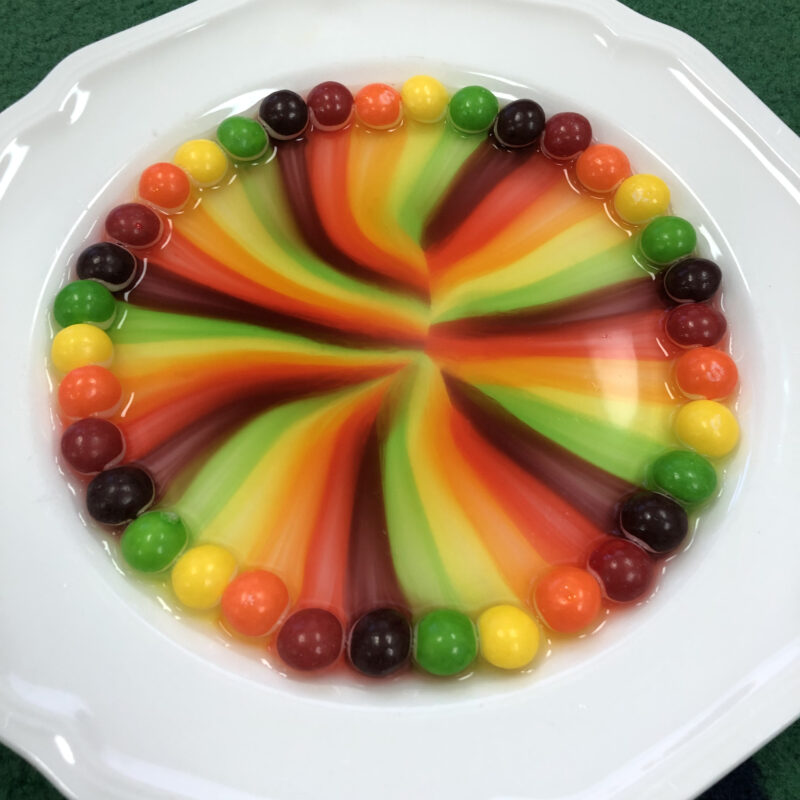
Arrange candies in a circle on a plate and pour water into the center. Students can watch the colors dissolve and move toward the middle. This project demonstrates diffusion, dissolving, and how colored coatings spread through water.
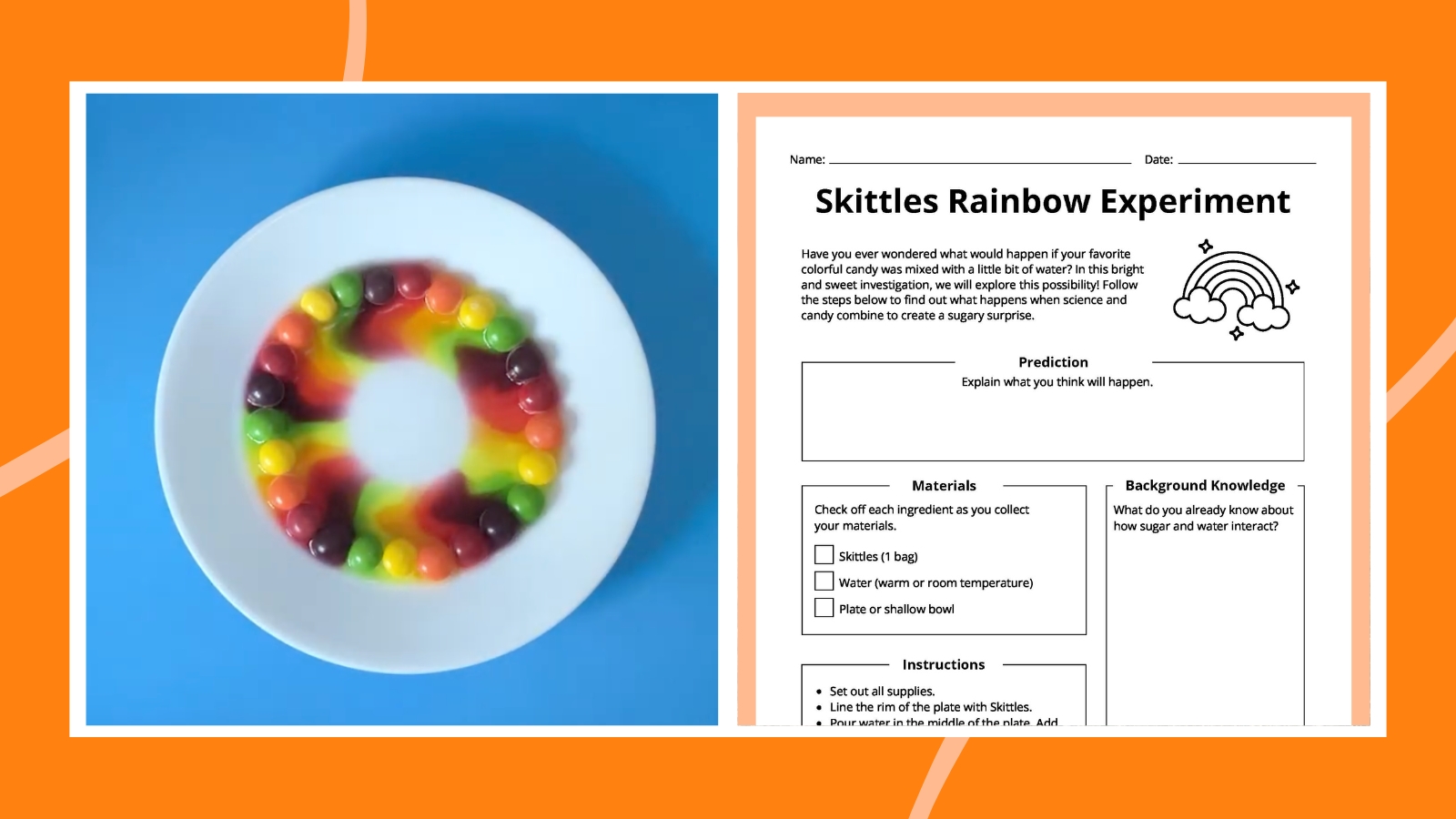
Skittles Rainbow Experiment (Worksheet + Video)
Learn how to conduct the Skittles rainbow experiment. Then students use the free worksheet to record their observations.
65. Find out whether different liquids conduct electricity
- Difficulty: Advanced
- Materials: Advanced
- Materials Needed: Low-voltage batteries, wires with clips, LED bulb, cups, water, juice, oil, salt water, adult supervision
Use a low-voltage circuit to test whether different liquids allow electricity to flow. Students can observe whether the LED lights up for each sample and compare conductivity. Use battery power only, never a wall outlet, and keep liquids away from other electrical sources.
66. Investigate the effect of music on plant growth
- Difficulty: Advanced
- Materials: Advanced
- Materials Needed: Similar potted plants, water, sunlight or grow lights, music source, ruler, observation sheet
Expose similar plants to different music conditions while keeping light, water, soil, and temperature as consistent as possible. Measure plant growth over several weeks and compare results. This project helps students practice controlling variables and interpreting biological data.
67. Test how salt affects ice melting
- Difficulty: Easy
- Materials: Basic
- Materials Needed: Ice cubes, salt, tray, timer, cups or bowls
Place ice cubes in separate containers and sprinkle salt on some while leaving others plain. Observe and time how quickly each ice cube melts. Students can explore freezing-point depression, energy transfer, and why salt is used on icy roads.
68. Observe mold growth on different foods
- Difficulty: Medium
- Materials: Medium
- Materials Needed: Bread, cheese, fruit, sealable plastic bags or clear containers, labels, gloves, adult supervision
Place different foods in separate sealed bags or containers and observe mold growth over several days. Students can compare which foods grow mold fastest and track changes in color and coverage. Once sealed, containers should remain closed and be discarded by an adult.
69. Build a balloon-powered car
- Difficulty: Medium
- Materials: Medium
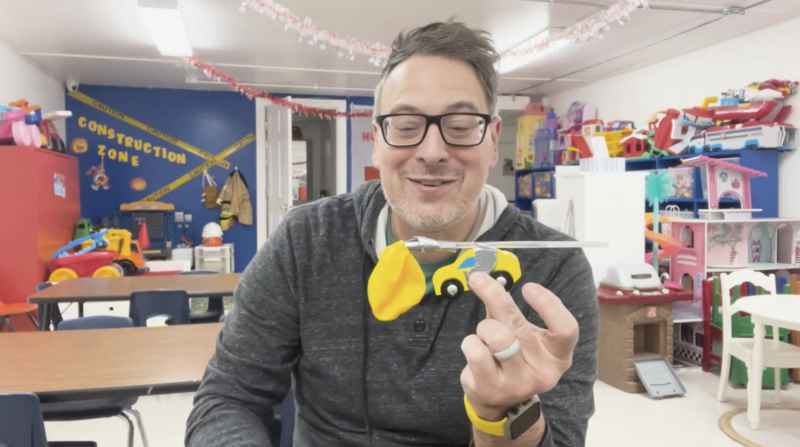
- Materials Needed: Balloon, straw, tape, small toy car or student-built car, open floor space
Attach a straw to a balloon and tape it to a small car. Inflate the balloon through the straw, pinch it closed, then release it and watch the car move. Students can modify car size, wheel design, or balloon placement to improve speed or distance.
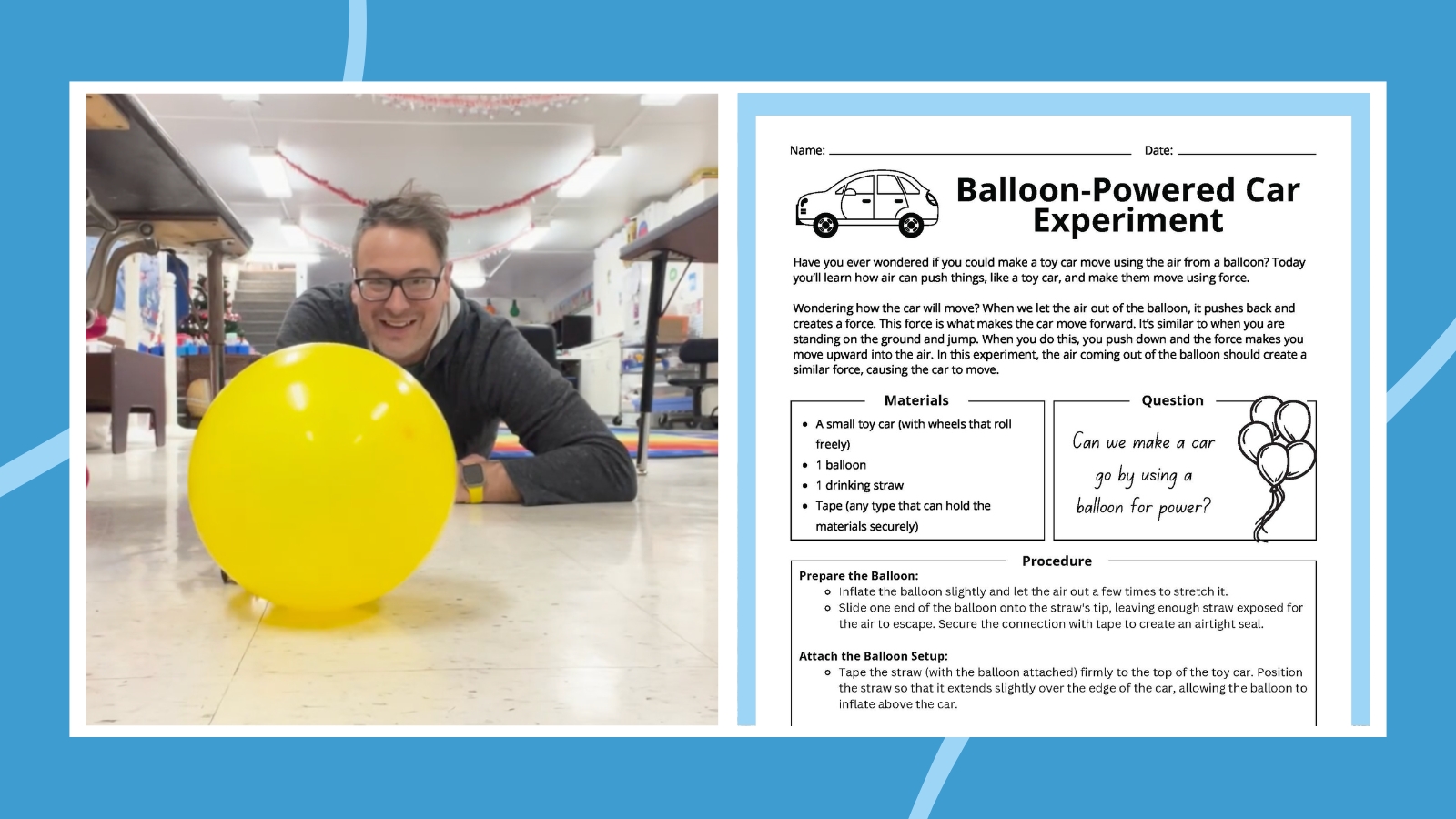
Balloon-Powered Car Experiment (Worksheet + Video)
Watch the video to learn how to make a balloon-powered car. Then have students fill out the worksheet.
70. Make your own potato battery
- Difficulty: Medium
- Materials: Medium
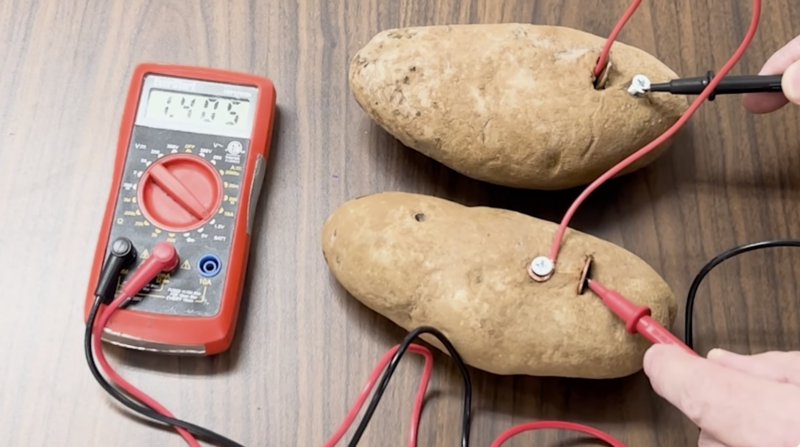
- Materials Needed: Potatoes, zinc nails or galvanized nails, copper pennies or copper strips, wires with clips, small LED or voltmeter, adult supervision
Insert zinc and copper electrodes into a potato and connect them with wires to create a simple battery. Students can test whether one potato produces enough energy to power a small LED or compare voltage using a meter. This project introduces electrochemical reactions, circuits, and energy transfer.
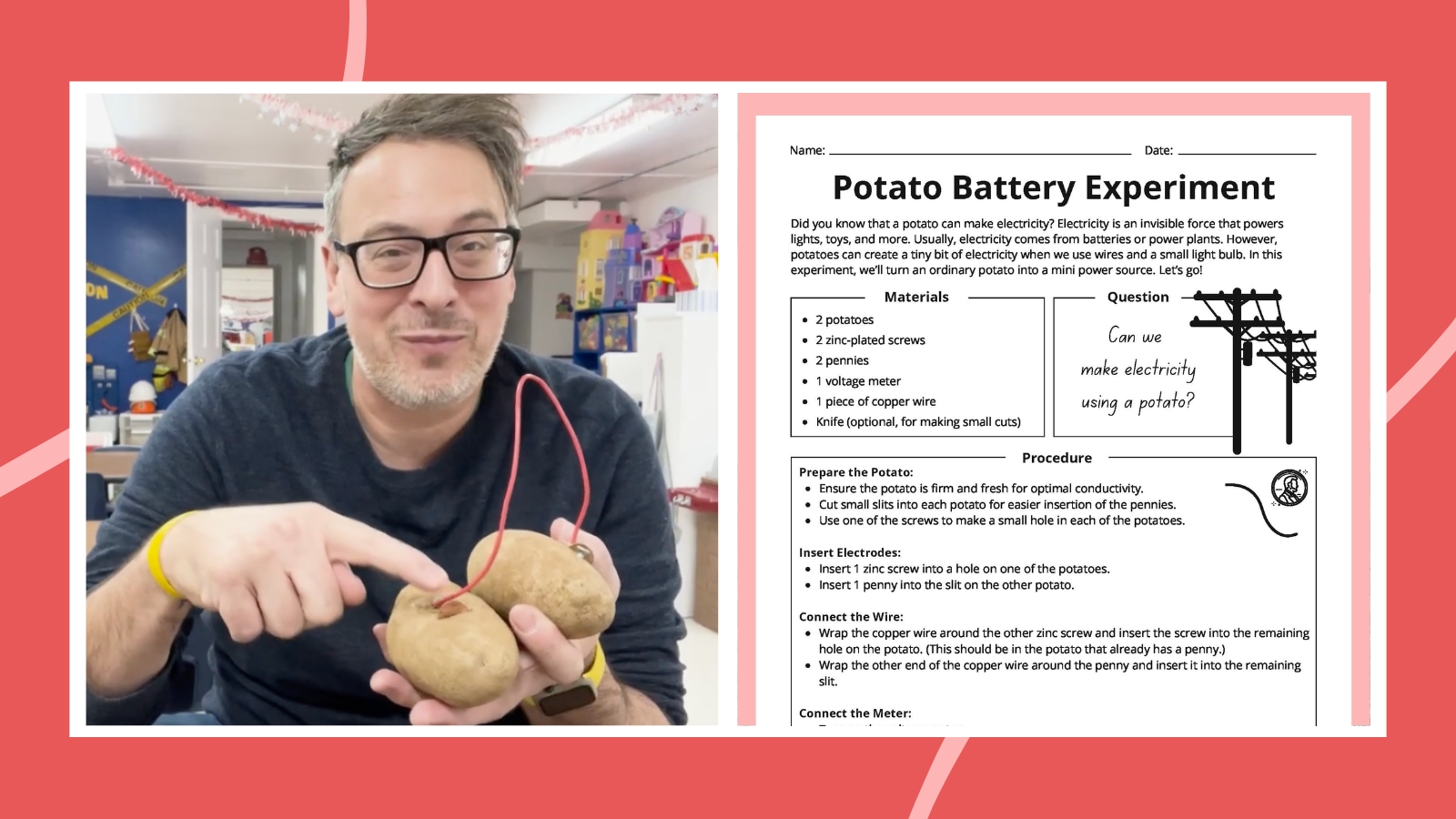
Potato Battery Experiment (Worksheet + Video)
Watch the video to learn how to conduct the potato battery experiment. Then have students record their observations on the free worksheet.
Get your free printable science fair award certificates!
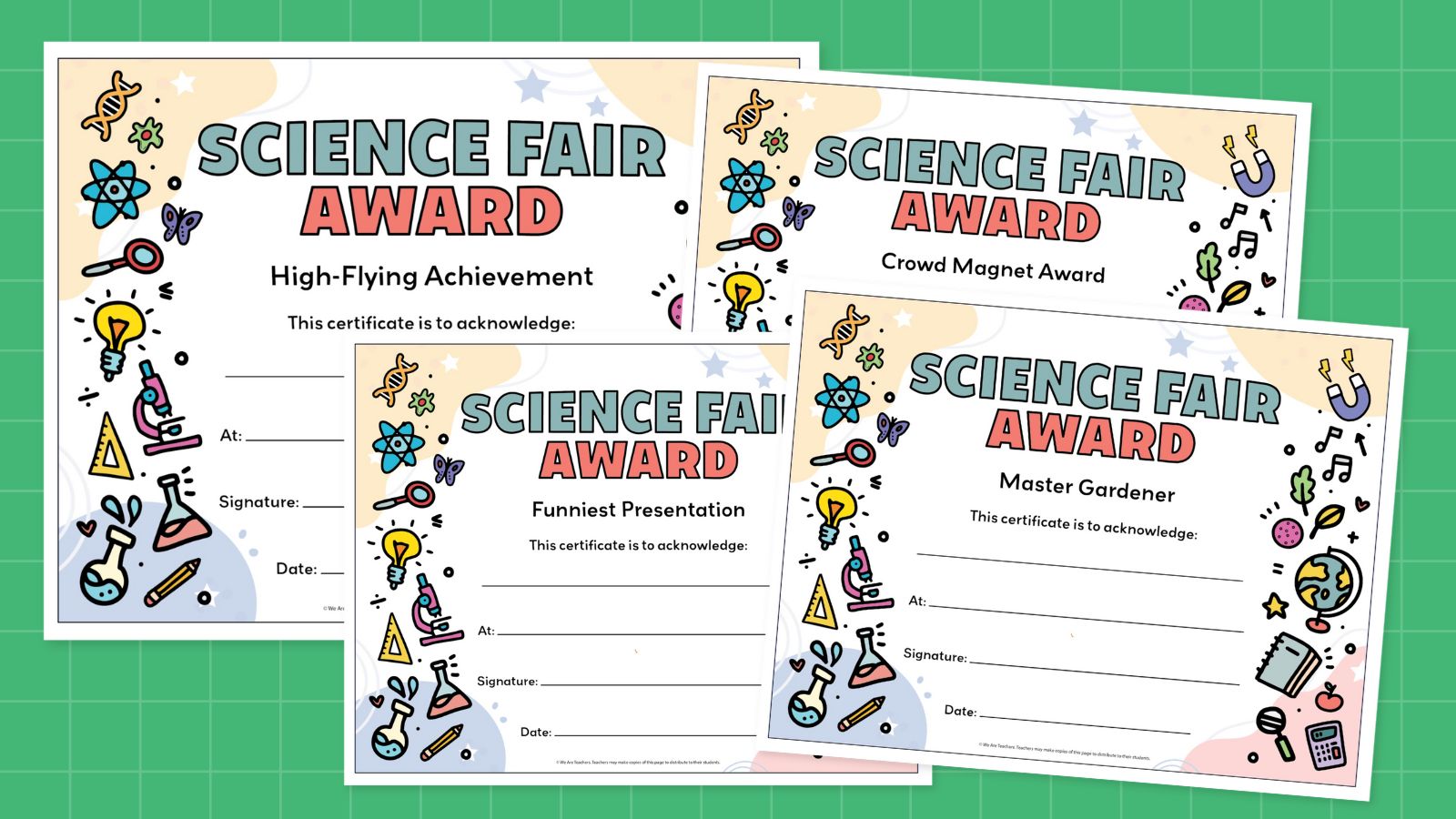
If you’re organizing a science fair, be sure to grab our free printable bundle of award certificates with more than 40 categories along with a customizable blank certificate so you can create your own awards. Just click the button below and fill out the form to get your free printable certificates.
Recent Comments