
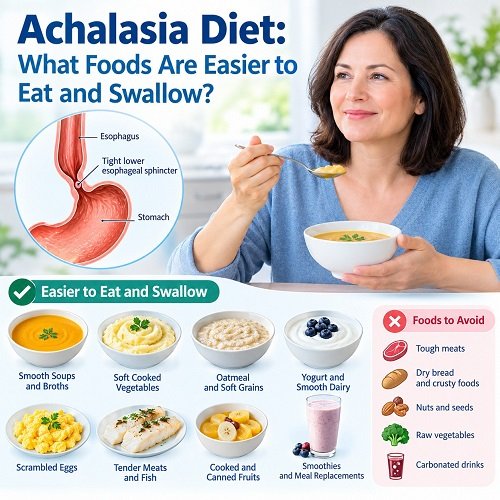
Achalasia is an uncommon disorder of the oesophagus that can make eating and drinking difficult. People living with achalasia may experience food sticking in the chest, regurgitation, discomfort after meals, or difficulty moving food into the stomach. Because these symptoms can make mealtimes challenging, choosing suitable foods and adjusting eating habits may help some people manage everyday symptoms.
An achalasia diet does not cure the condition or replace medical treatment. However, selecting softer foods, modifying meal sizes and eating slowly may make swallowing more comfortable for some individuals. Dietary needs can vary considerably, so foods that are easy for one person to tolerate may be difficult for another.
This guide explains which foods for achalasia may be easier to eat, which foods may cause problems, and practical strategies for eating with achalasia.
What Is Achalasia?
What Is Achalasia? Achalasia is a condition affecting the oesophagus, the muscular tube that carries food from the mouth to the stomach. In achalasia, the lower oesophageal sphincter does not relax normally when swallowing. The muscles of the oesophagus may also have reduced ability to move food towards the stomach.
As a result, food and liquids can remain in the oesophagus for longer than usual. This can contribute to Achalasia symptoms such as:
- Difficulty swallowing food or liquids
- A sensation that food is stuck behind the breastbone
- Regurgitation of food or saliva
- Chest discomfort
- Coughing, particularly at night
- Unintentional weight loss
- Prolonged or uncomfortable meals
- Heartburn-like symptoms
Because swallowing can be affected, dietary adjustments may become an important part of daily life.
Why Diet Matters With Achalasia
Food texture, meal size and eating habits can influence how comfortably a person eats. Large or dry pieces of food may be harder to pass through the oesophagus, while softer and more moist foods may be easier for some people.
The goal of an achalasia diet is generally not to eliminate a particular food group. Instead, it is to identify foods and eating habits that are easier to tolerate while maintaining adequate nutrition and hydration.
People with persistent swallowing difficulty should not rely solely on dietary changes. Achalasia requires appropriate medical assessment, particularly when symptoms are worsening or weight loss occurs.
Foods for Achalasia That May Be Easier to Eat
There is no single diet suitable for everyone with achalasia. Nevertheless, many people find that softer, moist foods are easier to swallow than dry, tough or bulky foods.
1. Soft-Cooked Vegetables
Well-cooked vegetables can be softer and easier to chew than raw vegetables.
Examples include:
- Cooked carrots
- Pumpkin
- Squash
- Courgette
- Soft-cooked spinach
- Mashed potatoes
- Sweet potatoes
- Well-cooked peas
Cooking vegetables until they are tender may reduce the effort required to chew and swallow them.
2. Soups and Broths
Soups can provide both fluid and nutrients while offering a softer texture. Smooth soups may be particularly useful for people who find solid foods difficult.
Options can include:
- Vegetable soup
- Lentil soup
- Chicken soup
- Pumpkin soup
- Blended vegetable soup
- Soft bean soups
Avoid making soups excessively thick or containing large, tough pieces if these textures cause difficulty.
3. Porridge and Soft Cereals
Porridge made with oats or other suitable grains can provide an easy-to-eat breakfast.
Adding sufficient liquid can produce a softer consistency. If dry cereals cause discomfort, a moist alternative may be easier to tolerate.
4. Yoghurt
Smooth yoghurt can be a convenient source of protein and calcium. Choose varieties that suit your nutritional needs and personal tolerance.
If very thick foods are difficult to swallow, adjusting the consistency may help.
5. Eggs
Softly prepared eggs may be easier for some people than firm or dry foods.
Possible options include:
- Scrambled eggs
- Soft omelettes
- Poached eggs
- Soft-boiled eggs
Avoid overcooking eggs if a dry texture makes swallowing more difficult.
6. Soft Fish
Tender fish can provide protein without the toughness associated with some meats.
Fish can be steamed, baked or poached until tender. Removing bones carefully is essential.
7. Tender Meat in Moist Preparations
Some people with achalasia find dry or fibrous meat difficult to swallow. If meat is tolerated, preparing it with moisture may make it easier to eat.
For example, minced or finely shredded meat served with a suitable sauce may be easier than a large, dry piece of meat.
8. Smooth Nut Butters
Smooth peanut butter or other nut butters can provide calories, protein and healthy fats. However, thick and sticky textures may cause difficulty for some people.
If a particular texture feels as though it sticks in the oesophagus, it may be better to avoid it or discuss alternatives with a dietitian.
9. Soft Fruits
Very firm fruits may be harder to chew and swallow. Softer choices may include:
- Bananas
- Ripe peaches
- Melons
- Soft pears
- Applesauce
- Stewed fruit
Fruit can also be blended into smoothies if this is better tolerated.
Foods That May Be Difficult With Achalasia
Certain foods may be harder to swallow because they are dry, tough, fibrous or bulky.
Potential problem foods include:
- Tough cuts of meat
- Dry bread
- Large sandwiches
- Dry crackers
- Raw vegetables
- Tough or stringy vegetables
- Popcorn
- Large pieces of fruit
- Dry rice
- Sticky foods
- Very dense foods
This does not mean everyone with achalasia needs to avoid these foods completely. Individual tolerance is important.
For example, one person may tolerate bread comfortably while another may find it difficult. Keeping a food and symptom diary can help identify personal triggers.
Eating With Achalasia: Practical Strategies
Food selection is only one part of managing meals. Changes in eating behaviour may also help.
Eat Slowly
Rushing through meals can make swallowing more challenging. Take smaller bites and give yourself enough time to chew food thoroughly.
Eating slowly can also make it easier to recognise when food is becoming difficult to swallow.
Chew Food Thoroughly
Chewing breaks food into smaller pieces and mixes it with saliva. This can make the food easier to swallow.
Avoid swallowing large pieces of meat, vegetables or other solid foods without adequate chewing.
Choose Smaller Meals
Large meals can be uncomfortable when food remains in the oesophagus.
Instead of eating a very large meal, some people may find several smaller meals easier to manage.
Remain Upright While Eating
Maintaining an upright position during meals may help reduce regurgitation for some individuals.
It may also be useful to remain upright for a period after eating rather than immediately lying down.
Take Small Sips of Liquid
Some people find that small amounts of liquid during or after a meal help food move through the oesophagus. However, drinking large quantities quickly may increase discomfort in some individuals.
Pay attention to your body’s response and discuss persistent problems with your healthcare professional.
Avoid Eating Too Close to Bedtime
Night-time regurgitation can be troublesome for some people with achalasia. Allowing sufficient time between eating and lying down may help reduce symptoms.
If night-time coughing or regurgitation occurs regularly, speak with a healthcare professional.
Hydration and Achalasia
Maintaining adequate hydration is important, particularly when swallowing problems make drinking difficult.
Some people tolerate small, frequent drinks better than large amounts at once. Water is usually a straightforward choice, but individual tolerance matters.
If drinking liquids is becoming difficult, or you frequently cough or choke when drinking, seek medical advice. Difficulty swallowing liquids can be an important symptom that should be assessed.
Maintaining Good Nutrition
An important consideration when following an achalasia diet is maintaining sufficient calories, protein, vitamins and minerals.
Avoid unnecessarily restricting your diet. If you eliminate many foods because of swallowing problems, nutritional deficiencies or weight loss may develop.
Nutrient-dense foods that may be easier to consume can include:
- Smooth yoghurt
- Eggs
- Soft fish
- Smooth soups
- Porridge
- Mashed vegetables
- Soft fruits
- Nutritionally balanced smoothies
A registered dietitian can help create an individual eating plan if swallowing problems are affecting your nutritional intake.
What About Spicy or Acidic Foods?
Spicy and acidic foods are not universally problematic for people with achalasia. However, some individuals may experience burning, chest discomfort or reflux-like symptoms after eating them.
Potential triggers may include:
- Chilli
- Very spicy sauces
- Citrus fruits
- Tomato-based foods
- Strongly seasoned meals
Rather than automatically eliminating these foods, consider whether they consistently worsen your symptoms.
A food diary can help identify patterns.
Foods and Drinks to Monitor
Certain foods and drinks may cause symptoms depending on the individual.
You may wish to monitor your response to:
- Coffee
- Fizzy drinks
- Alcohol
- Chocolate
- Very spicy foods
- Acidic foods
- Fatty meals
- Dry foods
If a particular food repeatedly causes discomfort, discuss the pattern with your healthcare professional.
Keeping a Food and Symptom Diary
A food diary can be particularly useful when eating with achalasia.
Record:
- What you ate
- Portion size
- How quickly you ate
- Whether you drank liquids with the meal
- Whether food felt stuck
- Regurgitation
- Chest discomfort
- Coughing
- How long symptoms lasted
After several weeks, patterns may become easier to identify.
This information can also help your doctor or dietitian understand how your symptoms affect your diet.
When Swallowing Difficulty Needs Medical Attention
Dietary adjustments should not delay medical evaluation.
Seek professional advice if you experience:
- Increasing difficulty swallowing
- Frequent regurgitation
- Persistent chest discomfort
- Unexplained weight loss
- Repeated coughing while eating
- Choking episodes
- Difficulty swallowing liquids
- Signs of dehydration
- Significant changes in your usual symptoms
Achalasia can require medical or procedural treatment. Dietary changes may support day-to-day eating but do not correct the underlying dysfunction of the oesophagus.
Medical Treatment and Diet
Treatment for achalasia may include procedures or medicines depending on the individual’s condition and clinical assessment.
Commonly used approaches can include pneumatic dilation, surgical myotomy and peroral endoscopic myotomy (POEM). Some people may also receive botulinum toxin injections or other medical management.
The appropriate treatment depends on factors such as symptoms, test results, overall health and the type of achalasia.
Dietary changes should therefore be viewed as supportive strategies rather than a replacement for treatment.
Building a Personal Achalasia Diet
The most practical diet is usually one that provides adequate nutrition while matching your individual swallowing tolerance.
You can start by identifying foods that are:
- Soft rather than hard.
- Moist rather than dry.
- Tender rather than tough.
- Small in portion size.
- Easy to chew thoroughly.
- Comfortable to swallow.
You can then gradually identify foods that cause problems and discuss suitable alternatives with a healthcare professional.
For example, if dry chicken is difficult to swallow, a person might tolerate tender minced chicken in a moist preparation more comfortably. If raw vegetables are difficult, cooked vegetables may be a better option.
The objective is not to create an unnecessarily restrictive diet. It is to find practical ways to maintain nutrition while reducing avoidable swallowing difficulties.
Sample One-Day Meal Pattern
A sample eating pattern may look like this:
Breakfast:
Soft porridge with mashed banana and yoghurt.
Mid-morning:
A smooth yoghurt or suitable smoothie.
Lunch:
Blended vegetable soup with tender shredded chicken or soft fish.
Afternoon:
Soft fruit or another tolerated snack.
Dinner:
Mashed potato with tender fish and well-cooked vegetables.
Evening:
A small, suitable snack if required.
This is only an example. Individual nutritional requirements vary, particularly for people who have experienced weight loss or significant swallowing problems.
Natural Treatment for Achalasia
A Natural treatment for achalasia may focus on supportive lifestyle and dietary habits that can make everyday eating more comfortable. Achalasia affects the oesophagus and can cause difficulty swallowing food and liquids, regurgitation, chest discomfort and a sensation that food is stuck.
Eating slowly and choosing softer, moist foods may help some people manage symptoms. Small meals, thorough chewing and remaining upright after eating can also support more comfortable eating. Foods such as soft-cooked vegetables, porridge, yoghurt, soups and tender proteins may be easier to swallow than dry or tough foods.
Some people explore a Natural Cure for Achalasia through herbal products or dietary approaches. However, there is currently no proven natural cure that reverses the underlying muscle and nerve problems associated with achalasia. Natural approaches should therefore be considered supportive rather than a replacement for appropriate medical care.
People with persistent or worsening swallowing problems should consult a qualified healthcare professional. Medical assessment is particularly important when there is unexplained weight loss, frequent regurgitation, choking, dehydration or difficulty swallowing liquids.
A balanced diet, adequate hydration and personalised dietary guidance can help support nutritional health while appropriate medical treatment addresses the underlying condition.
Final Thoughts
An achalasia diet can focus on foods that are soft, moist, tender and easier to chew. Soups, porridge, yoghurt, soft fruits, cooked vegetables, eggs and tender proteins may be suitable options for some people.
However, there is no universal list of foods for achalasia that works for everyone. Personal tolerance, symptoms and nutritional needs should guide food choices.
When eating with achalasia, take small bites, chew thoroughly, eat slowly and consider smaller meals. Keeping a food and symptom diary can help identify foods that worsen symptoms.
Most importantly, persistent swallowing difficulty, weight loss, choking, regurgitation or worsening symptoms should be discussed with a qualified healthcare professional. Diet can help make everyday eating more manageable, but it does not cure achalasia or replace appropriate medical treatment.
Medical Disclaimer: This article is for general educational purposes only and does not provide medical advice, diagnosis or treatment. People with achalasia or persistent swallowing problems should consult a qualified healthcare professional for individual assessment and dietary guidance.
Recent Comments