
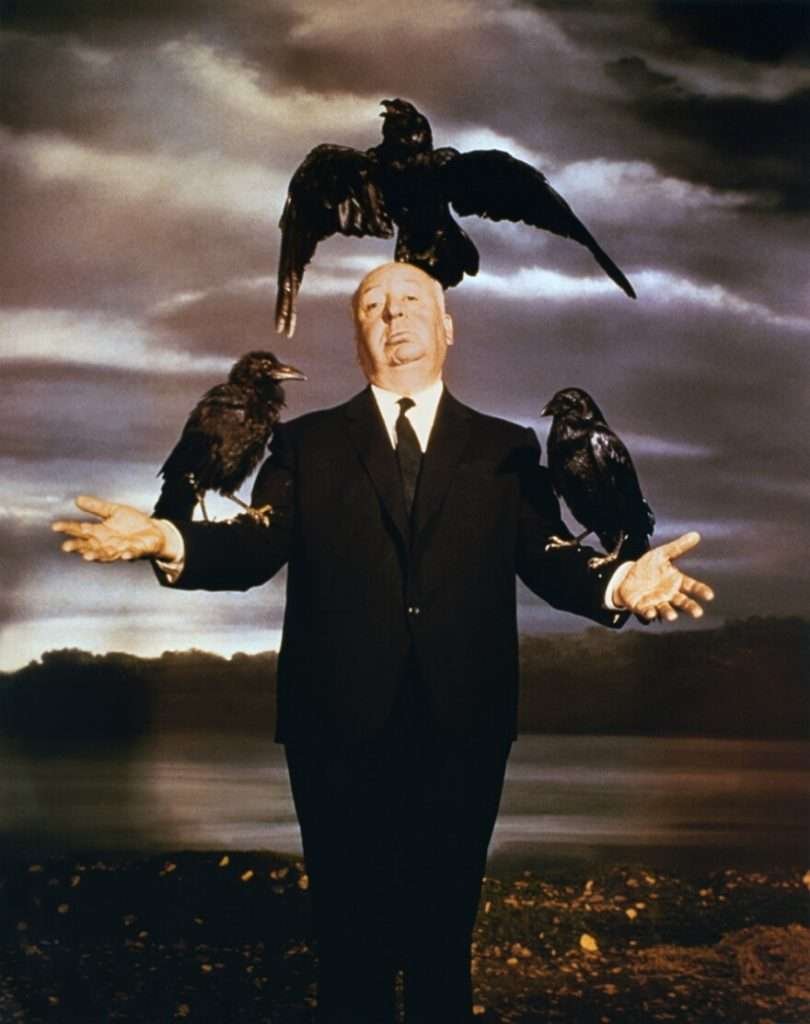
 Members of the Corvidae family (corvids) like crows and ravens are intelligent birds with a vocal repertoire that enables them to mimic words; they cooperate and use tools; they recognize human faces and, if hostile, alert the flock. They hold long-lasting grudges.
Featuring in myriads of myths and legends, corvids have received contrasting symbolic meaning. For some, they stand for adaptability and divine wisdom (in Greek mythology they served as sacred messengers for Apollo); for others, they are associated with plague, warfare, and death. Paradoxically, corvids are seen as both wise guides and grim omens.
New York, Lyon & Lisbon
Every year, flocks of crows migrate from the northeast of Canada, flying across Upstate New York towards roosting areas in southwestern Pennsylvania. Many birds cut the journey short to spend winter in New York City or the Hudson Valley where massive nocturnal “crow roosts” are a common spectacle.
Sizeable numbers seek shelter from the freeze by Poughkeepsie’s river front or at the campus of Syracuse University. At dusk and dawn (“crow o’ clock”) large groups make their way to and from the safety of their communal roost.
 Migrant crows display a blend of adaptability, resilience, and survival against the odds – in much the same manner as immigrants into the city had demonstrated for generations. Thriving in concrete environments, crows show the same resourcefulness as people living on the fringe of society.
In Syracuse, NY, locals have embraced the crow as its “spirit and soul.” Crows and residents are equally durable. Some city dwellers consider growing corvid populations a pest; many others value their cultural significance. There is a long urban history associated with crows.
The ancient Greek text De fluviis (Concerning Rivers) was written around the 2nd century AD by Pseudo-Plutarch (the particle “pseudo” indicates a false attribution) in which the author discusses a range of twenty-five rivers.
Besides supplying information on geography, flora and fauna, the book investigates traditional narratives. The sixth chapter concentrates on the French river Arar (now: Saône) and the foundation myth of a city we know today as Lyon.
According to legend, two Celtic kings named Momorus and Atepomarus were driven from their land by a rival ruler. Guided by a protective oracle, they began building a sanctuary on a hilltop near the river. Whilst at work, a flock of crows covered the surrounding trees.
Revered as sacred messengers, this was an augury of good fortune. They named the town Lugdunum (Hill of Crows: lugos for crow; dunum for hill). Although scholars have rejected this designation as an incorrect reading of Gaulish (the extinct regional Celtic language of Gaul spoken during the Roman Empire), the connection between city and crow stuck.
Ancient Roman coins minted in Lyon feature the city’s genius loci (protective spirit) as a young male deity with a corvid at his feet. The crow motif became part of the city’s identity.
 Historical Lisbon is associated with ravens. During the reign of Emperor Diocletian, Roman soldiers tortured and executed deacon Vincent of Saragossa, leaving his corpse as prey to vultures. According to legend, a flock of ravens protected his remains from predators. When the body was enshrined in the Algarve, its location became known as the “Promontory of Ravens” (later renamed Cape St Vincent).
In 1173 King Afonso I of Portugal ordered the body’s ceremonial translation to Lisbon Cathedral. During the journey, a pair of ravens followed the ship carrying the relics up the Tagus River. Vincent became the city’s patron saint.
Lisbon’s Coat of Arms features a sailing ship with a black raven perched on both its bow and stern. One can trace this image throughout the city, embedded in cobblestones, stamped on streetlights, and cast in statues.
Death & Carrion
Crows signify the boundary between life and death. In alchemy, nigredo (blackening) or decomposition is the first stage of the Magnum Opus (Great Work), the ancient process of turning black matter into the Philosopher’s Stone. This specific phase is named caput corvi (crow’s head).
Psychiatrist and psychoanalyst Carl Jung adopted the terminology. The crow in his analytical framework stands for nigredo, that is: psychic death and confrontation with the unconscious self before albedo (whitening) or psychological rebirth can be set in motion.
Many traditions view crows as messengers that carry universal wisdom from the spirit realm, offering insight into life’s mysteries. Used as a sacred totem, Native Americans worship the crow as a divine intermediary and sacred trickster.
The trickster archetype is a universal character that crosses borderlines between Gods and humans, right and wrong, order and chaos, by disrupting rules and forcing change.
 European settlers in America introduced a darker perspective. They associated the crow’s deep black plumage and scavenging habits with misfortune and approaching death. Corvids were omens of gloom. Death was the common symbolic denominator; the “crow funeral” its most intriguing ritual.
Crows are known for gathering around a fellow dead bird. These are not so much mourning sessions, but raucous investigative meet-ups intent to assess danger and threats. The birds remember locations and predators, helping them avoid a similar fate.
Crows are scavengers that feed on carrion. Throughout history, they have descended upon battlefields, execution gallows, and plague-ridden areas. During the American Civil War, corvids populated the Pennsylvania countryside where in early July 1863 the Battle of Gettysburg took place.
With over 50,000 casualties lying across the fields, the bloodshed attracted large numbers of crows. The grisly sight cemented their notoriety as symbols of lethal omens.
Many people feared crows as agents of death with intent, an anxiety deepened by the biblical threat of Proverbs 32:17: “Do not mock your father or disobey your mother – crows will peck out your eyes and vultures will eat the rest of you.”
Murder of Crows
A collective noun is a word that represents a cluster of humans or animals as a single entity. When used satirically, it tends to gently mock the status or behavior of certain professionals. The bookish trend may have gone out of fashion, but it is still a fun game to play (some personal examples): a ponder of philosophers; a corps of anatomists; a scoop of reporters.
During the Late Middle Ages, English aristocrats engaged in a pastime inventing terms of venery that describe groups of animals. Derived from the Latin venari (to hunt), they invented names based on habits or traits of specific species. Wordplay was a creative challenge.
Knowing obscure phrases such as a “gaggle of geese” or an “unkindness of ravens,” pointed at rank and education (social signaling) amongst the hunting and falconry elite. The word “murder” referring to a flock of crows has much to do with the bird’s scavenging nature.
 The earliest known record of the noun dates to 1475, spelled in Middle English as “a morther of crowys.” It was popularized in 1486 when published in The Book of Saint Albans (attributed to Dame Juliana Berners).
A gentleman’s handbook covering hawking and hunting, the text was a compilation from earlier French manuals and intended for the education of “gentle persons” – social training disguised as sport. Its main claim to fame was the list of collective nouns that includes the one
mentioned above.
Who was Dame Juliana Berners? Born about 1388, she was a well-educated noble person raised at the Royal court which explains her knowledge of field sports. She later adopted monastic life and became prioress of Sopwell nunnery near St Albans, Hertfordshire.
She was also one of the earliest published female writers in English. Having penned A Treatyse of Fysshynge wyth an Angle (1496), Berners produced the first printed account on the subject of sport fishing.
In American angling circles she has been hailed the “first lady of fly fishing.” Juliana’s Anglers Sporting Club, a woman’s fly-fishing club founded in 1995 in Manhattan, was named for her.
 Friedrich & Poe
The association between crow and death persists in western culture. For millennia, crows have served as living mirrors for man’s fear of mortality and angst about the unknown. The resonance of crows as mediators between life and death was explored in Romantic art and literature.
In 1822, German landscape painter Caspar David Friedrich (1774-1840) created “Der Krähenbaum” (Tree of Crows) at a time of deep personal grief. The painting depicts a twisted oak in the foreground with a murder of crows descending over a prehistoric burial ground, an image that stands for the passage of time and earthly despair.
Friedrich used the bleakness of landscape and the blackness of crows to express human insignificance in the face of a vast universe entirely indifferent to human agony. Contemporaries struggled with his use of nature as a psychological vehicle.
Similarly minded, Edgar Allan Poe (1809-1849) explored themes of isolation, aloneness, and the macabre. Like Friedrich’s crows, he transformed the raven into a symbol of grief, pain, and melancholy. Both were obsessed with death and dying.
Whereas earlier ages viewed corvids as harbingers of doom, they turned them into companions of solitude and suffering, bridging German Romantic painting with American Gothic poetry.
Members of the corvid family have a unique ability to interact with language as they mimic speech by replicating words or sounds. When composing “The Raven,” Poe needed a credible non-human creature to repeat the word “Nevermore.” He first considered a parrot, but the multicolored tropical bird did not evoke the gloomy atmosphere of the poem’s setting.
 Since the publication of John James Audubon’s foundational catalogue Birds of America in the 1830s, there had been a growing interest in corvids. The naturalist and painter captured the forms of the common raven (plate 101) and crow (plate 156) with scientific precision.
The book inspired artists and writers, but there was a more immediate link to Poe’s raven choice. In 1841, he wrote two reviews of Charles Dickens’s novel Barnaby Rudge (serialized in nineteen parts that year by the Philadelphia publishers Lea & Blanchard), trying to solve the murder mystery before its author had revealed the plot.
The tale featured a talking pet raven named “Grip.” Poe suggested that the novelist could have used the bird more prophetically – it provided the creative spark for “The Raven.”
When Poe published the poem in 1845, antebellum Americans treated bereavement with standard public codes, rituals, and expectations of an afterlife. The poem’s unnamed scholar mourning the loss of his beloved Lenore seems to mirror this social pattern.
The sudden arrival of “The Raven” echoes the familiar role of a spiritual comforter, but its presence becomes disturbing. It offers no solace or support. The raven’s haunting refrain of “Nevermore” shatters the hope of heavenly reunion, denying closure or healing.
There is a curious tale that links the American poet with Juliana Berners, the English nun. Local legend in Saint Albans, West Virginia, claims that Poe visited a friend (or family gathering) in a section of town called Raven’s Court and drew inspiration there for “The Raven.”
Literary historians have found no evidence that Poe ever set foot in Saint Albans. He worked on the poem whilst living at Brennan Farmhouse in Manhattan’s Upper West Side.
 Full Circle
In modern culture, the crow has evolved into a powerful symbol across the arts (including tattooing), reflecting troubled inner states and psychological anguish. Created towards the end of his life in July 1890 at Auvers-sur-Oise, Vincent van Gogh’s painting “Korenveld met kraaien” (Wheat Field with Crows) shows a bright yellow field under stormy skies with the menacing black presence of a murder of crows.
It was a desperate scream of inner turmoil and isolation. In modern western culture the image has been interpreted as a universal metaphor of depression and a premonition of death.
Its most consequential appearance in twentieth-century culture came with Alfred Hitchcock’s 1963 horror film The Birds. The scene that sent shivers down our cultural spine is set at Bodega Bay, California, showing a dive-bombing assault by a murder of crows, after which the character of Dan Fawcett is found dead at his farm with his eyes pecked out.
The disturbing episode has some scientific credibility. The premise of a coordinated avian attack is fiction; targeting the soft tissue of a corpse’s eyes is biologically correct. Hitchcock’s film set a precedent.
 The 1994 film The Crow was directed by Alex Proyas and based on a comic superhero series by American author and graphic artist James O’Barr. The story follows Eric Draven, a rock musician who is brutally murdered alongside his fiancée by a criminal gang on the eve (“Devil’s Night”) of their Halloween wedding.
A year later, he is resurrected from the grave by a mystical crow. Granted supernatural strength and vision, he seeks retribution. Celebrated for its moody “noir” aesthetic, the cult film transformed the crow into a symbol of tragic love and vengeance.
In its aftermath, crows have appeared repeatedly in film and literature. From psychological thrillers to horror tales, they are presented as creatures that signal danger, transition, or hidden knowledge. Linked to the film’s impact was the harrowing death of actor Brandon Lee (son of martial arts legend Bruce Lee) who, during the final weeks of filming, was shot on set by a defective prop gun.
Four years later, Hollywood director Rowdy Herrington produced a psychological thriller set in New Orleans and Key West. The intriguing part of the film is not its contents (regarded as a B-grade “neo-noir” mystery), but the title.
Named A Murder of Crows, it recalls the collective noun dating back to Juliana Berners, St Albans, and fifteenth-century aristocratic hunting traditions.
Read more about Ravens and Crows
Illustrations from above: Alfred Hitchcock with crows from a 1963 Birds film promotional photo; American Crows roosting illustration by Adelaide Murphy Tyrol; the Coat of Arms of Lisbon with motto “Most noble and always loyal city of Lisbon”; Théodule Ribot’s “Saint Vincent,” 1867 (Musée des Beaux-Arts, Lille); a purported image of Dame Juliana Berners, OSB (1904); Caspar Friedrich David’s “Der Krähenbaum,” (Tree of crows), ca. 1822 (Louvre, Paris); John James Audubon, ‘The American Crow’ (Plate 156) in The Birds of America, 1823-39; Vincent van Gogh’s “Korenveld met kraaien” (Wheat field with crows), 1890 (Van Gogh Museum, Amsterdam); and an Italian poster for The Crow (Il Corvo), 1994.
Recent Comments