
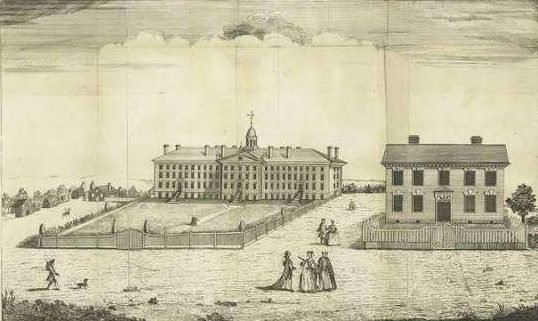
 The New York and New Jersey metropolitan area hosts several leading higher education institutions, ranging from elite Ivy League and public research universities to specialist technological schools. Three of those belong to the historic group of nine pre-Revolutionary colonial colleges.
The College of New Jersey was set up in 1746 by seven Presbyterian trustees. All of them were slave-holders. A decade later the institution moved to Princeton. Its Nassau Hall served as a military hospital during the Revolutionary War. The college later became Princeton University and a private member of the Ivy League.
Founded in 1754, King’s College Manhattan was established under an Anglican charter by King George II. From the start its presidents and donors were associated with slavery. The college was renamed Columbia University after the Revolution.
Chartered under George III and named for Queen Charlotte, the founding of Queen’s College in 1766 at New Brunswick, New Jersey, was undertaken by Dutch Reformed ministers. In 1825, trustees renamed the college after Revolutionary War hero Colonel Henry Rutgers (1745-1830).
It transitioned later into New Jersey’s public state university (one of two former colonial colleges that are public institutions today). Its early history was associated with both the call for independence and the endorsement of slavery.
Hardenbergh Dynasty
The son of Dutch settlers in New Amsterdam, Major Johannes Hardenbergh (1670-1745) was a prominent landowner, soldier, and slave-holder. The surname was a habitational reference to Hardenberg, a town in the eastern Dutch province of Overijssel.
Born in Albany, he acquired the Hardenbergh Patent in 1706 from the indigenous Esopus people, a land tract spanning some two million acres across the Catskill Mountains. Legalized by the British Crown in 1708, the grant encompassed present-day Sullivan, Ulster, and Delaware counties.
His son Colonel Johannes Hardenbergh Jr. (1729–1799) was an officer under George Washington and served in New York’s Colonial Assembly; his grandson Jacob Rutsen Hardenbergh (1735/36-1790) was born in Rosendale, Ulster County.
 The latter was eighteen years old when he first entered the Raritan Valley, central New Jersey, seeking religious instruction from Johannes (John) Frelinghuysen (1727-1754).
A minister and educationalist, the latter lived in the Old Dutch Parsonage at Somerville, NJ where he served the congregation until his death. He took in student lodgers; and one room in the house served as a Dutch Reformed seminary.
Upon his mentor’s death in 1754 Jacob Rutsen took over the parish, married Frelinghuysen’s much older widow Dina van Bergh in 1756, and pushed forward the project of creating a religious college.
In 1763 he sailed to Europe to inform grandees at the Dutch Mother Church of his appeal to King George III of Britain on behalf of the college movement. On November 10, 1766, William Franklin (Benjamin Franklin’s son), Royal Governor of New Jersey, granted a charter for the creation of Queen’s College.
Preparations for the new college took five years before opening at the Red Lion, a former tavern on the corner of Albany and Neilson Streets, New Brunswick. In November 1771, the school’s first tutor Frederick Frelinghuysen began instructing students. Jacob Rutsen himself taught theology.
One of the students who matriculated as a sophomore that memorable year was sixteen-year-old Matthew Leydt. Three years later, this student (of Dutch descent) was the first to receive a Bachelor of Art degree during a ceremony presided over by Hardenbergh.
After graduation, Leydt gained his license to enter the ministry of the Dutch Reformed Church. Growing slowly, the college functioned for more than a decade under governance of its trustees rather than an elected President.
Queen’s College & Revolution
As the American Revolution approached, Hardenbergh became an outspoken advocate of independence. He was a delegate to the last Provincial Congress which met in June 1776 in Burlington to ratify the Declaration of Independence and frame New Jersey’s first state constitution. He served several terms in the General Assembly.
British incursions into New Jersey interrupted the continuity of education at Queen’s. Classes were suspended or moved elsewhere around the county to avoid invading forces. Some tutors and students joined the Continental Army.
 Frederick Frelinghuysen became an officer; alumnus Simeon De Witt served as Surveyor General and chief geographer for George Washington. He mapped the victory at Yorktown in 1781.
That same year, Hardenbergh left New Jersey to return to Ulster County where he acted as pastor of the Reformed Churches, but he stayed involved in the college’s affairs. Meanwhile, the trustees continued their search for a President in cooperation with the by then autonomous Dutch Church.
In 1786 they appointed Jacob Rutsen as the first President of Queen’s College. He served for four years until his death in October 1790. Under his leadership, Queen’s College reputation grew steadily.
His belief in the young nation remained firm and the College educated some of its pioneers. Jacob Rutsen was still alive when, in 1789, Brunswick-born alumnus James Schureman was elected to the first U.S. Congress to represent New Jersey.
The Reformed Church & Slavery
The Reformed Church was New Netherland’s official religious institution. Rather than resisting human bondage, the clergy aligned with the profit-driven goals of the Dutch West India Company (WIC) and its slave trade. Ministers used biblical interpretation of selective texts to “prove” that slavery did not contradict the Holy Scripture. They themselves freely “purchased” enslaved people, although the Church authorities sustained a cautious ambiguity.
Going back to the sixteenth century, the “free soil” tradition was based on a ruling by the Great Council of Mechelen (Mechlin), the highest court in the Burgundian Netherlands. It decreed that when entering the Low Countries, enslaved people became free agents.
At the time that Portuguese Jewish merchants and their African slaves began settling in Antwerp and Amsterdam, local authorities reinterpreted legal codes. During the 1630s, the WIC received charters that allowed for the slave trade. It created a dilemma as slavery was accepted in colonial territories but not at home.
In 1644, Amsterdam’s city authorities issued a decree against slavery: Binnen der Stadt van Amstelredamme… zijn alle menschen vrij, ende gene Slaven (“Within the city of Amsterdam, all men are free and there are no slaves”).
 The practice of slavery in the Dutch Republic and its colonies was not codified. In that vacuum, the church served as a space where slaves secured protections. Those who integrated into the Reformed Church gained civil privileges. They could testify in court or sign legal documents.
The WIC granted “half-freedom” to long-serving enslaved families, offering land to farm in exchange for an annual contribution and labor when needed.
Slaves could be legally married by Reformed ministers and have their children baptized. As doctrine dictated that a Christian could not be held in bondage, this right created a contradiction. Reformed ministers therefore separated baptism from emancipation on behalf of the WIC, ruling that spiritual liberty did not imply physical freedom.
When the English seized New Netherland in 1664, they stripped away most civil rights for Black residents and codified a harsher form of slavery, but the cultural footprint of the Reformed Church endured. Generations of enslaved people in rural New York and New Jersey continued to speak Dutch as their first language.
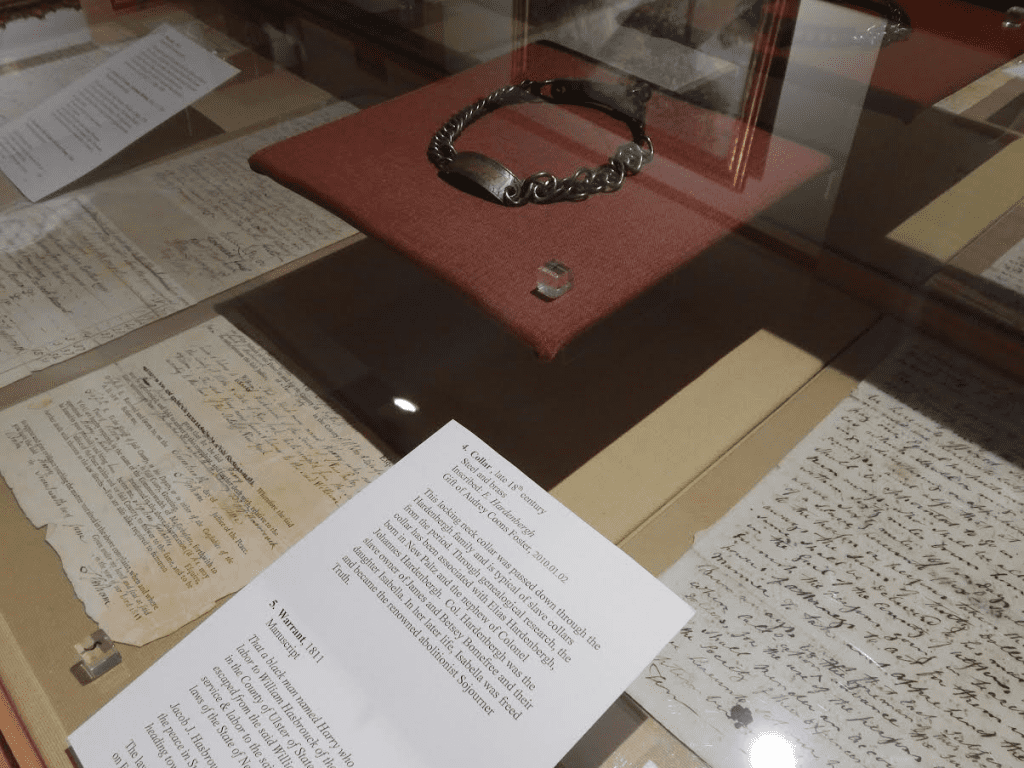
As slave-holding was part of life for Dutch landowners in New York and New Jersey at the time, the religious zeal of the Hardenbergh family did not oppose slavery. The 1790 census of Hurley, Ulster County, lists Johannes Hardenbergh as the owner of seven enslaved people, including the parents of Isabella Baumfree (Bomefree).
Born around 1797 in Swartekill, New York, she grew up in a Dutch-speaking environment and is known to have kept a strong accent all her life, although fluent in
English. In 1826 she escaped to seek freedom and, having adopted the name Sojourner Truth in 1843, made her mark as an abolitionist and activist for African American civil rights.
 Jacob Rutsen Hardenbergh continued the tradition of slave-holding. His son Jacob Jr was an alumnus of the college (class of 1788) and served on the Board of Trustees for almost fifty years. He held slaves in his household into the nineteenth century.
On December 16, 1800, he placed a notice in the local Guardian, or New-Brunswick Advertiser in which, in a chilling matter of fact tone, he offered a thirty-five-year-old Black woman for “sale,” describing her as a “good cook.”
The Legacy
Born in 1745 in New York City, Henry Rutgers (1745-1830) was the son of landowner and brewer Hendrick Rutgers and his wife Catharine de Peyster (a prominent Dutch family in New York’s early history). He graduated from King’s College in 1766 and became a champion of American independence.
He served as an officer in the Continental Army at the Battle of White Plains in late October 1776, and later in the New York militia. He turned his home into barracks during the British occupation of New York.
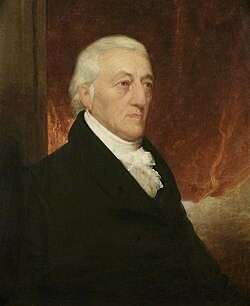 Elected to the New York State Assembly across multiple terms between 1777 and 1808. Serving Thomas Jefferson and the (anti-Federalist) Democratic-Republican party, he would continue to play a role in the defense of the young nation during the War of 1812.
A bachelor with large holdings in Manhattan, Rutgers donated land for building schools and churches in the area. Both Henry Street and Rutgers Street, Lower Manhattan, are named for him. He supported Queen’s College when it was in financial trouble and threatened with closure.
He donated a bond valued at $5,000 to reopen the school and gifted a bronze bell for the cupola of the Old Queens building. In December 1825, the trustees renamed the school Rutgers College in his honor, removing all Royal British associations at the same time. The institution later became Rutgers University.
Historical census records confirm that Henry Rutgers too was a lifelong slave-holder.
In May 2015, faculty members and researchers met in Old Queen’s and decided to confront the past. They started an investigation in the institute’s historical connections to the slave trade. The outcome of painstaking research, the University has published a multi-volume Scarlet & Black series that documents racial history at Rutgers from slavery to Black Lives Matter.
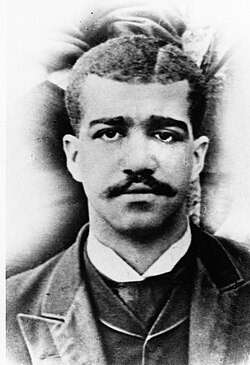 Rutgers admitted its first undergraduate Black student when Baltimore-born James Dickson Carr (1868-1920) entered the College in 1888, graduating four years later as its first African American graduate. Carr then became the third Black student at Columbia Law School where he received a Bachelor of Law and gained admittance to the New York Bar in June 1896.
He would become the first Black assistant district attorney in New York State’s history. Carr co-founded the faction of United Colored Democrats within Tammany Hall.
Paul Robeson was the most versatile alumni in the history of Rutgers University. Having enrolled on an academic scholarship in 1915, he was the third Black student entering the school and its first Black football player.
Despite facing racial bigotry and, at first, being barred from living on campus, he achieved heights as a scholar, athlete, and orator before graduating as the class valedictorian in 1919. In a spectacular career, he developed into a world-famous actor, singer, and human rights advocate.
The Hardenbergh dynasty left a distinct regional legacy as colonial landowners, religious leaders, slaveholders, and pioneers in education. A municipal footprint remains today via the rural town of Hardenburgh in Ulster County (founded in 1859). There was more to come. A later descendant defined New York City’s towering skyline and infrastructure.
Born on February 6, 1847, in New Brunswick, Henry Janeway Hardenbergh was the great-great-grandson of the first President of Queen’s College. From 1865 onward he apprenticed in Manhattan under the inspiring guidance of Detlef Lienau, a German immigrant from Holstein (later part of Denmark) who had studied architecture at the École des Beaux-Arts in Paris.
Hardenbergh who opened his own practice in 1870 and secured his first contracts at Rutgers College. His monumental Gothic Revival designs of the Geology Hall in 1872 (now Geology Museum) and, a year later, the Kirkpatrick Chapel shaped the university’s Queens Campus.
 In later years, Henry Janeway was celebrated for residential projects such as the 1884 Dakota apartments on Manhattan’s Upper West Side; and for designs of deluxe hotels (Waldorf, 1897, and Plaza, 1907).
His distinct Revival vocabulary, a mixture of French and Northern European Renaissance elements, transitioned New York City from a ground-level urban area into the upward density of a global metropolis. He reshaped Manhattan’s architectural face by creating some iconic landmarks, helping to lay the structural groundwork for the skyscraper era.
Read More About the History of Education
Illustrations, from above: Princeton University shortly after it was founded as the College of New Jersey; the Old Dutch Parsonage in Somerville, New Jersey in 2017; a map of the Hardenbergh Patent, 1795; a Hardenburgh slave collar held by Historic Huguenot Street; a Hardenbergh slave advertisement in the Guardian, Or, New-Brunswick Advertiser, December 16, 1800 (Special Collections, Rutgers University Libraries); Henry Inman’s “Portrait of Henry Rutgers,” 1828 (Old Queen’s Building, Rutgers University); James Dickson Carr, 1892 (Digital Archive, Rutgers University); and Henry Janeway Hardenbergh’s Dakota apartments as seen from Central Park West.
Recent Comments