
LinkedIn grew its active user count in the EU in the first half of 2026, while it also reported a significant jump in its enforcement of inauthentic activity, as the platform works to weed out automated and artificial intelligence-generated comments and profiles.
As outlined in the platform’s latest EU DSA disclosure report, LinkedIn added 1.4 million active users in the EU for the first half of 2026 (versus H2 2025), taking it to 56.5 million active EU users.
The most significant point of note about this stat is that it’s the only insight LinkedIn provides into active user numbers, as opposed to total members, which is the stat that LinkedIn would prefer to focus on.
In its official reporting, LinkedIn generally shares this overview of its global member base.
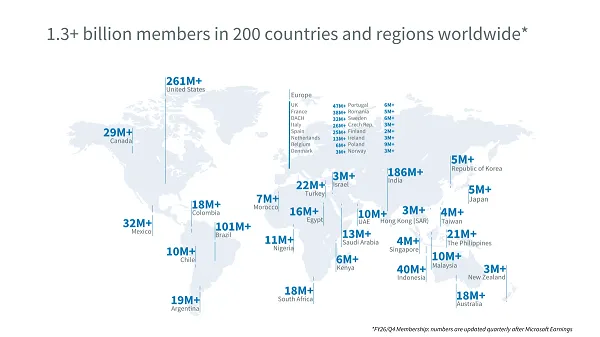
A total of 1.3 billion members is impressive, but it’s also worth noting that members and users are two very different things, and LinkedIn’s actual active usage is significantly lower than this.
LinkedIn’s EU active user stats provide some insight into this.
Looking at LinkedIn’s reported EU membership stats, only around 30% of LinkedIn’s member base is actually active in the app.
Assuming that trend is the same across all regions, that would mean that LinkedIn’s active user base is currently around 433 million monthly active users.
That is a big number, no doubt, though it is also interesting to note that while LinkedIn’s user base has slowly climbed in the EU over the past few years, the percentage of active users has stayed pretty much the same.
In March 2025, based on the same DSA reporting from LinkedIn, the data showed that 28% of the platform’s EU member base was actively using the app. In October 2024, the rate of members to active users was also 28%.
What the data shows is that, over time, despite LinkedIn reporting higher levels of user engagement, the platform isn’t actually attracting a significantly higher amount of active users.
For example, last month, as part of parent company Microsoft’s latest update, LinkedIn CEO Daniel Shapero shared that the platform saw double-digit member growth in Q2 2026, while content consumption increased 10% year-over-year.
Those stats, along with its headline member numbers, make it sound like LinkedIn is seeing significant growth in engagement, but its active user stats suggest that it’s largely the same people talking to each other in the app most of the time, with the platform struggling to drive significant growth in active usage.
Does that matter? Well, it depends on who you’re trying to reach and how active they are in the app. But it is interesting to note the variance between LinkedIn’s topline member data, and its actual active user stats, which suggest that the app is only seeing modest growth in its overall audience over time.
In terms of content trends, LinkedIn also reported a 46% rise in detected instances of inauthentic activity in the app in the first half of 2026 versus the second half of 2025.
LinkedIn has been working to address concerns with inauthentic comments from engagement pods, as well as external apps that offer automated posting services. At the same time, the platform is also working to address what it classifies as “AI slop,” and artificial intelligence-generated engagement that doesn’t add to the experience.
The new DSA numbers suggest that LinkedIn is taking more action on these elements, with a significant rise in reported actions against inauthentic profiles and members.
Recent Comments