
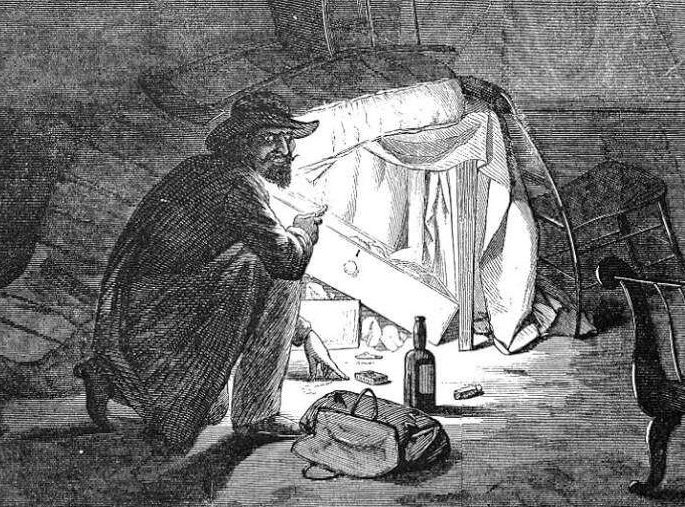
 Early British colonists brought English common law to the colonies and adapted it to frontier conditions. Formally known as Lawes Divine, Morall and Martiall, “Dale’s Code” was a legal system enacted in 1610 (published in 1612) by the Deputy-Governor of colonial Virginia, Thomas Dale.
It mandated the death penalty for a range of misdeeds, from stealing grapes to trading with Indigenous populations. Arson too was a capital crime.
New York’s legal history also goes back to colonial times. After occupied New York City finally pushed out English troops in 1783, the Founding Fathers rejected the death penalty as an oppressive tool.
 They provided a Bill of Rights (ratified in 1791) with the Eighth Amendment – which prohibits government from imposing excessive bail, excessive fines, or cruel and unusual punishments – as a crucial part.
In 1796, New York State’s legislature reduced capital crimes to murder and treason only – but there were grave concerns about that decision. New York City lived in fear of arsonists.
In the seven decades between 1741 and 1811, Manhattan experienced five fires that shook the city to its core. The devastation in each of these apocalyptic events created a lingering trauma.
Smouldering ruins symbolized a cityscape of paranoia and blame. It ingrained an acute sense of vulnerability in the civic psyche. In 1808, arson became a capital crime again.
The New York Conspiracy (1741)
On March 18, 1741, a blaze engulfed the capital’s administrative center at Fort George. Within three hours, the fire had destroyed its main buildings. Gale force winds drove the flames to neighboring homes, but heavy rain in the evening dampened their spread.
Over the following weeks, several unexplained fires broke out across the city. Terrified settlers suspected a scheme by Black “plotters” together with criminal white allies to burn down the city and seize power.
Other worries fueled the paranoia. The city was recovering from a severe winter and food shortages; there was talk of foreign interventions (Britain was at war with Spain and France); fears were rife about impending slave insurrections.
 John Hughson’s tavern was identified as a den of conspiracy. Located on the waterfront at the corner of Liberty and Trinity Streets, his establishment was a meeting place for free and enslaved Black Americans, although it was illegal for more than three slaves to gather away from work.
City officials made more than 150 arrests. The courts relied on coerced confessions and the dubious testimony of an indentured servant named Mary Burton.
The trials resulted in draconian punishments. Thirteen Black men were burned at the stake; seventeen others hanged. Executions took place at the old Poor House in the Fields, now City Hall Park, with the bodies (probably) dumped in the African Burial Ground.
Four white collaborators were also hanged; other suspects banished from the city or sold into slavery in the Caribbean. Colonial authorities exaggerated the scale of the plot, seeking to impose social control. Impelled by panic and prejudice, trials allowed for state violence to take hold, silencing marginal communities.
New York State’s reintroduction of the death penalty did not stop any fires. Instead, their frequency increased as the metropolis grew in numbers and density. There may have been a suspicion of foul play at times, but convictions were rare.
One of the few executions was that of Rose Butler, a young Black woman who had been “sold” to a Manhattan resident and arrested in 1819 for setting fire to his house.
The property was undamaged and no one hurt, but Rose’s hanging took place on July 9th in Washington Square Park. A crowd of 10,000 people turned up to see the execution of an arsonist.
Arson & Rebellion (1776)
As resistance in the colonies grew violent during the 1770s, the British authorities became obsessed with the dual threat of arson and treason. The “Gaspee Affair” was a pre-Revolutionary act of resistance in Rhode Island.
 On June 9, 1772, HMS Gaspee which enforced British custom laws to combat smugglers, ran aground on a sandbar in the shallow waters of Narragansett Bay.
Local colonists boarded the ship and burned her the next day. The British treated incident as an act of treason; arson became synonymous with rebellion.
On September 21, 1776, six days after the British occupation of New York City, a fire broke out. According to John Joseph Henry, a prisoner aboard HMS Pearl anchored in the harbor, the blaze started shortly after midnight at the Fighting Cocks tavern on Whitehall Street.
The flames spread among the district’s tightly packed homes and businesses, continued through the night, and ruined most of the properties between Broadway and the Hudson River. At least a quarter of the city burned down as most properties were wooden structures.
Whilst the fire’s cause remained a mystery, the blame game began at once. Was it arson? Rumors circulated about insurrectionists who would sooner burn down their city than surrender to British troops.
The Continental Army dispelled the notion that George Washington had given the order to start a blaze. British General William Howe accused rebel sympathizers of being involved.
Patriot observers singled out British soldiers for intentionally burning buildings to enable looting. Conspiracy theories abounded. Despite arrests, there were no charges filed against any of the accused.
T he 1776 calamity was a traumatic event made worse by the fact that barely two years later another blaze hit Lower Manhattan. Around 1 am on August 3, 1778, a fierce fire broke out near Cruger’s Wharf.
Sweeping through the waterfront, it destroyed sixty-four houses and several warehouses in a two-block radius as well as three ships near the wharf, until firefighters finally controlled the blaze close to the Fish Market.
Manhattan was combustible, a place shrouded in woodsmoke that could burst into flames at any given time.
In October 1783, shortly before British forces evacuated New York City, Commander Guy Carleton commissioned a panel of officers to investigate the 1776 fire and answer the question whether its cause had been “accidental or the effect of design.”
If started deliberately, was this an act of a single individual or were others involved? If so, were they working on the orders of a higher authority?
Although the report raised the possibility of arson, the Carleton Commission did not supply a definite answer to these questions. The evidence was ambiguous. New Yorkers lived in perpetual fear of arsonists.
The Great Fire (1835)
In 1815, city officials banned the construction of wood-frame buildings in dense urban areas, but certain structures remained at risk of fire. Amongst them were theaters that lit stage and auditorium with candles.
On the evening of May 26, 1828, a blaze spread from a nearby stable and destroyed the original Bowery Theater. On December 16, 1848, the renowned Park Theater in Lower Manhattan went up in flames.
Brooklyn’s Theater blaze on December 5, 1876, was catastrophic. A gas lantern ignited the canvas backdrop, setting off a fire that claimed almost three hundred lives. Panic and poor safety provisions caused this tragedy, forcing changes to theater design and exit facilities.
Hotels were also vulnerable. The City Hotel on Broadway suffered a fire on April 25, 1833, which destroyed the upper stories of the historic building (dating from 1794).
Water supply had been a problem since the foundation of New Amsterdam. Water was scarce and of inferior quality, hence the many (cholera) epidemics in the city. Firefighters relied on local wells, cisterns, and a modest reservoir at the Bowery (built in 1829), but during droughts or freezes rescue workers were hampered by a lack of water.
New York City’s prosperity attracted newcomers. Since the opening of the Erie Canal in October 1825, some 145,000 people flocked to the teeming city. The volunteer fire department could not keep up with this expansion. An understaffed service lacked equipment that could generate enough pressure to reach the top of large buildings.
 In a city crammed with wooden structures full of flammable goods, a disaster was waiting to happen. It struck on the evening of December 16, 1835.
The Great Fire covered fifty acres in seventeen blocks, destroying somewhere between 530 and 700 buildings, but only two people died in the fire. The disaster did end the obsession with arson.
Authorities realized that the death penalty would not solve the fire threat. That demanded safety planning, adequate investment, efficient equipment, and professional training.
The fire decimated the city’s commercial district. Wiping out its insurance capital and forcing banks to lend out their precious metal reserves prematurely, the disaster made Wall Street highly vulnerable.
The Great Fire did not directly cause the nationwide Panic of 1837, but it was the catalyst that weakened New York City’s financial institutions. It left the nation’s entire banking system fragile to the point of failure at a time of a deepening global crisis that triggered a depression lasting until the mid-1840s.
Another Great Fire (1845)
After the disaster, new dwellings were built with brick, and the fire department became better equipped. One project proved decisive. Plans to build an aqueduct gained urgency.
The Croton River in Westchester County would serve as a source of “inexhaustible” water supply. Although not in use until 1842, the aqueduct created a crucial water network. It eradicated waterborne epidemics and gave firefighters a reliable supply.
The Great Fire of Saturday July 19, 1845, started on the third floor of J. L. Van Doren, Oil Merchant & Candle Manufacturer, at 34 New Street, and spread quickly to adjoining wood-frame buildings.
The City Hall alarm bell began ringing at about three in the morning, summoning volunteer firefighters. They used water from the Croton Aqueduct to battle the blaze.
 The raging fire reached a multi-story warehouse at 38 Broad Street occupied by Crocker & Warren. Their business stored a quantity of saltpetre used for producing gunpowder. It caused an explosion that flattened six to eight buildings and shattered windows a mile away.
The whole neighborhood was ablaze. Burning for over ten hours, the inferno destroyed 345 buildings of what is now the Financial District. Four firefighters and twenty-six civilians died. There were reports of looting during and in the aftermath of the blaze.
Despite its destruction, the disaster proved that building codes had been effective. The fire’s progress was checked when it spread toward areas rebuilt with brick and stone. It prompted demands for an even more proactive stance in fire prevention and stricter implementation of safety regulations.
The fire was widely discussed with whispers of irresponsible trading. The owners of Crocker & Warner were arrested for illegally storing materials that caused the power of the explosion (later disproved in Court), but there were no suspicions of arson or conspiracy. These fears returned during the Civil War.
On November 25, 1864, the Confederate Secret Service orchestrated a sabotage mission to burn down New York City. A gang calling itself the “Confederate Army of Manhattan” infiltrated the city to set simultaneous fires at seventeen hotels, two theaters, and P. T. Barnum’s American Museum.
The aim was to inflict terror, overwhelm local emergency resources, and force the Union to make concessions. The fires were quickly contained, but the outcome could have been disastrous if the plotters had used more potent chemicals.
In 1865, the city’s volunteer firefighters converted into a professional Fire Department of the City of New York (FDNY).
The Shirtwaist Factory Fire
In 1900 Isaac Harris and Max Blanck, Jewish immigrants from Eastern Europe, founded the Triangle Waist Company. Producing more than 1,000 blouses and shirts a day, they were called the “Shirtwaist Kings,” employing about five hundred workers by November 1909.
Located on the eighth, ninth and tenth floors of the Asch Building at Washington Place, the firm was notorious for hiring young immigrant women who labored for long hours at low wages.
 On March 25, 1911, a fire broke out on the eighth floor. Workers on the ninth floor were unaware of trouble until smoke filled the room, and flames blocked the exit doors (which were locked to prevent workers from taking unauthorized breaks).
Out of two hundred workers on that floor 146 perished. It was the deadliest disaster in New York City’s industrial history.
Harris & Black were indicted on seven counts of manslaughter but acquitted of all charges. The jury’s verdict sparked public outrage. Grief transformed into political action.
Labor organizations and trade unions received a wave of support in their drive to improve working conditions and having safety requirements implemented.
The modern concept of emergency management evolved out of fragmented agency responses to a series of crises. Throughout its history Manhattan advanced in the face of disasters, ranging from natural (coastal) hazards to human-caused tragedies that shaped and reshaped the island’s urban fabric.
Fire and ashes repeatedly obliged the city to reinvent itself. A dense infrastructure increased exposure, forcing officials to continually update and adapt safety protocols. Manhattan’s resilience was forged in flames.
Read more about fires in New York State
Illustrations, from above: A detail from, “Southern Gentleman (about to Fire the Hotel” a cartoon showing a Confederate arsonist setting a fire in Manhattan (Harper’s Weekly, 1864); Detail from the broadside “Execution of the pirates… Particulars of the murder perpetrated by the pirates for which they are this day to suffer public execution…,” 1820 (Connecticut Museum of Culture and History); an account of the 1741 “New York Plot” trials; Charles DeWolf Brownell’s “The Burning of the Gaspee,” 1892 (Rhode Island Historical Society); Franz Xaver Habermann’s imagined print of the fire in New York during teh Revolution seen as lit from the back; Nicolino Calyo’s “The Great Fire of New York as Seen from the Bank of America,” 1836 (New-York Historical Society); “View of the Terrific Explosion [at Crocker & Warren] at the Great Fire in New York,” 1845; and news of the Triangle Shirtwaist Factory Fire, 1911 (New York Herald).
Recent Comments