
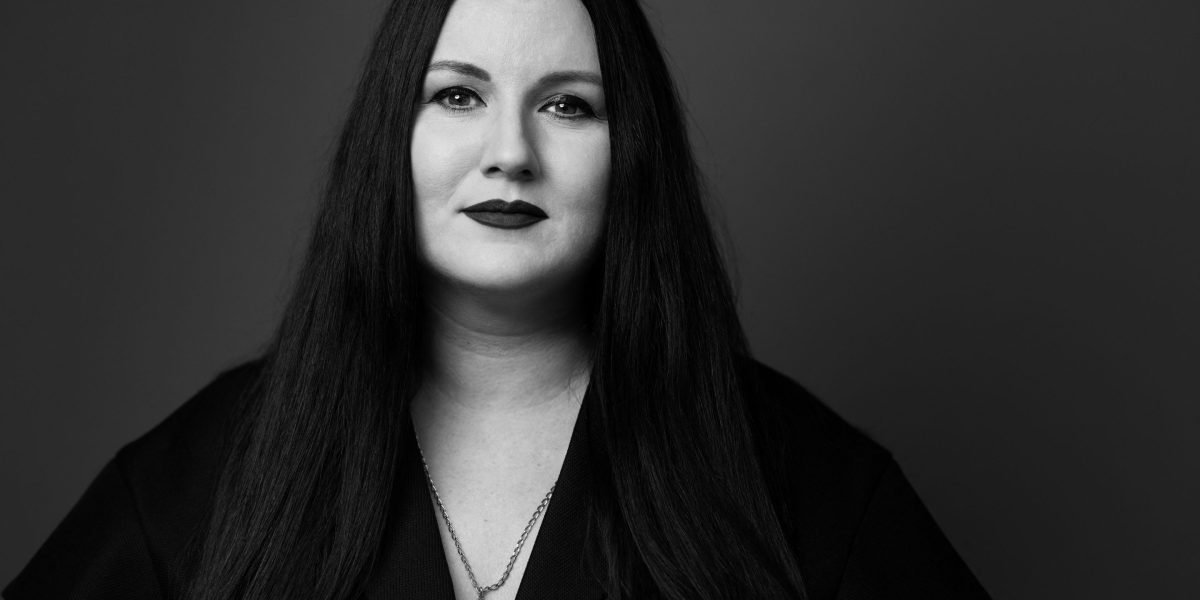
When Fidji Simo announced she was leavin g her role as one of the most senior members of OpenAI’s leadership team after a seven year battle with her chronic illness, Postural Orthostatic Tachycardia Syndrome, or POTS, the news felt unexpectedly personal. My little cousin has POTS, and it’s been devastating to witness. Simo’s post said she would be focusing on how to use AI to cure these types of diseases, but I wondered if it was just another tech executive making lofty promises about AI that may never materialize.
“Do people like my cousin have any reason to have hope that AI can actually make a difference for their health?” I asked Simo when I reached out to her after the announcement. I also told her how much I admired her courage to be so open about her condition. That’s not easy for a highly scrutinized public figure. Simo was previously at Meta for a decade, where she oversaw the Facebook app, and then CEO of Instacart, which she brought public in 2023, before joining OpenAI in 2025.
“Yes,” she answered. “I created a company, ChronicleBio, to tackle just that.”
We hopped on the phone to chat about it in Simo’s first interview since leaving her position as OpenAI’s CEO of AGI Deployment, where she reported directly to CEO Sam Altman. While now her main focus is her recovery and a never-ending schedule of medical appointments, she’s also working on growing ChronicleBio as well as continuing advising OpenAI. She’s still in a Slack channel with the company’s leadership team, where she regularly speaks with Altman, and Greg Brockman, the OpenAI co-founder and president who took over the bulk of Simo’s responsibilities when she departed.
Brockman’s wife, Anna, has POTS in addition to two other chronic diseases. ChronicleBio’s three co-founders—Simo, Rohit Gupta, and Rishi Reddy—also either have chronic diseases themselves, or have a family member with one. These days, Simo says she’s “physically the worst I’ve ever been.” There is no cure for POTS. It causes dizziness upon standing up, fatigue, brain fog, headaches, and other symptoms, due to an imbalance in the body’s autonomic nervous system.
Chronic conditions are “becoming a real epidemic,” Simo tells me. “We’re talking about hundreds of billions in lost productivity, and so there’s very big potential in finding drugs for these conditions.”
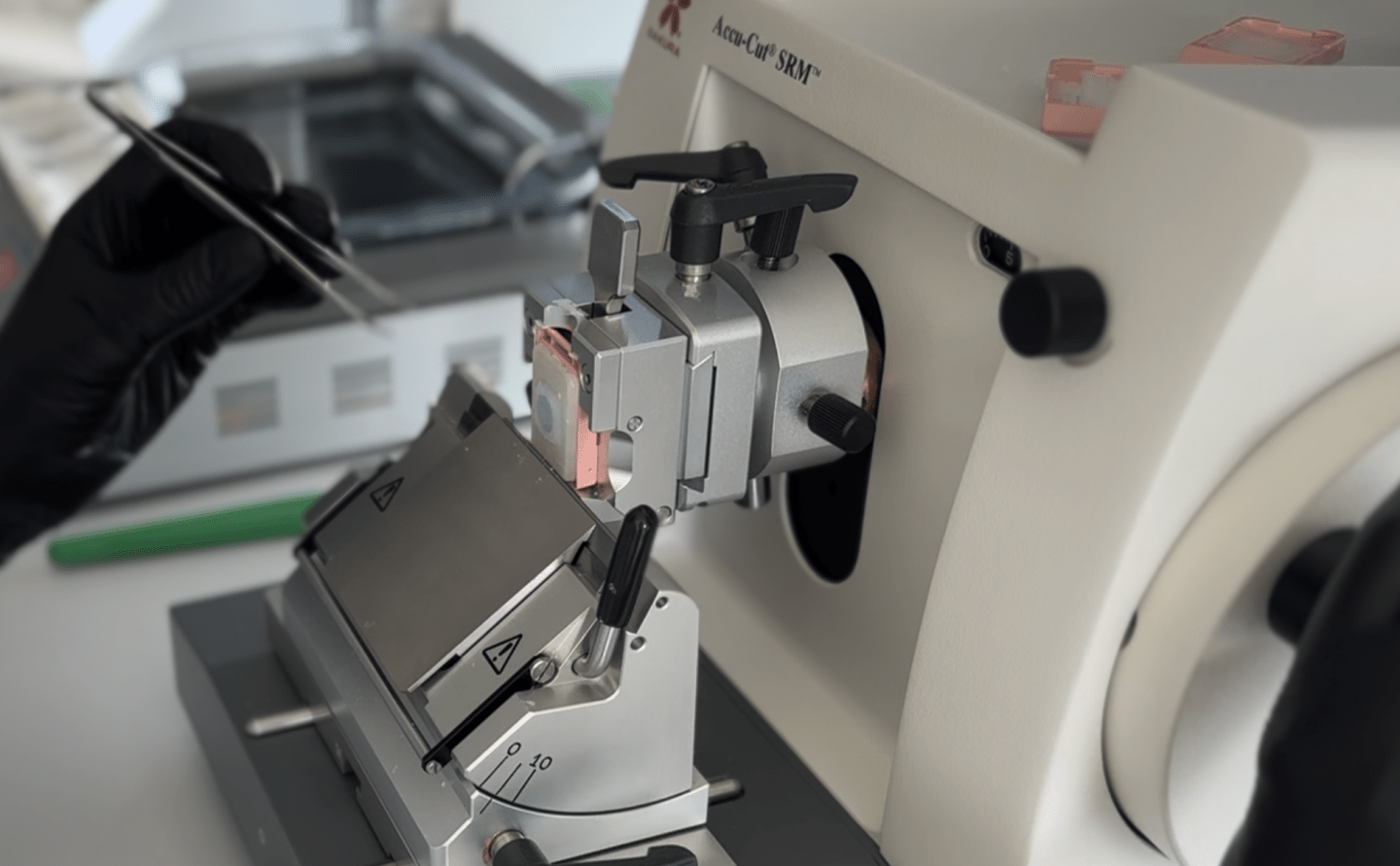
In its first year as a company, ChronicleBio has performed 890 blood draws from 709 patients in Utah, Arizona, Texas, and India. It has over 3,500 tubes of blood in its “biobank,” the company tells me. It’s extracted 153 terabytes of data from the blood—that’s three-times the 45 terabytes GPT 3.5, a 2022 model from OpenAI, was trained on. The company has raised $15 million to date.
The next big thing: Home blood draws. On August 11, ChronicleBio will launch a sign-up link for mobile phlebotomy trucks to come to the homes of people with certain chronic diseases. Participants will get an in-depth report on their condition, free for the first 250 people. In exchange, they’ll give their biological data to ChronicleBio.
The goal is to learn more about diseases and improve the success of clinical drug trials, something Simo says would be nearly impossible without AI.
The transcript below has been edited for length, clarity, and publication.
ChronicleBio
In preparation for this interview, you sent me an article that you said encapsulates ChronicleBio’s approach. It talks about how some patients with long COVID were participating in a clinical trial. The drug was working well for them, but then the trial was cancelled for supposedly being ineffective for the group as a whole.
Fidji Simo: Yes, so that’s really what Chronicle Bio is meant to solve. We have seen a lot of clinical trials fail because the pharmaceutical companies aren’t able to identify which subset of patients they could work for. So they end up giving the drug to everyone with the same diagnosis. Let’s say it’s POTS. But there could actually be five sub-diseases within POTS, and the drug would work for one of them, but not the other four. So the clinical trial fails when it could have succeeded if we could have identified these people up front. It seems really simple, but it hasn’t been done for these conditions.
So is what your company is doing is finding patients with similar symptoms, grouping them together, and then testing drugs on those sub-groups so the trial is more likely to be successful?
That’s exactly right. We have already found five sub-diseases where the biology is really different, despite the symptoms being the same. And now that we understand the biology, we can map that to existing drugs that would solve the problem, and so we’re going to start testing these existing drugs on our patient population before the end of the year. Then we would partner with biotech and pharma to develop new drugs, with the goal of having suitable therapeutics for every part of this patient population.
What exactly do you mean by a sub-disease?
The sub-diseases don’t even have names right now. That’s the problem. So, the way the medical system names these syndromes is by their symptoms. In the case of POTS, it’s called Postural Orthostatic Tachycardia Syndrome. It’s basically named after the symptom: Tachycardia means your heart rate goes up when you stand. But for one group of patients the disease might be driven by the immune system. For another, it’s driven by the mitochondria. The underlying biology is very different, and that’s why one drug isn’t going to work across everyone even if the symptoms are the same.
Very cool. Backing up for a second, is it an amazing feeling to have gone through such a long medical journey yourself, and now you’re in a position of power to actually improve the system?
Yeah, you know, it’s obviously a horrible disease, and I certainly wish I could have dodged it. But at the same time, I think it has given me enormous meaning. The delta between the disability from these diseases and the amount of funding and research being done on them is terrible. If you look at a condition like chronic fatigue syndrome, it is considered the most disabling disease of all diseases. Like when you look at the disease chart, it’s completely at the bottom, worse than cancer.
And yet, like if you look at the amount of funding for this condition, it’s absolutely pathetic for two reasons. One, it primarily affects women, so of course you get less funding. Second, while it completely disables you, it usually doesn’t kill you. And so, the combination of these two things has made it that these diseases are really ignored, even though they affect people at the prime of their lives. You usually get affected between 20 and 40 [years old], and you’re completely disabled. You’re taken out of your life entirely, and so it’s a crazy amount of suffering.
I got a lot of empathy for people with chronic fatigue and chronic conditions after being pregnant. It kind of feels like that. [Earlier in our conversation, Simo mentioned she was bedridden for five months of her pregnancy and she developed POTS a few years later.]
Yeah, imagine that 24/7, impossible to move. [Some] patients are fully bedridden in the dark, sensitive to light, sensitive to sound. It’s a really terrible quality of life, and to me, it seems impossible that with the tools we have today, we would continue to conclude that diseases are incurable and that patients should be in a dark room for years. We owe them something better, given the progress that we’re seeing in a lot of disciplines.
So what’s different now with AI? What does it unlock that wouldn’t have been possible before?
The complexity of these diseases made it that without AI they were incredibly difficult to solve. Like I said, they’re multi-system, so you need to be looking at the state of the nervous system, the state of the immune system, and how it correlates with your genetics. All of that is a massive data problem that was very hard to get your hands around without AI. And so finally we have AI, and then on top of that, you have the cost of these analyzes going down. Doing a genetic analysis years ago was way more costly than it is now. Analyzing 150 terabytes of data would have been either impossible or would have taken years, and now it takes us minutes.
So that’s what gives me a lot of hope. I’m physically the worst I’ve ever been, but at the same time, we are at a moment in time where we have the best tools we’ve ever had to solve diseases that are considered incurable.
What AI models are you using?
We’re using a combo of OpenAI and Anthropic models. We’re using anything that’s available that can help.
Why do you need to collect blood to get the right data?
The reason I did ChronicleBio is because I really think that we are missing true biological data to make progress towards discovering drugs. Right now, a lot of the models use a lot of EHR data—medical records. But medical records don’t tell you enough about biology. They’re incredibly noisy. They don’t tell you how the human body works. If you look at LLMs, they work so well because the internet existed, right? You already had all of this language. We are missing the internet of biology.
What’s the latest initiative you’re working on?
Right now we’ve acquired all of this data [from blood] by partnering with clinics, but we think it’s really important to get that data from anyone who wants to participate. We’re now in the process of opening up our tests to anyone in the U.S. with mobile phlebotomy coming to their house. That’s going to allow us to have like a much larger data set, but also reach patients that are bedridden, that are in the sickest stages of the disease. And we actually return the data to patients, so that gives them more information about that condition in case that can help direct them towards a particular therapy. So that’s yeah, that’s that’s basically what we’re up to.
That’s amazing. When does it start?
It’s next week, [on August 11]. We partnered with mobile phlebotomy companies that collect the blood in a kit. They send that to us. We get it analyzed. It takes a couple weeks because these analyzes are very robust. And then we send back a report to the patient about everything we learned, and that data goes into our database. And then over time, if we have more findings about which sub-disease the patient might have or things like that, we continue keeping them posted, and then they can take the test over time, so at multiple points in time, so that we can also see how they evolve. So if they went on a particular drug, did their immune system change? That gives us longitudinal data about the evolution and progression of these diseases.
So I know there are already a variety of mail-in blood tests out there. How is what you’re doing different?
That’s right. The test we do is very focused on these particular complex chronic conditions. So it’s not just the standard blood tests that are common. It’s a really advanced research-grade blood test.
How much will it cost?
We’re making it free for the first 250 patients because we really want to make sure they are getting value out of the report. After that, it’s going to cost $400. We’re doing it at cost, meaning that’s what it costs us, and we’re charging the same for patients. The whole point for us is not to make money. It’s to collect data so we can find cures.
This is all so fascinating. I’m glad we did this.
Thank you for your interest! We’re excited. You know, when I was at OpenAI, I said I think if AI accomplishes everything but doesn’t cure disease, that would be a very sad state of affairs. The real promise of AI has always been to cure disease. I think it would be a tragedy if we had all of these amazing tools in our hands, but weren’t able to turn them into drugs that can save patients’ lives on a time frame that matters.
Recent Comments