
 By 1783, the Revolutionary War was winding down. It had been a year and a half since the Franco-American victory at Yorktown. Since then, peace negotiations had taken place, with preliminary terms agreed to between Great Britain and the United States in November 1782.
With the British still occupying the city of New York, Washington moved much of the Continental Army to the Hudson Valley.
He made his own headquarters on the west bank of the Hudson River in Newburgh, about sixty miles from New York. From there, he could keep a close eye on the British until they evacuated, which they finally did in November.
 Although many Americans were happy that the war had resulted in the independence of the United States, others felt differently, including many people in the Hudson Valley.
Loyalists, who were a sizeable minority of the population, had opposed independence and wanted to remain part of the British Empire. Perhaps 20 percent of the population of the Hudson Valley stayed loyal to the crown.
With the war almost over, Loyalists faced a difficult decision. One option was to go into exile. Britain offered to resettle Loyalists on land in other parts of the empire, with most Loyalists who departed the United States moving to what became Canada.
The majority of Loyalists, however, did not want to leave their homes and would have preferred to reintegrate into American society.
Newburgh Patriots Rally Against Loyalists
Patriots across the Hudson Valley made clear that Loyalists who had joined the British during the war were not welcome to return to their pre-war homes. Throughout the region people worked to permanently bar Loyalists from their communities.
Many committees issued and published resolutions on the matter, including one in Newburgh. On October 15, 1782, they met at the home of innkeeper Adolph DeGrove (1720-1796).
 The meeting selected seven men to form a committee which was to “draw up their sentiments relative to those persons who have voluntarily gone to, and joined the enemies of the United States.”
One week later, on October 22, there was another meeting at DeGrove’s house where those sentiments were laid before the community in writing. The committee’s resolutions primarily concerned Loyalists.
The address provided a list of grievances that Patriots had from the war, including the confinement of prisoners on ships in Wallabout Bay, attacks on New York’s frontier by Loyalists and American Indian allies, and the destruction of Patriot property.
All these difficulties worsened over a long war, for which they blamed “those more than savage brutes, the Tories.”
Given their offenses, the committee called Loyalists “atrocious villains” and said it would be injurious to allow them to return to Newburgh, regretting that some Patriots were in favor of more lenient treatment.
 The committee said it was duty-bound to “use every means to extirpate from this precinct, all such who have joined the enemy.” They added that they would not abide by any state laws offering Loyalists protection.
The resolutions were unanimously approved and sent to the nearest printer to be published. The meeting also chose another committee of nine men to meet for three months to carry the resolutions into execution.
There was a great deal of hostility in Newburgh to returning Loyalists. The precinct had a substantial Loyalist community, with most of its Loyalists affiliated with the Anglican church in the town.
Many Newburgh Loyalists had taken refuge behind British lines in Manhattan or on Long Island.
Adding to Patriot grievances, town residents had been taken prisoner at the Battle of Forts Clinton and Montgomery in 1777 and put on British prison ships. There was little sense of forgiveness for Loyalists.
The Beating of Jacob Traver
Jacob Traver would learn firsthand what could happen to Loyalists who went to Newburgh. A resident of Rhinebeck, Traver appeared on “A List of the kings true subjacts in Rainebeek” in 1776.
Not long after, he joined the New York Volunteers, a Loyalist Provincial regiment, which fought in a variety of engagements in both New York and the Southern Campaign.
Traver thus traveled far and wide in attempting to restore British rule in America. In June 1783, he obtained leave to return to Rhinebeck to see his family.
He boarded a sloop in New York and went up the Hudson River. En route to Rhinebeck, the sloop stopped in Newburgh on June 22.
 While the sloop docked, locals in Newburgh became aware of Traver’s presence on the vessel and called him to come onto the wharf. Traver obliged and noted that he was “about three hundred yards from General Washington’s Head Quarters.”
Getting off the sloop had been a mistake. Immediately, five men began beating Traver with hickory clubs. Traver estimated that they landed about “forty Blows” before he fell into the river. Only then did they stop. He scrambled back on the sloop, which soon departed.
Traver believed that one of the men who beat him was a “Captain” of a committee, likely referring to the committee that Newburgh established the previous fall.
He also estimated that at least one hundred of “General Washington’s Soldiers” gathered around to watch the abuse. Traver said the attackers were motivated by revenge and to prevent Loyalists from returning home.
On reaching Rhinebeck, it seemed Traver might be beaten once more. Fortunately, a friend and relative named Joshua Chambers intervened and convinced the committee of Rhinebeck to permit Traver to stay for ten days.
 Chambers gave himself as security for Traver’s good behavior. In later providing a deposition describing his experiences, Traver lamented that “the Government of the Country is now almost in all Places in the hands of Committees.”
Traver was far from the only Loyalist who encountered violence from Patriots on trying to return to their homes at the end of the Revolutionary War.
In the end, these stories of violence filtered back into the Loyalist refugee communities in both Canada and the city of New York, convincing many crown supporters that it was too risky to return to their abodes and that they must instead start new lives in other parts of the British Empire.
Read more about Loyalism in New York.
Kieran J. O’Keefe is the author of Suffering for the Crown: The Hudson Valley Loyalists and the Violence of Revolution (University of Virginia Press, 2026).
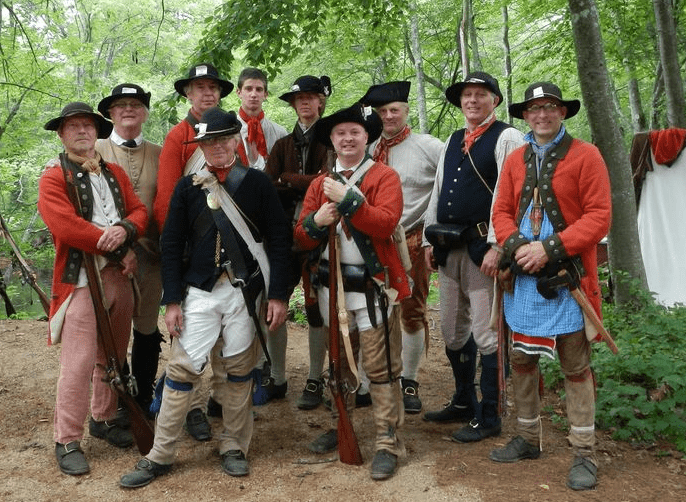
Illustrations, from above: Cornwallis’s surrender in October 1781 following the siege of Yorktown; 1820 Hudson River view from Newburgh, NY (New York Public Library); Engraving of John Lamb of the Sons of Liberty reading the Tea Act to a crowd in New York City; Captain Sherwood’s company of the Queen’s Loyal Rangers; lithograph of Washington’s Headquarters in Newburgh by Currier & Ives, 1837; and a map showing Loyalists settlements in Quebec.
Recent Comments