
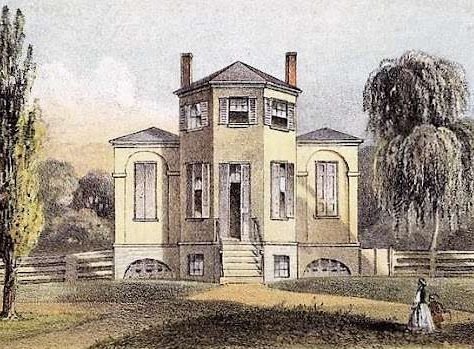
 Charity Clarke was born in the colonial city of New York on June 28, 1747, and lived through the momentous times that gave birth to the United States. She grew up on her father’s “Chelsea” estate (now the Chelsea neighborhood) in Manhattan.
Clarke married the Rev. Benjamin Moore, the pastor of Trinity Church, in 1778. Their son, Clement Clarke Moore was author of the poem A Visit from St. Nicholas or The Night Before Christmas.
Charity Clarke Moore deserves to be elevated to the pantheon of heroic Revolutionary Era women and included in school curricula. Between 1768 and 1774, she wrote a series of letters to London lawyer Joseph Jekyll, who was her cousin.
The letters, now in the Columbia University archives, illustrate the emerging hostility towards British policies in the New York colony prior to the Declaration of Independence.
Extended transcriptions from two of the letters are available on the website of the Museum of the City of New York and are part of their exhibit on “The Occupied City: New York and the American Revolution.”
On November 6, 1768, in response to the Townshend Acts imposing new taxes on imports, Clarke wrote her cousin “When there is the least show of oppression or invading of liberty you may depend on our working ourselves to the utmost of our power.”
In a March 31, 1769 letter Clarke supported reaching an accommodation with Great Britain but expressed disappointment with British responses to American protests:
“The attention of every American is fixed on England. The last accounts from thence are very displeasing to those who wish a good understanding between Britain and her colonies. The Americans are firm in their resolution of no importations from England.”
 However, by June 1769, Clarke was willing to endorse active resistance.
She wrote her cousin “if you English folks won’t give us the liberty we ask, [like] a Thalestris [Legendary Queen of the Amazons] at the head of a fighting army of Amazons I will try to gather a number of ladies armed with spinning wheels & attended by [peasants] who shall all learn to weave and keep sheep and will retire beyond the reach of arbitrary power clothed with the work of our hands, feeding on what the country affords without any of the luxuries or oppression of a long-inhabited country.
“In short, we will found a new Arcadia. You imagine we cannot live without your assistance, but I know we can banish everything but the necessaries of life and we will want nothing but what our country will afford. We shall then be happy no more slave to fashion and ceremony: freedom can content & peace shall be our constant.”
On December 8, 1769 Clarke wrote: “While we may enjoy full extent of liberty that we have right to I would wish every American a loyal subject and believe from my heart they are so inclined to be, but the moment that liberty is infringed let us seek it where it may be found… Don’t you think a country may be fine by nature without the assistance of the husbandman?… Let each country be left in the enjoyment of its inhabitants.”
 Following the Boston Massacre in March 1770 wrote “Unaffected patriotism and true virtue will I trust distinguish America in every age, and among every nation. So my dear Coz, your fears are groundless. America still practices the thorough unboasted list of virtues, which the generality of English men have scarce an idea of.”
In a final letter to her cousin on September 10, 1774, months before the outbreak of revolutionary violence, Clarke disputed the characterization of the colonists as “rebels,” writing:
“On what instance pray are the Americans called Rebels? What have they done to deserve the name? They have asserted their rights, and are determined to maintain them. Great Britain stands ready to destroy her sons for inheriting her spirit.”
In that same spirit of defiance, she wrote “What care we for your fleets and armies, we are not going to fight with them unless drove to it by the last necessity, or the highest provocation… Though this body is not clad with silken garments, these limbs are armed with strength. The soul is fortified by Virtue, and the love of Liberty is cherished within this bosom… And is this their crime in your eyes, my Cousin? Do you condemn them for not being foolish enough to give away the property of their posterity? Surely you ought not to condemn America.
A November 1767 poem “Address to the Ladies,” Boston Post-Boy & Advertiser reflects Charity Clarke attitude in urging women to join the boycott of British goods organized by the Sons of Liberty. It recommended wearing homespun linen clothing, brewing tea from American bog plants and refusing to marry men who wear London finery. The anonymous poet advises that such actions will earn them much stronger love from their suitors.
“Young ladies in town, and those that live round,
Let a friend at this season advise you:
Since money’s so scarce, and times growing worse
Strange things may soon hap and surprise you:
First then, throw aside your high top knots of pride
Wear none but your own country linen;
Of economy boast, let your pride be the most
What, if homespun they say is not quite so gay
As brocades, yet be not in a passion,
For when once it is known this is much wore in town,
One and all will cry out, ‘tis the fashion!
And as one, all agree that you’ll not married be
To such as will wear London Fact’ry:
But at first sight refuse, tell’em such you do choose
As encourage our own manufact’ry.
No more ribbons wear, nor in rich dress appear,
Love your country much better than fine things,
Begin without passion, ‘twill soon be the fashion
To grace your smooth locks with a twine string.
Throw aside your Bohea [Black Chinese Tea], and your Green Hyson Tea,
And all things with a new fashion duty;
Procure a good store of the choice Labradore [Tea made from a bog plant],
For there’ll soon be enough here to suit ye;
These do without fear and to all you’ll appear
Fair, charming, true, lovely, and cleaver;
Tho’ the times remain darkish, young men may be sparkish.
And love you much stronger than ever! O!
Charity Clarke Moore, who was just 17 at the time of the poem was written, died 1838 at the age of 91 and is buried in Trinity Churchyard at Broadway and Wall Street.
Read more about the American Revolution in New York.
Illustrations, from above: Chelsea Mansion in 1816 as shown in Valentine’s Manual, 1864 – most other depictions show the house after it’s been considerable renovated and expanded (New York Public Library); Charity Clarke Moore’s 1769 letter to her cousin (Museum of the City of New York); and Charity Clarke Moore, ca. 1765.
Recent Comments